

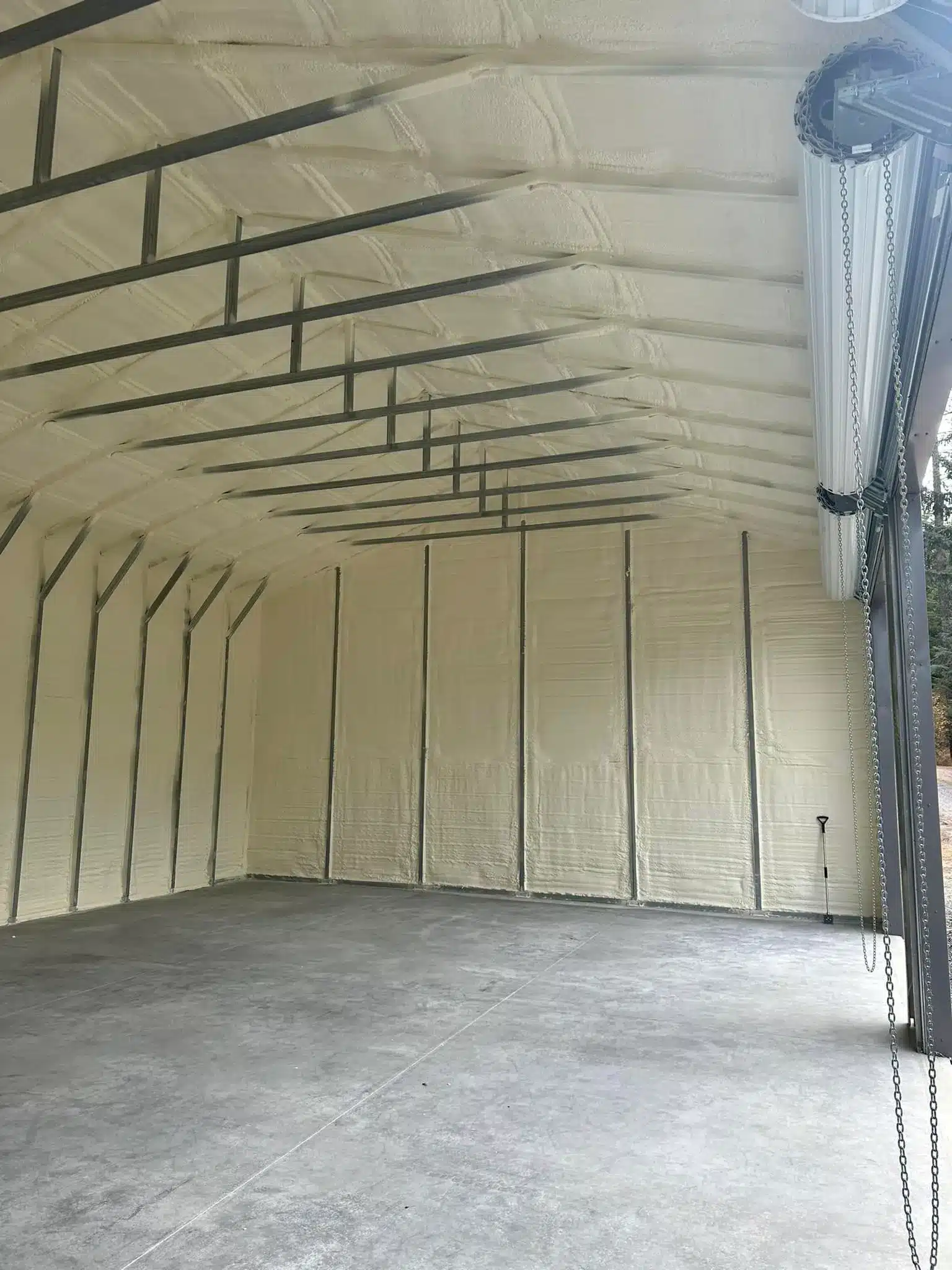
Running a farm in Bonners Ferry, ID means protecting expensive equipment, stored harvest, and livestock from temperature extremes that can undo months of hard work. Our team delivers dependable Agricultural Insulation built to manage moisture, hold interior temperatures steady, and cut down on wasted energy across every structure on your property. Reach out to Selkirk Energy Solutions today and request your Free Quote to keep your farm buildings working as hard as you do.
Farms in Boundary County deal with long winters and sharp temperature swings, so the buildings housing your grain, feed, and machinery need more than a quick fix. Our Agricultural Spray Foam Insulation process builds an unbroken thermal barrier that locks conditioned air inside and keeps harsh weather out. Since escaping air is the leading cause of energy waste and unstable humidity in large ag structures, closing those gaps is where the real savings begin, as outlined in Enverge's guide to ag building energy efficiency.
Rather than stapling panels into place, spray foam bonds directly to wood, steel, and concrete to form one continuous layer. That bond stops heat transfer at the surface and holds indoor conditions steady no matter what the weather is doing outside. Our crew adjusts application thickness and technique to match each structure, from tight pump houses to wide-open machine sheds.
Good Farm Building Insulation does far more than keep a barn warm in January. When condensation forms on walls and ceilings, feed spoils, metal corrodes, and the air your animals breathe goes downhill fast. A properly insulated envelope keeps damp air from settling on cold surfaces, which protects your harvest, your livestock, and the structure itself. Industry analysis from Warm Home Insulation confirms that stronger thermal protection keeps farm facilities usable and productive in every season.
There is also a security angle many farm owners overlook. Foam insulation fills the cracks and crevices that mice, birds, and insects use as doorways into feed storage. Fewer pests means less contamination, better biosecurity, and lower losses in the sensitive areas of your operation.
Operational Advantages:
No two farm buildings serve the same job, so one-size-fits-all insulation rarely delivers the results you need. Our Agricultural Building Insulation work covers the full range of rural structures, letting us set separate climate targets for your milking parlor, machinery bay, and produce cellar. Each zone gets the coverage and R-value it needs to do its job well.
Because our installers work with farm schedules in mind, we plan every project around planting, harvest, and feeding routines. The finished barrier stands up to years of bumps, washdowns, and daily wear without breaking down.
We rely on industry-proven materials such as
Closed-cell foam leads our lineup because it shrugs off moisture and stiffens the wall assembly at the same time. Research from High Country Solutions shows that closed-cell products are the smarter pick in damp or humid conditions, which describes plenty of barn interiors here in North Idaho. That water resistance protects the R-value you paid for instead of letting it wash away.
To see how these options stack up, here is a quick reference comparing common insulation materials used on farms today:
Insulation Material
| R-Value Per Inch | Moisture Resistance | Common Farm Application |
Closed-Cell Spray Foam | R-6 to R-7 | Excellent, blocks water absorption | Metal barns, crop storage, foundations |
Open-Cell Spray Foam | R-3.5 to R-3.8 | Moderate, permits vapor diffusion | Interior walls in dry zones |
Fiberglass Batts | R-2.9 to R-3.8 | Poor, sags and holds water when wet | Dry framed walls in shops and offices |
Rigid Foam Board | R-4 to R-6.5 | Good, resists moisture uptake | Continuous exterior sheathing |
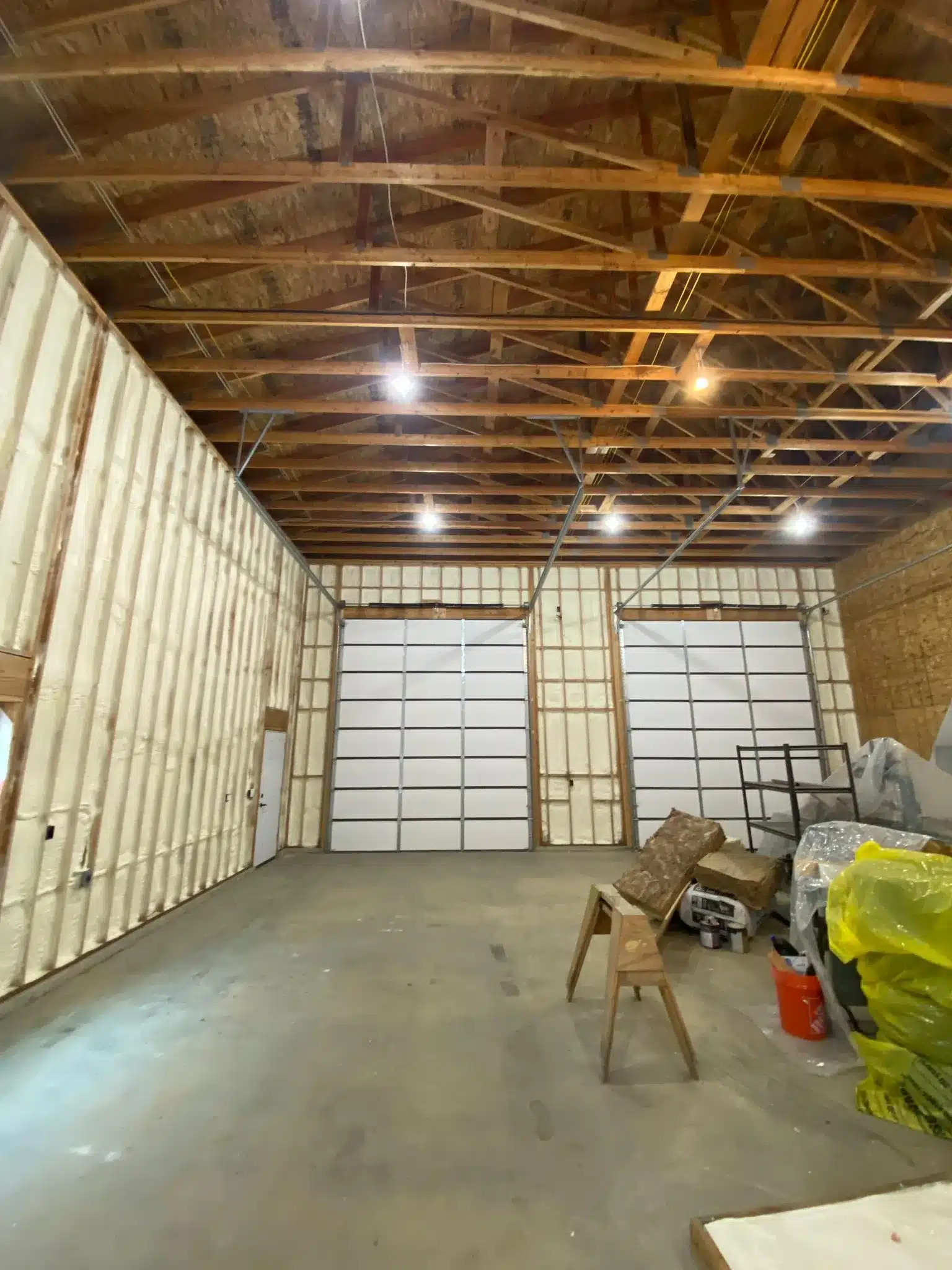
Our layered approach also includes Fiberglass for framed cavities where it performs well and commercial-grade Vapor Barriers across walls and ceilings where moisture migration is a concern. Stacking these layers correctly stops hidden condensation from turning into mold, mildew, and rot inside your wall cavities.
On paper, cheap fiberglass batts look like a bargain for any farm budget. In real barn conditions, though, they sag, soak up moisture, and lose their insulating power within a few seasons. Once that happens, your heating bill creeps upward while the material sits in the wall doing almost nothing.
Premium systems cost more on day one and earn it back for decades. Spray foam holds its thermal rating for the life of the building and keeps performing through humidity, dust, and heavy use, which is why so many farm owners now choose Spray Foam Insulation for Agricultural Buildings over conventional products.
Feature
| Closed Cell Spray Foam | Traditional Fiberglass Batts |
Air Sealing Capability | Excellent, creates an airtight barrier | Poor, permits constant air leakage |
Moisture & Vapor Resistance | Very high | Low, soaks up water easily |
Structural Support
| Stiffens walls and roof decks | None |
Longevity | Permanent, keeps its R-Value for life | Breaks down when wet or compressed |
North Idaho winters test every farm building to its limits, with deep freezes, heavy snow loads, and damp shoulder seasons that punish weak building envelopes. As local agricultural insulation contractors, our team specs every project to handle these exact conditions, keeping animal quarters warm, pipes unfrozen, and storage areas dry from November through April.
Farms in Bonners Ferry and the surrounding communities count on their buildings through every phase of the growing season. With Farm Insulation Installation Services from our crew, you spend less on fuel, lose less to spoilage, and gain confidence that your operation is ready for whatever the weather brings.
Stronger buildings, healthier livestock, and lower utility bills all start with one phone call. Contact Selkirk Energy Solutions today for a free quote on agriculture building insulation solutions and find out how affordable protection can be. Call us now at (208) 295-9780.
Every structure is different, but our crew plans each job around your schedule and finishes most projects quickly to limit disruption to farm routines.
Yes, please clear out equipment and animals and make sure surfaces are clean and dry so the insulation bonds properly.
Yes, a properly applied thermal envelope manages condensation and slows moisture migration, both of which protect stored crops.
Just call us at (208) 295-9780 or send us a message, and we will prepare your Free Quote.
It does, since steady temperatures and fewer drafts lower stress and illness in livestock, which means healthier animals and better output.