

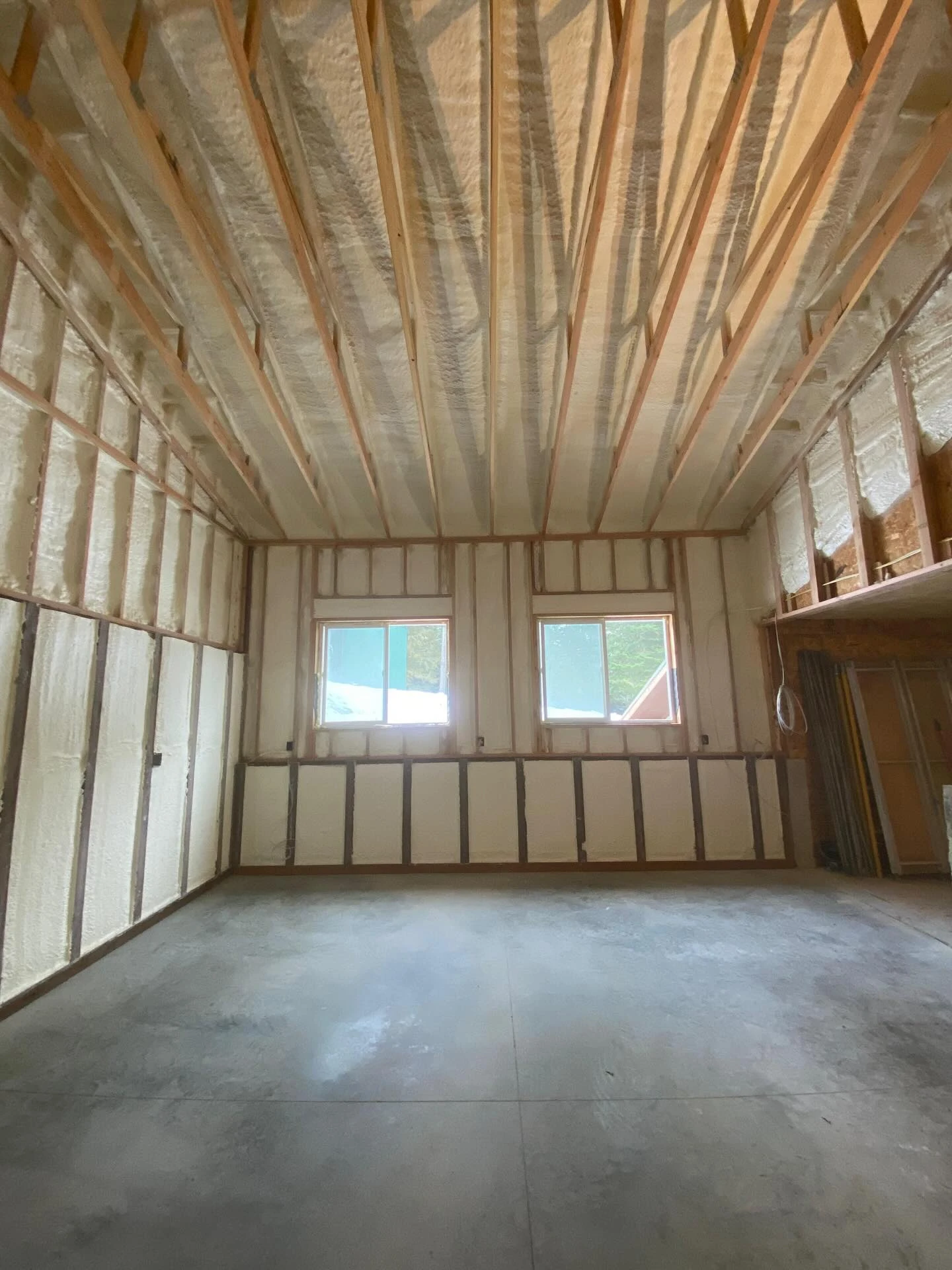
If you’re planning a home renovation in Sandpoint, Idaho, spray foam insulation should be at the top of your upgrade list. This insulation method delivers superior energy efficiency and comfort specifically suited to North Idaho’s climate, where winters can be harsh and summers surprisingly warm. The initial investment pays for itself through reduced heating and cooling costs, plus you’ll notice immediate improvements in indoor comfort and air quality. This guide will walk you through everything you need to know about adding spray foam insulation during your Sandpoint home renovation.
Sandpoint’s unique climate presents specific insulation challenges that traditional materials often fail to address effectively. With average winter temperatures dropping below freezing and occasional summer heat waves reaching the 90s, your home needs insulation that performs consistently across seasonal extremes. Local building codes continue to emphasize energy efficiency, making now an ideal time to upgrade your insulation system while walls are already open during renovation projects.
Spray foam insulation excels in North Idaho’s variable climate because it creates an airtight seal that prevents the temperature fluctuations common in the region. Unlike fiberglass or cellulose, spray foam expands to fill every gap and crack, eliminating the cold drafts that plague many older Sandpoint homes during winter. The material’s high R-value per inch means you get more insulation power in less space, which is particularly valuable during renovations when every inch counts.
The moisture resistance of spray foam provides additional benefits in Sandpoint’s climate, where humidity levels can vary significantly between seasons. Closed-cell spray foam acts as a vapor barrier, preventing condensation buildup within walls that could lead to mold growth and structural damage over time. This characteristic alone makes it especially valuable for homes near Lake Pend Oreille or in areas with high water tables.
Local energy costs also make spray foam particularly attractive. According to data from the U.S. Energy Information Administration, Idaho residents pay above-average rates for natural gas heating, making energy efficiency improvements financially sensible. Homeowners who install spray foam often see heating and cooling costs reduced by 30-50% compared to traditional insulation methods.
Spray foam comes in two main varieties, each with distinct advantages for different applications. Understanding these differences helps you make the right choice for your renovation project.
Open-cell spray foam is less dense and more flexible, making it ideal for interior applications where sound dampening is desired. It expands significantly when applied, filling irregular spaces effectively. However, it has a lower R-value (around 3.5 per inch) and requires a separate vapor barrier in certain applications.
Closed-cell spray foam is denser and provides a higher R-value (approximately 6.5 per inch), making it perfect for exterior applications and spaces where you need both insulation and moisture protection. It also adds structural strength to walls and can support some weight after curing. The higher material cost is often offset by the reduced need for additional vapor barriers and the smaller space required to achieve target R-values.
Here’s a quick comparison to help you decide:
| Feature | Open-Cell Spray Foam | Closed-Cell Spray Foam |
|---|---|---|
| R-Value per inch | 3.5 | 6.5 |
| Expansion rate | 100x original volume | 30x original volume |
| Vapor barrier | No | Yes |
| Cost per square foot | Lower | Higher |
| Sound dampening | Excellent | Good |
| Best applications | Interior walls, attics | Exterior walls, basements |
Bonus Tip: Many Sandpoint renovations benefit from using both types – closed-cell on exterior walls and open-cell in interior partitions where sound control matters more than maximum thermal performance.
Before committing to spray foam insulation during your renovation, several factors deserve careful consideration. First, assess your home’s current condition and renovation scope. Spray foam works best when installed during major renovations where walls are already opened up, as this allows for proper application and complete coverage.
The age and construction of your Sandpoint home also influence your decision. Older homes, particularly those built before 1980, often have significant air leakage issues that spray foam can effectively address. However, these same homes may require additional moisture management strategies to prevent trapping existing moisture problems within the walls.
Your renovation budget plays a crucial role, too. While spray foam typically costs 2-3 times more than traditional insulation upfront, the long-term savings often justify the investment. Research from the Insulation Institute shows that homeowners recoup spray foam installation costs through energy savings in an average of 3-5 years.
Consider your renovation timeline as well. Spray foam installation requires specific temperature and humidity conditions for optimal curing. In Sandpoint, this means scheduling installation during seasons when you can maintain adequate ventilation and temperature control in the work areas. Professional installers typically need 24-48 hours of favorable conditions after application.
Bonus Tip: Ask your contractor about combining spray foam with other energy efficiency upgrades. When paired with high-performance windows, air sealing, and proper ventilation systems, spray foam insulation delivers maximum benefits for your renovation investment.
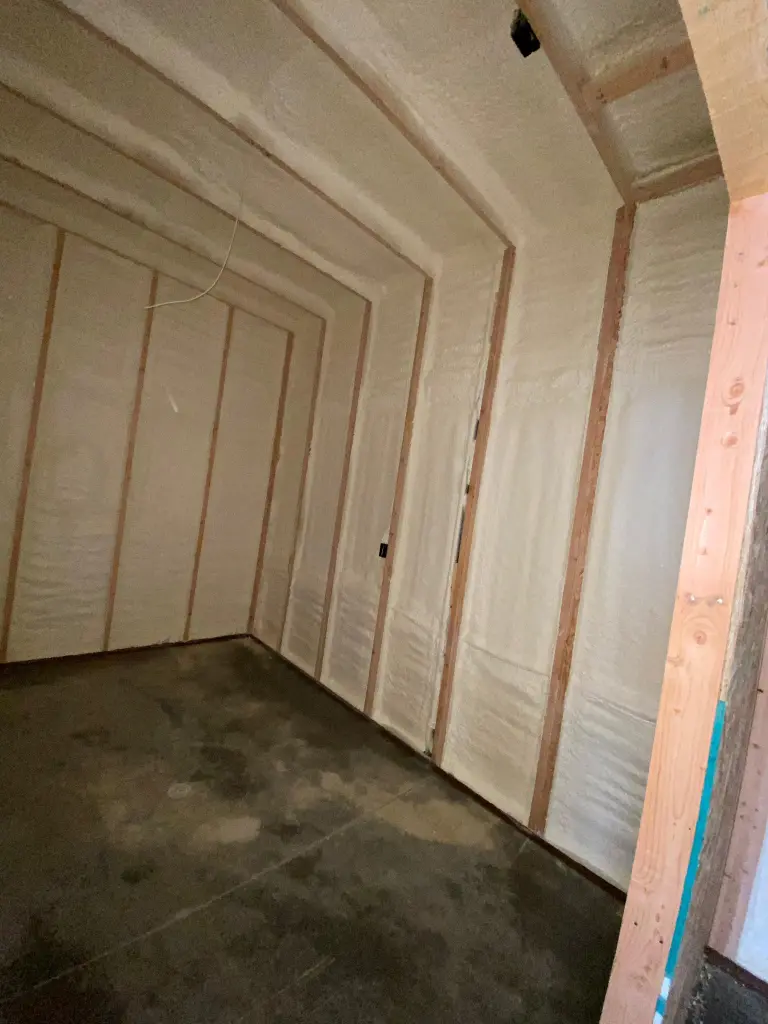
The spray foam installation process requires careful coordination with your renovation timeline. Professional installers typically need access to wall cavities after electrical and plumbing rough-in, but before drywall installation. This sequencing prevents damage to the foam while ensuring complete coverage of all wall spaces.
Proper preparation is essential for successful installation. The work area must be clean, dry, and free of dust that could interfere with foam adhesion. Your renovation team should protect finished surfaces and ensure adequate ventilation during application, as the chemicals produce fumes during curing. Professional installers use specialized equipment and protective gear to handle the material safely.
Installation generally proceeds quickly once conditions are right. An average-sized room might take just a few hours to complete, though larger projects require more time. The foam expands rapidly upon application, filling cavities completely and creating an airtight seal. After curing, excess material gets trimmed back to create smooth surfaces ready for drywall or other finishing materials.
Timing your installation during Sandpoint’s renovation season matters too. Spring and fall often provide ideal conditions, balancing temperature requirements with your project schedule. Summer installations require careful temperature management, while winter work needs adequate heating to ensure proper curing.
Understanding the financial implications helps you make an informed decision about spray foam insulation for your Sandpoint renovation. The upfront costs typically range from $1.50 to $3.50 per square foot for open-cell foam and $2.00 to $6.00 per square foot for closed-cell applications, depending on project complexity and local market conditions.
These initial costs compare favorably when considering lifetime value. Spray foam insulation lasts indefinitely without degrading, unlike traditional materials that can settle or lose effectiveness over time. The energy savings compound annually, with many homeowners reporting 30-50% reductions in heating and cooling expenses. In Sandpoint’s climate, where heating demands are significant, these savings quickly add up.
Property value increases provide another financial benefit. Energy efficiency improvements consistently rank among home upgrades that deliver a strong return on investment. A study by Remodeling Magazine shows that insulation upgrades recoup an average of 107% of their cost at resale, making them financially smart beyond just energy savings.
The enhanced comfort and air quality improvements, while harder to quantify financially, contribute to overall home value and livability. Many homeowners report fewer allergy symptoms and more consistent indoor temperatures after upgrading to spray foam, benefits that become immediately apparent during Sandpoint’s temperature extremes.
Spray foam insulation offers clear advantages for Sandpoint home renovations, particularly when considering the local climate and energy costs. The material’s superior air sealing, moisture resistance, and high R-value deliver benefits that traditional insulation methods cannot match, especially important in homes near Lake Pend Oreille, where humidity management matters.
The decision ultimately depends on your renovation scope, budget, and long-term goals for your home. If you’re undertaking significant renovations with open walls, the added cost of spray foam often pays for itself through energy savings and improved comfort. Consider the lifetime value rather than just upfront costs, and factor in the enhanced property value and quality of life improvements.
Your specific home characteristics also influence the decision. Older Sandpoint homes with drafty windows and poor insulation benefit most from the air sealing properties of spray foam. Newer homes might focus on specific areas like attics or bonus rooms where temperature control has been problematic.
Making the right insulation choice during your Sandpoint home renovation deserves expert guidance. The professionals at Selkirk Energy Solutions understand North Idaho’s specific climate challenges and building requirements. With extensive experience in spray foam installation across the Sandpoint area, we provide detailed assessments and recommendations tailored to your home’s unique characteristics and your renovation goals. Contact Selkirk Energy Solutions at [email protected] or call (208) 295-9780 to schedule a consultation and discuss how spray foam insulation can enhance your renovation project.
When properly installed and fully cured, spray foam insulation is completely safe for residential applications. The materials are inert and stable after curing, similar to other plastics in your home. Professional installation ensures proper chemical ratios and complete curing, while adequate ventilation during installation protects installers and occupants. Look for installers who use third-party certified products with documented safety profiles.
The actual spraying process moves quickly, with most rooms completed within hours. However, proper curing requires 24-48 hours before closing up walls. Your renovation timeline should account for preparation, installation, curing, and trimming phases. Most professional installers work efficiently to minimize disruption to your overall project schedule while ensuring quality results.
Modern building science emphasizes controlled ventilation rather than random air leakage through building envelopes. Spray foam eliminates uncontrolled air movement while requiring proper mechanical ventilation systems. This approach actually provides better indoor air quality by filtering and controlling fresh air exchange rather than allowing pollutants to enter through random gaps and cracks.
Spray foam performs exceptionally well in cold climates like North Idaho’s. The airtight seal prevents cold drafts and heat loss that plague traditionally insulated homes. The material maintains its insulating properties regardless of temperature, unlike some traditional materials that lose effectiveness in extreme cold. Many Sandpoint homeowners report significantly improved comfort and reduced heating bills after installing spray foam.