

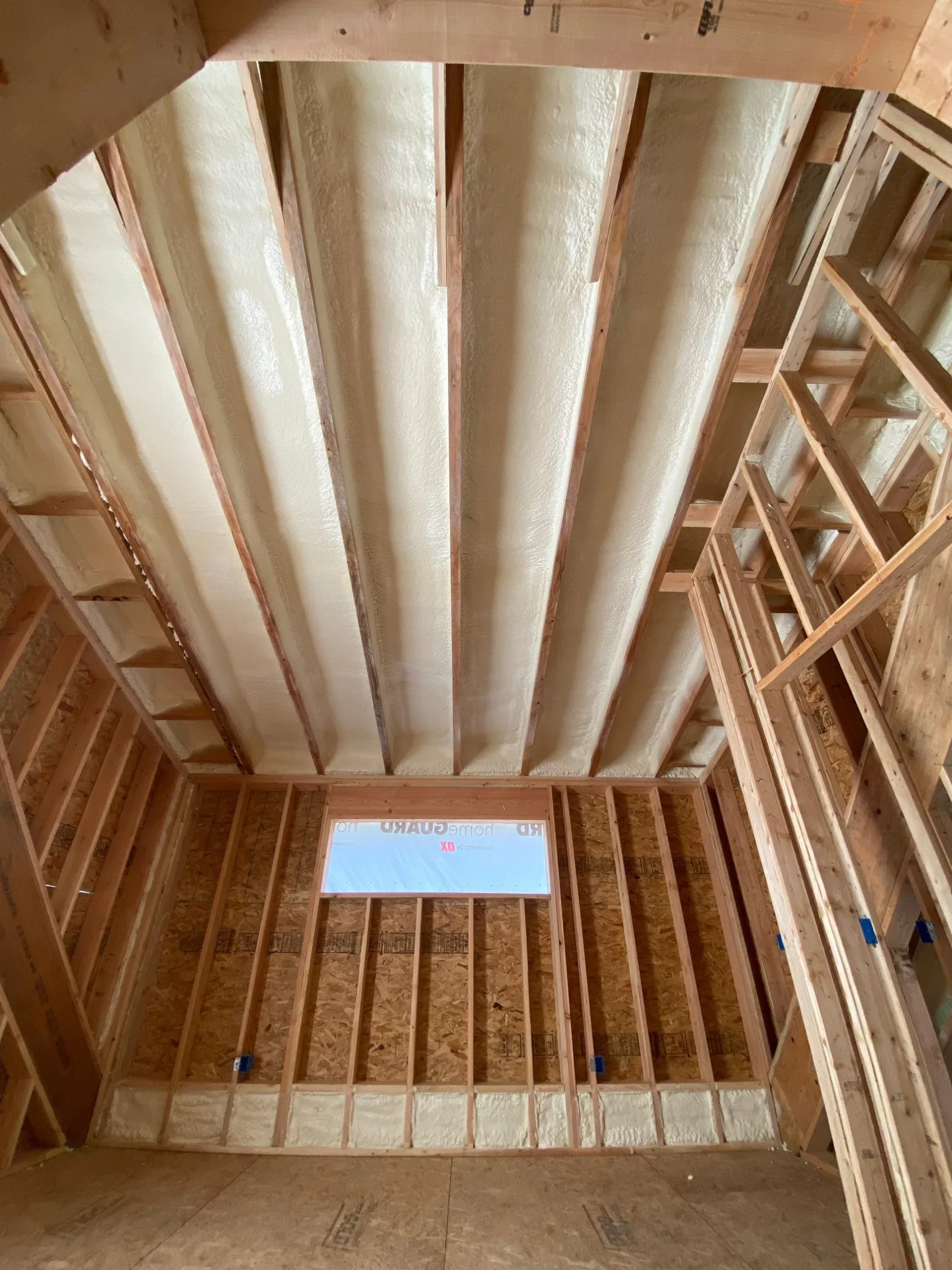
Closed-cell spray foam prevents mold and water intrusion by creating a continuous air and moisture barrier that stops humid air from penetrating building cavities where condensation can occur. The foam’s dense, closed-cell structure is inherently water-resistant and qualifies as a Class II vapor retarder when installed at sufficient thickness, blocking both air leakage and vapor diffusion that feed mold growth. Unlike traditional insulation that can trap moisture, Closed-cell spray foam actively repels water while sealing the tiny gaps and cracks where moisture typically enters a building envelope.
Moisture intrusion is one of the most destructive forces affecting residential and commercial buildings. When water penetrates walls, attics, or crawl spaces, it creates the perfect breeding ground for mold, which only needs moisture, organic material, and temperatures between 40-100°F to thrive. Traditional insulation materials like fiberglass and cellulose do little to stop moisture entry and can actually hold water against structural components, accelerating decay.
Air leakage represents a primary pathway for moisture problems. According to Building Science Corporation, humid air carrying moisture vapor can bypass traditional insulation through tiny gaps, then condense on cold surfaces within wall cavities. This hidden condensation often goes undetected until mold growth becomes extensive or structural damage appears.
The stack effect drives warm, moist air upward through buildings, forcing it through any available gap or crack. In winter, this warm interior air meets cold exterior surfaces within walls and attics, causing condensation. Without an effective air barrier, this moisture cycle repeats daily, gradually saturating building materials.
Closed-cell spray foam addresses moisture and mold problems through several interconnected mechanisms. The foam expands on application to fill all voids, cracks, and gaps, creating a monolithic air seal. This air sealing function stops the primary carrier of moisture vapor, humid air, from entering building cavities where it could condense.
The foam’s physical structure consists of billions of tightly packed closed cells filled with a gas that provides insulation value. This closed-cell architecture makes the material inherently resistant to water penetration. When tested according to ASTM standards, Closed-cell spray foam demonstrates minimal water absorption compared to open-cell alternatives that can wick and hold moisture.
At thicknesses of 2 inches or more, Closed-cell spray foam typically achieves a permeance rating below 1.0 perms, qualifying it as a Class II vapor retarder under most building codes. This vapor retarder function prevents moisture vapor from diffusing through walls via concentration gradients, adding a second layer of protection beyond air sealing. According to Building Science Corporation’s residential spray foam guide, Closed-cell foam’s vapor impermeability is sufficient to control diffusion condensation in most climate zones.
| Insulation Type | R-Value per Inch | Air Barrier | Moisture Barrier | Vapor Permeability | Mold Risk |
|---|---|---|---|---|---|
| Closed-cell Spray Foam | 6.0-7.0 | Yes | Yes | <1 perm | Very Low |
| Open Cell Spray Foam | 3.5-3.8 | Yes | No | 10-20 perms | Moderate |
| Fiberglass Batts | 3.0-3.8 | No | No | High | High |
| Cellulose | 3.2-3.8 | No | No | Moderate | High |
| Mineral Wool | 3.0-3.3 | No | Limited | Moderate | Moderate |
Mold requires three conditions to grow: moisture, organic food sources, and suitable temperatures. Closed-cell spray foam attacks the moisture variable directly by preventing water accumulation in building cavities. The foam itself is inert and provides no food source for mold, unlike cellulose insulation that contains organic paper fibers.
When warm, humid air contacts cold surfaces like exterior sheathing in winter, the air temperature drops below its dew point, causing water vapor to condense. This condensation provides the moisture that mold needs. Industry research demonstrates that Closed-cell spray foam eliminates this condensation by preventing humid air from reaching cold surfaces and by raising surface temperatures through its high R-value insulation.
The high R-value per inch of Closed-cell foam helps maintain warmer surface temperatures within wall assemblies. When interior surfaces stay above the dew point temperature of indoor air, condensation cannot occur. This temperature moderation works in concert with air sealing to keep building materials dry.
Understanding how Closed-cell spray foam performs in actual building scenarios helps illustrate its effectiveness for moisture control. The following examples demonstrate common situations where foam prevents mold and water damage.
| Scenario | Building Area | Moisture Problem | Solution | Outcome |
|---|---|---|---|---|
| Crawl Space Encapsulation | Unvented crawl space | Ground moisture, mold on joists | 2″ Closed-cell foam on walls and rim band | Humidity dropped to 45%, and mold was eliminated |
| Basement Rim Band | Above-grade wall junction | Air leakage causing condensation | Closed-cell foam sealing rim band | No condensation, improved comfort |
| Attic Roof Deck | Cathedral ceiling | Ice dams, ceiling stains | 3″ Closed-cell under the roof deck | Ice dams eliminated, attic dried out |
| Masonry Wall Retrofit | Brick building with furring | Moisture through the brick, mold on the studs | Closed-cell foam in stud cavities | Walls dried, mold growth stopped |
One particularly effective application involves spray foam application in crawl spaces. Traditional vented crawl spaces allow humid outdoor air to enter, where it contacts cooler surfaces and condenses. This creates persistent moisture problems that encourage mold growth on wooden joists and subflooring. By applying Closed-cell foam to crawl space walls and sealing vents, we create a conditioned space that stays dry year-round. Industry data shows that encapsulated crawl spaces with spray foam maintain relative humidity below 50%, well below the 60% threshold where mold thrives.
The effectiveness of Closed-cell spray foam for moisture control depends heavily on proper installation. Thickness, coverage, and application technique all influence the foam’s ability to prevent mold and water intrusion.
Thin spots in foam application create weak points where moisture can penetrate. When foam is applied too thin, it may not achieve the closed-cell structure needed for water resistance. Similarly, gaps around windows, doors, and utility penetrations allow air leakage that can carry moisture into building cavities. Working with experienced installers who understand building science prevents these problems.
While Closed-cell spray foam is excellent at preventing moisture problems, improper application can sometimes hide existing issues. According to property loss investigations, spray foam applied over wet or moldy materials can seal moisture inside walls, causing hidden decay. Additionally, foam applied on the wrong side of a wall assembly can sometimes create condensation problems by altering how vapor moves through the structure.
These potential issues highlight why building an assessment before insulation is essential. Professional contractors evaluate existing moisture conditions and design the insulation system appropriately for the climate zone and building type.
Contractors and homeowners can implement several practical steps to maximize mold prevention with Closed-cell spray foam:
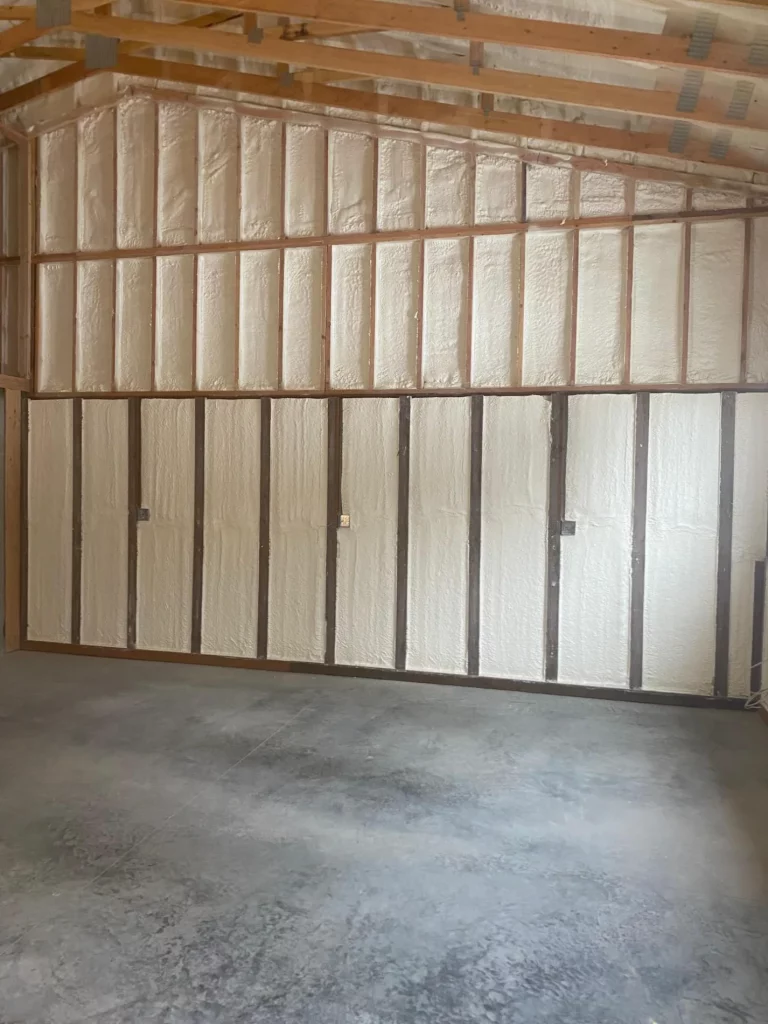
The investment in Closed-cell spray foam delivers returns beyond energy savings. By preventing mold growth and moisture damage, property owners avoid costly remediation and structural repairs. Mold remediation typically costs $10-25 per square foot, while structural repairs from moisture damage can run into tens of thousands of dollars. Compared to these potential cost of insulation, quality spray foam insulation provides insurance-like protection for the building.
Additionally, preventing mold improves indoor air quality and reduces health risks for occupants. Mold exposure can cause allergic reactions, respiratory problems, and other health issues, particularly in children and those with existing conditions. Research from building science experts confirms that properly installed Closed-cell spray foam contributes to healthier indoor environments by controlling the moisture that enables mold growth.
Bar Chart Suggestion: Cost comparison showing typical mold remediation costs ($10-25/sq ft) versus spray foam installation costs per square foot, demonstrating ROI potential.
Selkirk Energy Solutions brings expert knowledge of building science and moisture control to every insulation project. Our team understands the critical factors that determine whether Closed-cell spray foam will effectively prevent mold and water intrusion in your specific application. We assess your building’s current condition, design the right insulation system for your climate zone, and apply foam with meticulous attention to coverage and thickness.
Contact us at (208) 295-9780 or email [email protected] to schedule a consultation and learn how Closed-cell spray foam can protect your property from moisture damage for decades to come.
Closed-cell spray foam is inert and provides no organic food source for mold, so mold cannot grow on the foam surface. The foam prevents mold by eliminating the moisture conditions that support mold growth on other building materials like wood and drywall.
Closed-cell spray foam is water-resistant but not completely waterproof. The dense cellular structure resists water penetration and absorption, making it highly effective at preventing moisture intrusion in typical building applications. However, extended submersion or prolonged water exposure can eventually penetrate any material.
Closed-cell spray foam typically needs to be applied at a minimum thickness of 2 inches to achieve a perm rating below 1.0, which qualifies as a Class II vapor retarder under most building codes. RetroFoam . Thicker applications provide additional vapor control and higher R-values.
Existing moisture problems must be addressed before applying Closed-cell foam. Applying foam over wet surfaces or active water intrusion can seal moisture inside, where it causes hidden damage. Proper site drainage, sump pumps, and other moisture management should be implemented first.
Closed-cell spray foam effectively prevents moisture problems in all climate zones, but the specific application details vary. In cold climates, the foam’s vapor retarder properties help prevent condensation in walls. In hot, humid climates, the air sealing prevents humid outdoor air from entering conditioned spaces.