

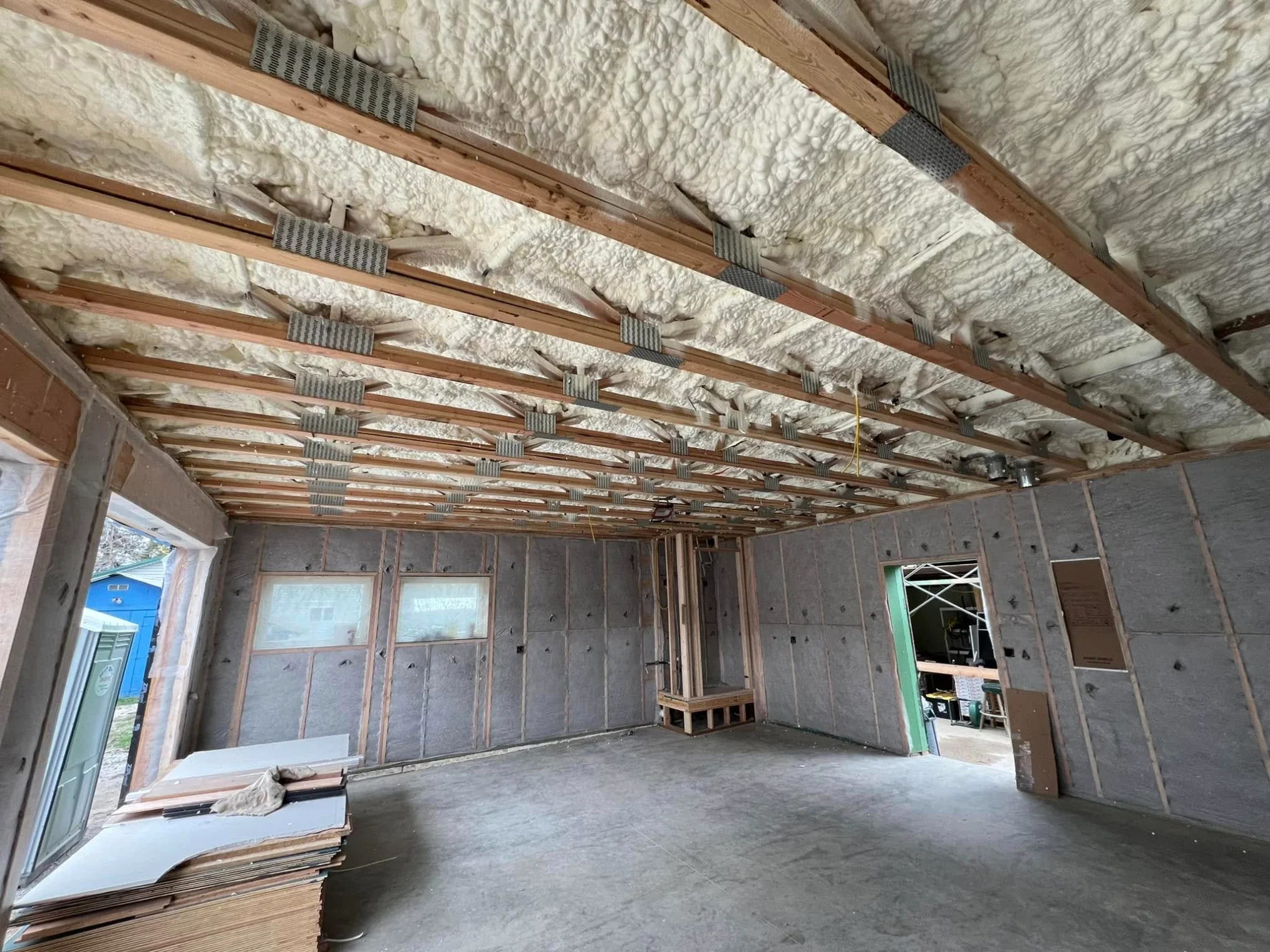
Open-cell spray foam insulation addresses the most persistent challenges in residential and commercial building performance by creating an effective air seal while offering superior sound dampening and cost efficiency. Unlike traditional insulation materials that can shift, settle, or leave gaps, Open-cell spray foam expands up to 100 times its liquid volume to fill cavities completely, sealing cracks and crevices that account for significant energy loss. This expansion capability, combined with its air barrier properties, allows Open-cell foam to solve problems that fiberglass batts and cellulose simply cannot address, making it a preferred choice for new construction and retrofit applications where comprehensive air sealing matters more than maximum R-value per inch.
Open-cell spray foam is a spray polyurethane foam (SPF) insulation product characterized by cells that are intentionally left open rather than closed. This Open-cell structure gives the foam its characteristic soft, flexible texture and lower density of approximately 0.5 pounds per cubic foot, compared to closed-cell foam at 2 pounds per cubic foot. The Open-cell s create pathways for vapor transmission while still providing an effective air barrier when installed at adequate thickness.
According to the Spray Polyurethane Foam Alliance, SPF products provide insulation and air sealing in a single application, addressing both thermal performance and air infiltration simultaneously. This dual functionality represents a significant advantage over traditional insulation materials that require separate air sealing measures to achieve comparable building envelope performance.
The expansion behavior of Open-cell foam allows it to fill irregular cavities, seal around electrical boxes, plumbing penetrations, and framing irregularities that create thermal bypasses in conventionally insulated assemblies. Building Science Corporation notes that spray foam applications result in low exterior air leakage that provides significant energy efficiency and sound attenuation benefits.
Air leakage represents one of the most significant sources of energy loss in buildings, accounting for up to 30% of heating and cooling costs in typical residential construction. The U.S. Department of Energy identifies air leakage through cracks, holes, and gaps in the building envelope as a primary contributor to energy waste, comfort problems, and moisture issues. Traditional insulation materials like fiberglass batts do not stop air movement, allowing conditioned air to escape and unconditioned air to infiltrate.
Common air leakage points include:
Fiberglass and cellulose insulation settle and compress over time, creating voids that reduce thermal performance and allow air movement. This settling occurs due to vibration, moisture exposure, and the natural breakdown of binding agents that hold the material in place. In wall cavities, settled insulation leaves uninsulated gaps at the top of walls, while in attics, compression from storage or foot traffic reduces the effective R-value below the installed specification.
Moisture problems in insulation assemblies stem from temperature differentials that cause condensation within wall and ceiling cavities. According to the Department of Energy’s moisture control guidelines, uncontrolled moisture leads to mold growth, structural damage, and reduced insulation effectiveness. Traditional insulation materials can absorb and retain moisture, further degrading thermal performance and creating conditions for biological growth.
Multi-family housing, home offices, and bedrooms adjacent to living spaces require sound control that standard insulation cannot provide effectively. Hollow wall cavities with minimal insulation allow sound waves to travel freely between rooms, creating privacy concerns and reducing occupant satisfaction. Mass-loaded materials and specialized acoustic products address sound transmission but add complexity and cost to construction projects.
Open-cell spray foam solves air infiltration by expanding to fill all voids, gaps, and irregularities in building cavities. The liquid foam components mix at the spray gun and react to create expanding foam that flows into cracks around framing members, electrical boxes, and penetrations before curing to a flexible solid. This expansion behavior creates a continuous air barrier that eliminates the thermal bypasses responsible for significant energy loss.
The Department of Energy’s Building America program reports that spray polyurethane foams provide air sealing advantages in complex assemblies where traditional insulation and separate air sealing measures prove difficult to install effectively. This air sealing capability addresses the primary cause of energy loss in building envelopes.
Once cured, Open-cell spray foam maintains its shape and position indefinitely. The foam adheres to framing members and sheathing materials, creating a monolithic insulation layer that does not settle, shift, or compress over time. This stability ensures consistent thermal performance throughout the building’s service life, eliminating the performance degradation that affects loose-fill and batt insulation products.
Open-cell foam’s vapor permeability allows moisture to diffuse through the insulation layer rather than becoming trapped within wall assemblies. In climate zones where inward or outward vapor drive occurs, this permeability reduces condensation risks by allowing drying potential in both directions. The foam itself does not absorb liquid water, maintaining its thermal properties even in high-humidity environments.
This moisture management capability requires proper design consideration. Fine Homebuilding’s technical analysis notes that open-cell foam allows vapor transmission while still providing air sealing, making it appropriate for specific climate zone applications where controlled vapor diffusion supports building durability.
The Open-cell structure absorbs sound waves more effectively than rigid or fibrous insulation materials. Sound energy dissipates within the foam’s porous structure, reducing transmission between rooms and from exterior sources. This acoustic performance makes Open-cell foam particularly valuable for:
| Insulation Type | R-Value per Inch | Air Barrier | Vapor Permeability | Sound Control | Relative Cost |
|---|---|---|---|---|---|
| Open-cell Spray Foam | ~3.7 | Yes | Permeable | Excellent | Moderate |
| Closed Cell Spray Foam | ~6.5 | Yes | Vapor Barrier | Good | High |
| Fiberglass Batts | ~3.0-3.8 | No | Permeable | Moderate | Low |
| Cellulose (dense-pack) | ~3.5-3.8 | Partial | Permeable | Good | Low-Moderate |
| Mineral Wool Batts | ~3.0-3.3 | No | Permeable | Good | Moderate |
Bar Chart Suggestion: R-value comparison across insulation types commonly used in residential construction, showing Open-cell spray foam at 3.7 per inch versus alternatives.
Open-cell spray foam offers a balance of performance characteristics that suit specific applications. While its R-value per inch falls below that of closed-cell foam, the air sealing capability and sound-dampening properties provide benefits that extend beyond simple thermal resistance measurements.
| Scenario | Building Type | Problem | Solution | Outcome |
|---|---|---|---|---|
| Drafty older home | 1970s ranch | Air leakage through wall cavities, high utility bills, and comfort complaints | Open-cell foam in exterior walls during renovation | 28% reduction in heating costs, eliminated cold spots near outlets |
| Multi-family unit | Apartment building | Sound transmission between units, tenant complaints | Open-cell foam in demising walls during construction | Sound transmission class improved from STC 35 to STC 48, with zero complaints |
| Cathedral ceiling | Custom home | Limited space for insulation, air leakage at framing connections | Open-cell foam applied directly to the roof deck | Full cavity fill at 8 inches, no ventilation required, consistent comfort |
| Basement renovation | Finished basement | Moisture concerns, cold floors above | Open-cell foam in rim joist and above-grade walls | Warmer floor surfaces, no condensation issues after 3 years |
| Commercial office | Office building | Noise between conference rooms, high HVAC costs | Open-cell foam in interior partitions and exterior walls | Improved meeting privacy, 22% HVAC energy reduction |
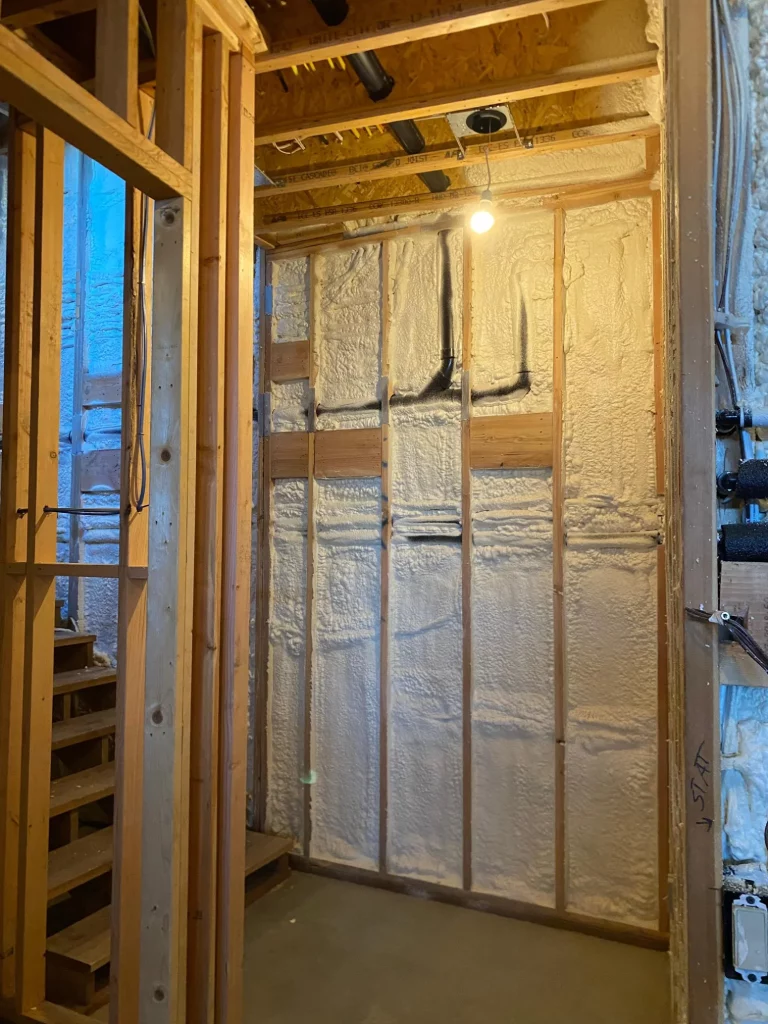
Professional installation determines Open-cell foam performance more than any other factor. Improper mixing, incorrect temperature, or inadequate thickness create weak spots that compromise the air seal and reduce thermal resistance. Experienced installers maintain proper substrate temperatures, apply consistent lift thicknesses, and verify complete coverage to ensure specified performance.
Open-cell foam suits specific climate zone applications where vapor permeability supports drying potential. In cold climates, Open-cell foam in exterior walls may require interior vapor retarders to prevent moisture accumulation within the assembly. In mixed-humid and hot-humid climates, the permeability allows inward drying that improves assembly durability.
The interaction between Open-cell spray foam and other building components affects overall performance. Air barriers at transitions, vapor retarder placement, and thermal bridging at framing members all influence the effectiveness of spray foam installations. Comprehensive building science analysis ensures that Open-cell spray foam integrates correctly with the overall building envelope design.
Achieving specified R-values requires adequate foam thickness throughout the assembly. Undersized cavities, complex framing, and access limitations can create thin spots that reduce overall thermal resistance. Installation specifications should account for framing factors and require minimum thickness verification throughout the application area.
Conduct thorough air sealing assessments before spray foam application to identify areas requiring special attention. Use blower door testing and infrared thermography to locate existing air leakage paths. Document pre-existing conditions to demonstrate improvement after insulation installation.
Ensure all substrates are clean, dry, and free of contaminants that could impair foam adhesion. Remove loose materials, address moisture issues, and verify that framing connections are secure. Temperature and humidity conditions must fall within manufacturer specifications for proper foam reaction and curing.
Plan spray foam installation timing to avoid conflicts with other trades. Electrical rough-in must be complete, and all penetrations should be in their final positions before foam application. Coordinate with HVAC contractors to ensure ductwork and mechanical systems accommodate planned insulation thicknesses.
Implement quality control measures, including thickness verification, density testing, and visual inspection for voids or gaps. Use infrared cameras to identify areas of incomplete coverage or thermal bridging. Document installation conditions and verification results for building owners and code compliance.
Open-cell spray foam typically costs less per board foot than closed-cell alternatives, making it attractive for projects requiring large coverage areas. While material costs exceed fiberglass and cellulose, the integrated air sealing function eliminates separate air barrier installation costs. Energy savings over the building’s life cycle offset initial cost premiums, particularly in climate zones where heating and cooling loads are significant.
Energy savings of 20-30% compared to conventional insulation are typical for comprehensive spray foam applications addressing air leakage and thermal bridging simultaneously. These savings compound over time, providing increasing value as energy costs rise.
Selkirk Energy Solutions specializes in spray foam insulation solutions that address real-world building performance challenges. Our team understands the building science principles that determine insulation success, and we apply that knowledge to every project, whether it is a new construction build, renovation, or retrofit application. We provide comprehensive assessments, professional installation, and verification testing to ensure your insulation investment delivers lasting performance.
Contact us at [email protected] or call (208) 295-9780 to discuss your insulation project and discover how Open-cell spray foam can solve your building’s air leakage, comfort, and energy efficiency challenges.
Open-cell spray foam has cells that remain open after curing, creating a soft, flexible material with a lower density and R-value of approximately 3.7 per inch. Closed-cell foam has sealed cells that create a rigid, dense material with an R-value of around 6.5 per inch and vapor barrier properties. Open-cell foam allows vapor transmission, while closed-cell foam blocks moisture movement.
Open-cell foam is vapor-permeable, so climate zone and assembly design determine vapor retarder requirements. Cold climates typically require interior vapor retarders when Open-cell foam is used in exterior walls. Hot-humid climates may benefit from the permeability for inward drying. Consult local building codes and building science professionals for specific requirements.
Yes, Open-cell spray foam applied directly to the underside of roof decking creates an unvented attic assembly that brings the attic space within the conditioned building envelope. This application requires adequate foam thickness to prevent condensation on the roof deck and proper attention to air sealing at transitions.
Open-cell spray foam typically costs 2-3 times more per square foot than fiberglass batt insulation. EPA . However, the integrated air sealing function eliminates separate air barrier costs, and energy savings over time offset the initial cost premium. The total project cost comparison should account for the air-sealing measures fiberglass requires.
Properly installed Open-cell spray foam is safe for indoor air quality once fully cured. The curing process releases volatile organic compounds that require ventilation during and immediately after installation. Professional installers follow manufacturer guidelines for re-occupancy timing and ventilation requirements. Once cured, the foam is inert and does not off-gas.