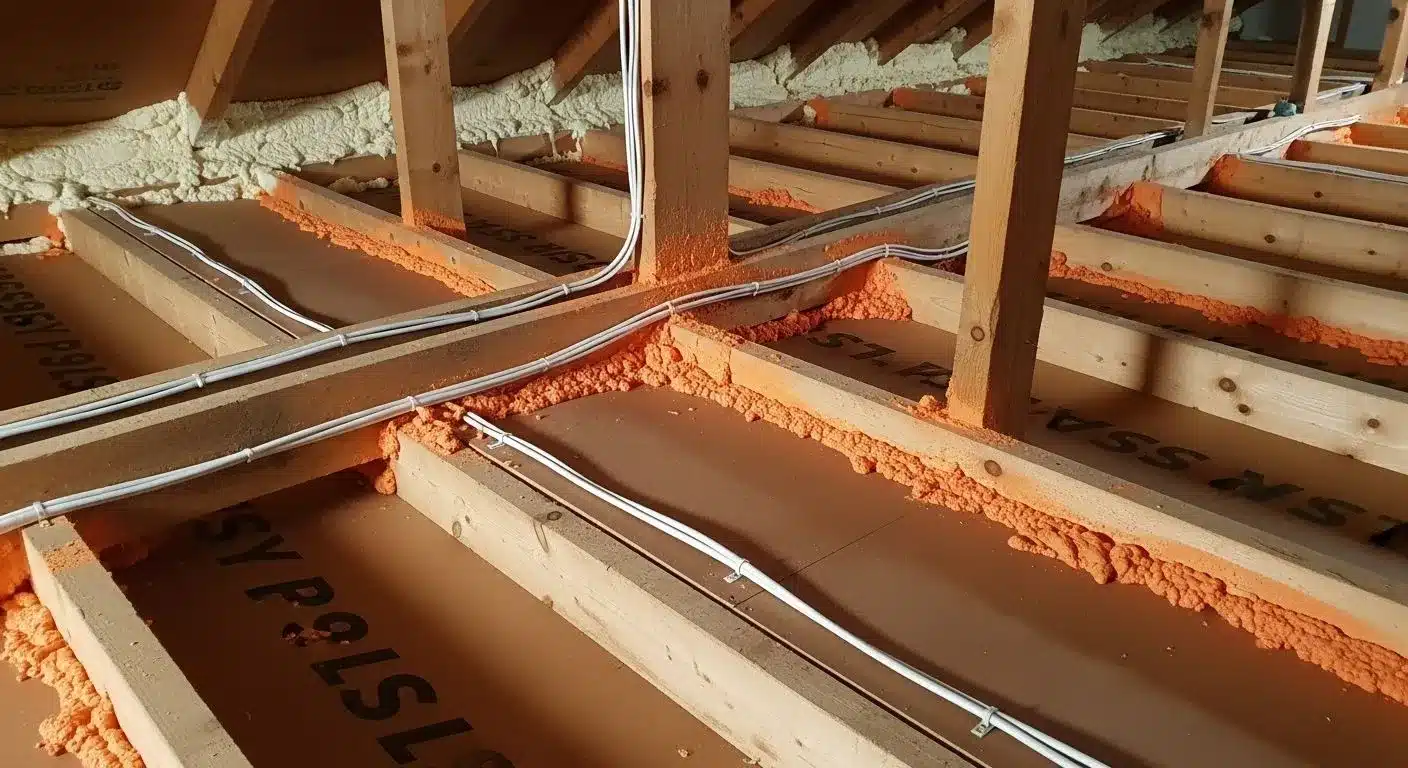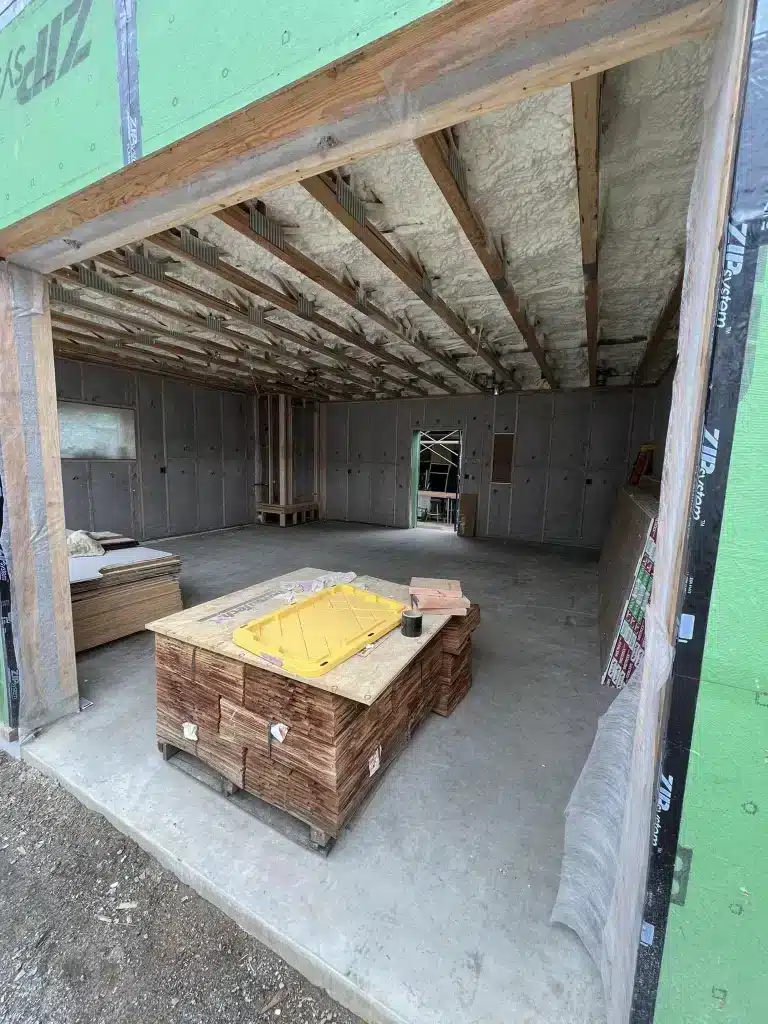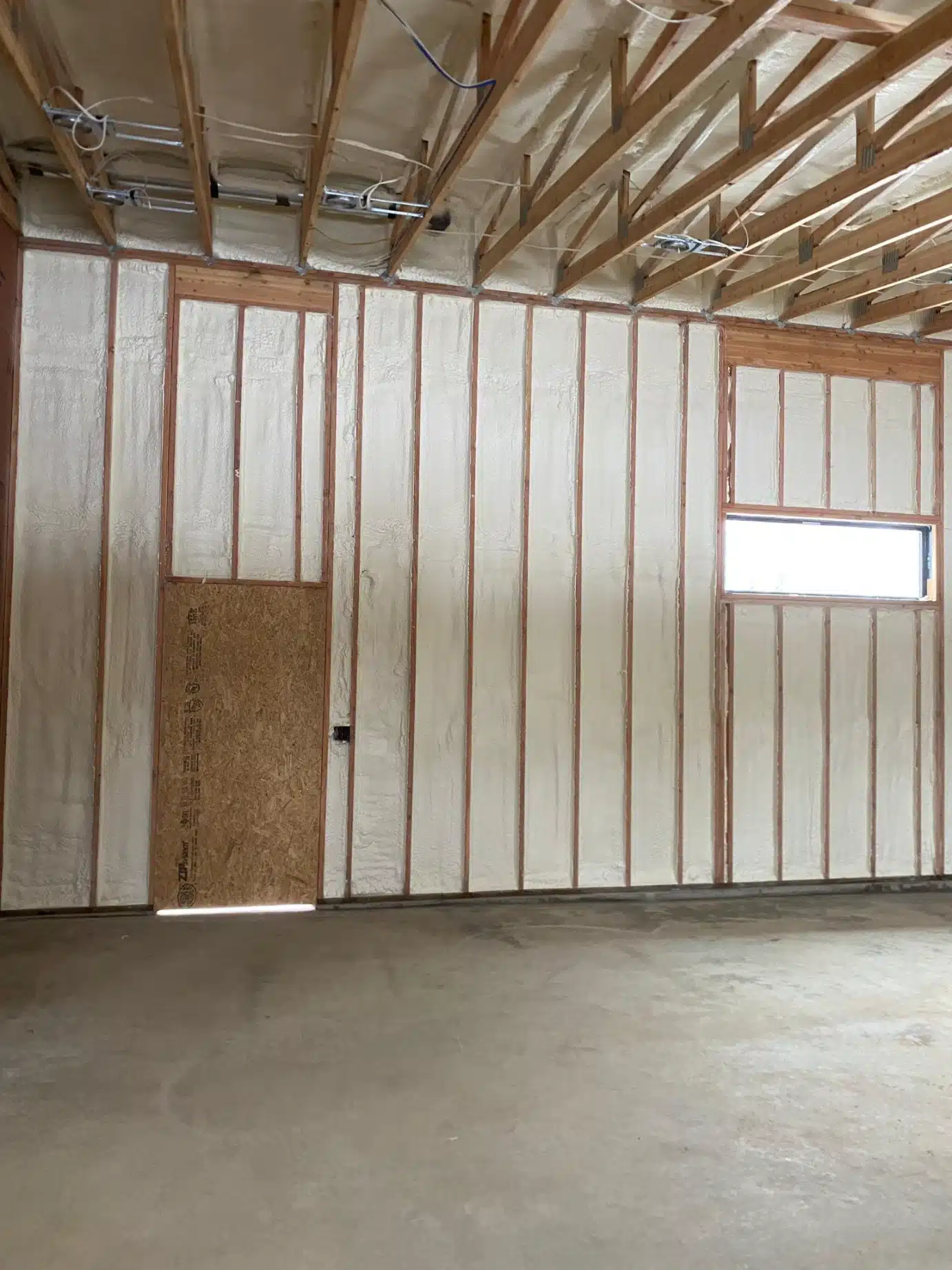
How Can Spray Foam Insulation Help Reduce Persistent Drafts in Garwood, ID Homes?
Spray foam insulation reduces persistent drafts because it works as an insulation and an air barrier in a single application.…


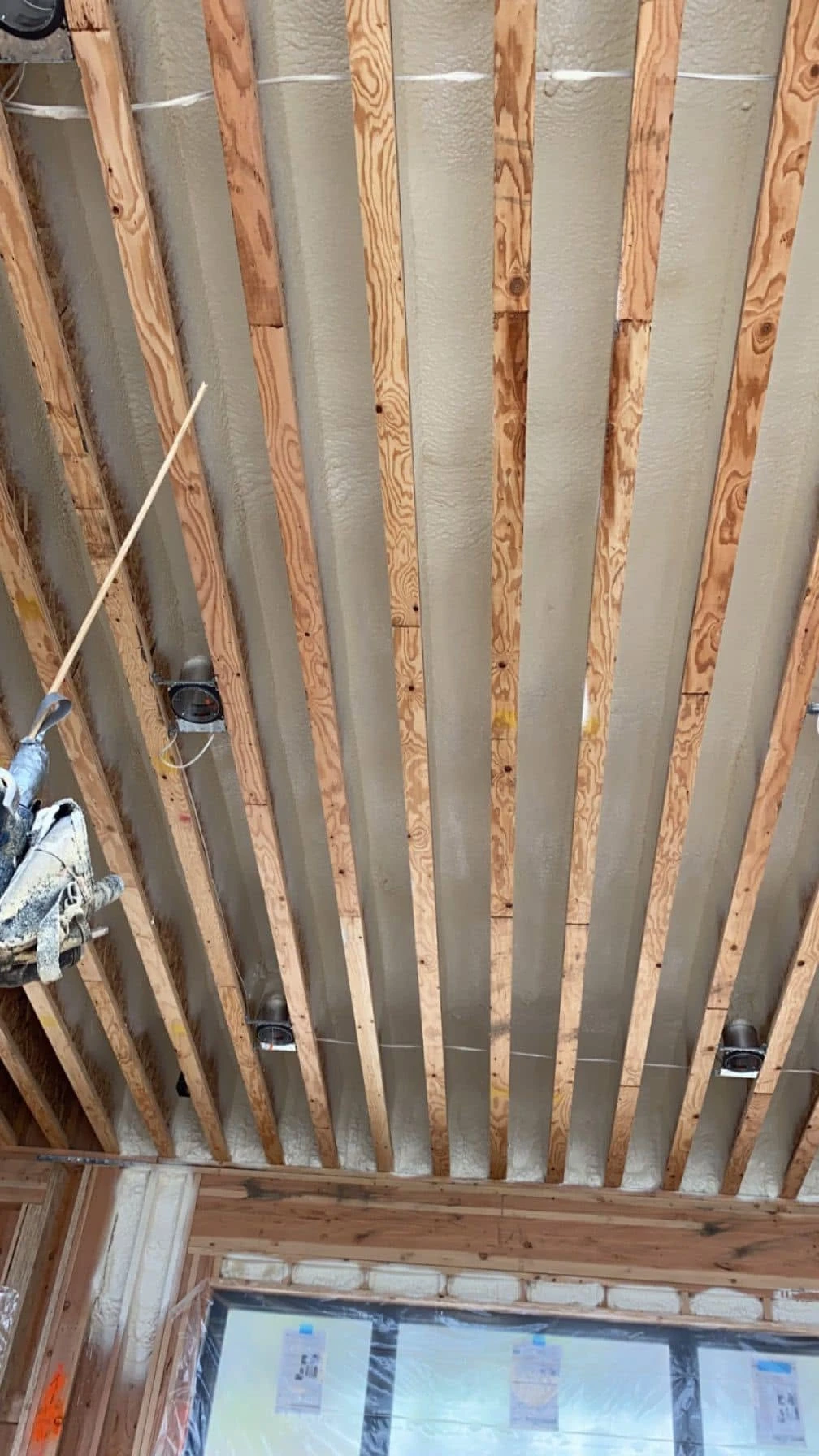
Builders in Evergreen, Montana, are increasingly specifying closed-cell spray foam insulation during the framing phase of new homes, and the reasoning goes well beyond basic code compliance. Closed-cell spray foam delivers a combination of thermal resistance, air sealing, and moisture control that few other insulation materials can match in a single application. In a region where heating dominates energy costs and moisture management is a year-round concern, builders who choose closed-cell spray foam are solving multiple building envelope problems at once rather than layering separate products to meet each requirement.
Montana falls primarily within climate zones 6 and 7, where heating loads are substantial, and insulation requirements are among the most demanding in the country. The Montana Department of Environmental Quality (DEQ) oversees a statewide energy code based on the 2021 International Energy Conservation Code (IECC) with amendments specific to the region. For new construction, the code requires minimum insulation levels of R-49 to R-60 in ceilings, R-21 in above-grade walls, R-19 in crawlspace and basement walls, and a blower door test target of 4 air changes per hour at 50 Pascals pressure.
These requirements mean that builders working in Evergreen cannot afford insulation choices that leave gaps, compress over time, or fail to control air movement. Closed-cell spray foam addresses all three concerns. Its dense, rigid cell structure delivers roughly R-6.5 per inch according to DOE’s Guide to Home Insulation, which means a 3-inch application in a standard 2×6 wall cavity achieves approximately R-19.5 before accounting for the thermal resistance of the framing and sheathing itself.
Builders in Evergreen typically weigh closed-cell spray foam against open-cell spray foam, fiberglass batts, and blown-in options. Each has tradeoffs depending on the application zone and project priorities.
| Insulation Type | R-Value Per Inch | Air Barrier | Vapor Control | Structural Benefit | Best Application |
|---|---|---|---|---|---|
| Closed Cell Spray Foam | R-6.0 to R-7.0 | Yes | Class II at 2″+ | Yes, bonds framing | Walls, crawlspaces, rim joists |
| Open Cell Spray Foam | R-3.5 to R-4.0 | Yes | Vapor permeable | No | Interior walls, sound control |
| Fiberglass Batts | R-3.1 to R-3.8 | No | No | No | Standard wall cavities (code min) |
| Blown Cellulose | R-3.2 to R-3.8 | Partial | No | No | Attic floors, retrofits |
| Rigid Foam Board | R-3.8 to R-6.5 | Depends on sealing | Varies | No | Continuous exterior insulation |
The table shows why closed-cell spray foam stands apart for new construction in cold climates. No other single product on this list combines high R-value per inch, air barrier performance, vapor control, and structural reinforcement in one application. Builders who choose closed-cell spray foam reduce the number of subcontractor visits, simplify their wall assembly, and eliminate the need to coordinate separate air sealing, vapor barrier, and insulation trades.
Moisture management is one of the most serious challenges in Montana construction. Ground moisture migrating through basement walls, condensation in wall cavities, and humidity from daily occupancy can all cause mold, rot, and structural damage if the envelope is not designed to handle them.
Building science research published by Building Science Corporation concluded that closed-cell spray foam applied at 2 inches or greater will control vapor diffusion to safe levels in all climates up to 10,000 heating degree days and interior winter humidity levels above 50% RH. That coverage encompasses virtually every location in Montana. The report also confirmed that for either type of spray foam, the wood framing provides sufficient inherent vapor resistance to maintain safe moisture levels even in extreme cold climates.
This matters because in conventional wall assemblies using fiberglass batts, builders must install a separate polyethylene vapor retarder on the warm side of the insulation. That extra layer adds labor, introduces another point of failure if seams are not sealed properly, and can trap moisture in the cavity if installed incorrectly. Closed-cell spray foam eliminates that step entirely.
The DOE Building America Solution Center also notes that spray foam insulation with a perm rating above 0.1 is an acceptable approach for below-grade foundation walls, and that increasing foam thickness decreases permeability. This makes closed-cell spray foam an especially effective choice for crawlspace and basement walls in Evergreen homes where ground moisture is a constant concern.
One advantage of closed-cell spray foam that surprises many builders is its contribution to wall rigidity. When sprayed into stud cavities, the foam adheres to both the exterior sheathing and the interior face of the studs, bonding the entire wall assembly together. This adhesive bond increases the wall’s resistance to racking forces, which are the lateral loads exerted by wind that can distort a rectangular wall into a parallelogram shape.
According to research referenced by SprayFoam.com’s Education Center, testing conducted by the National Association of Home Builders (NAHB) Research Center demonstrated that walls insulated with closed-cell spray foam exhibited racking strength up to 300% greater than walls without it. Two separate NAHB studies compared SPF-insulated wall assemblies against conventional assemblies using fiberglass batts, and both showed the foam-filled walls deformed less under load and sustained higher force before failure.
For builders in Evergreen, where winter wind loads and snow loads are a factor, this added structural performance is a meaningful benefit. The foam does not replace structural connections or proper framing, but it does add a measurable layer of defense against wind-induced wall movement and the associated wear on siding, windows, and drywall.
Pricing for closed-cell spray foam installation in the Evergreen, Montana area (serving the 83864 zip code) depends on several project-specific factors. Our pricing reflects the realities of serving a rural Montana market where travel distance, access conditions, and moisture or mold concerns can influence the final number.
| Factor | Impact on Pricing |
|---|---|
| Difficult site access | Increases cost |
| Moisture or mold remediation needs | Increases cost |
| Crawlspace height restrictions | Increases cost |
| Clean job sites with easy access | Lowers cost |
| Material price fluctuations | Can affect pricing |
| Travel distance to the jobsite | Increases cost for remote locations |
Typical closed-cell spray foam pricing in our service area ranges from $1.90 per square foot on the low end to $2.80 per square foot on the high end, with an average of $2.45 per square foot. These figures account for both material and professional installation. For context, open-cell spray foam in the same market runs significantly lower, from $0.45 to $0.75 per square foot, but delivers roughly half the R-value per inch and none of the vapor control or structural benefits.
Our project mix in the Evergreen area is weighted toward new construction, and the most common application zones for closed-cell spray foam align with where building science says it delivers the most value:
Not every insulation contractor or material choice produces the same results. When evaluating whether closed-cell spray foam is the right call for your next Evergreen build, look for these indicators:
| Project Type | Recommended Approach | Reasoning |
|---|---|---|
| Custom new build 1,500 to 2,500 sq ft | Closed cell in walls and crawlspaces, open cell in non-conditioned attic floors | Balances performance and budget |
| Custom new build 2,500 to 4,000 sq ft | Full closed-cell package across all envelope zones | Maximizes energy savings and structural benefit |
| Retrofit crawlspace encapsulation | Closed-cell spray foam on crawlspace walls and rim joist | Vapor control and moisture resistance are critical in existing crawlspaces |
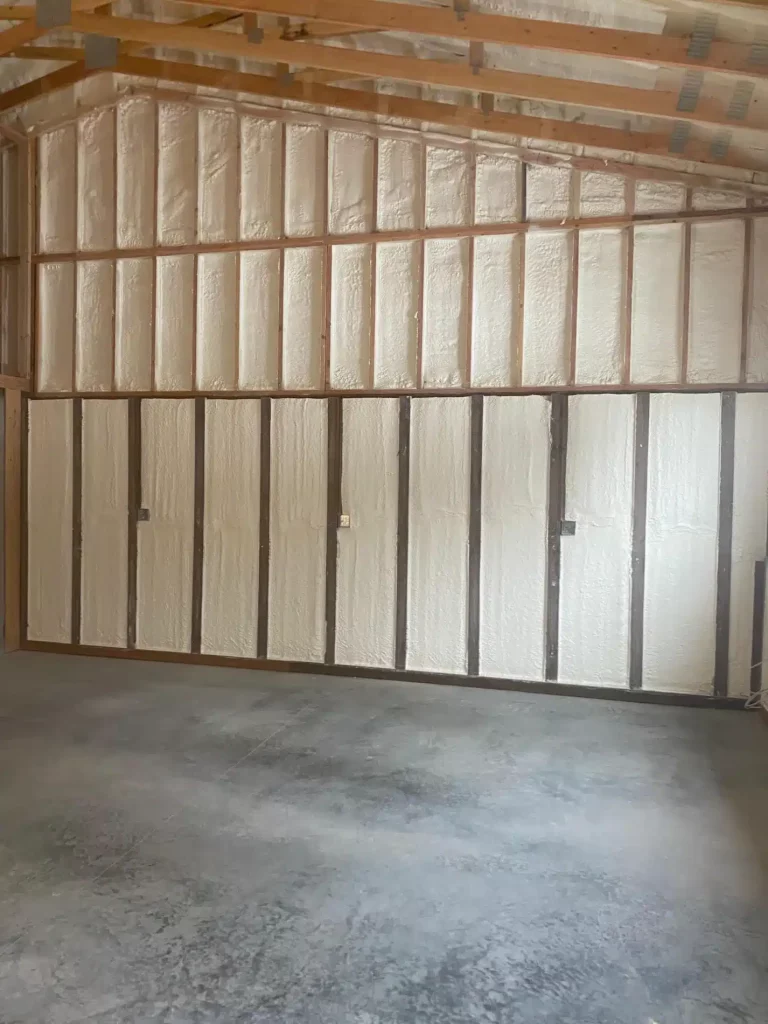
| Pole barn or shop | Closed cell on walls and roof deck | High air leakage rates in metal buildings demand the air sealing that closed-cell provides |
Selkirk Energy Solutions serves builders throughout Evergreen, Montana, and the surrounding 83864 area with professional closed-cell spray foam installation for new construction projects. Our team evaluates every job site in person, accounts for access conditions and local code requirements, and provides detailed proposals so there are no surprises at installation. Whether you are framing a custom home or sealing a crawlspace, we bring the expertise to get the building envelope right the first time.
Request a quote at [email protected] or call us at (208) 295-9780 to discuss insulation specifications for your next project.
Request a Quote | Schedule a Project Consultation
Closed-cell spray foam seals gaps and penetrations as it expands into cavities, significantly reducing air leakage. This directly helps builders meet Montana’s 4 ACH50 blower door target set under the 2021 IECC.
When applied at 2 inches or greater, closed-cell spray foam functions as a Class II vapor retarder, eliminating the need for a separate polyethylene vapor barrier in most wall and crawlspace applications.
Builders choose closed cell for the combined benefits of higher R-value per inch, built-in air sealing, vapor control, and added wall rigidity. These factors reduce callbacks related to moisture, comfort complaints, and energy performance.
Exterior walls, crawlspace and basement walls, rim joists, and band joists see the greatest benefit because these zones demand high R-value, air sealing, and moisture resistance simultaneously.
We recommend scheduling during the framing phase so our team can coordinate with your trades. Contact us early so we can walk through the project and align our timeline with your build schedule.