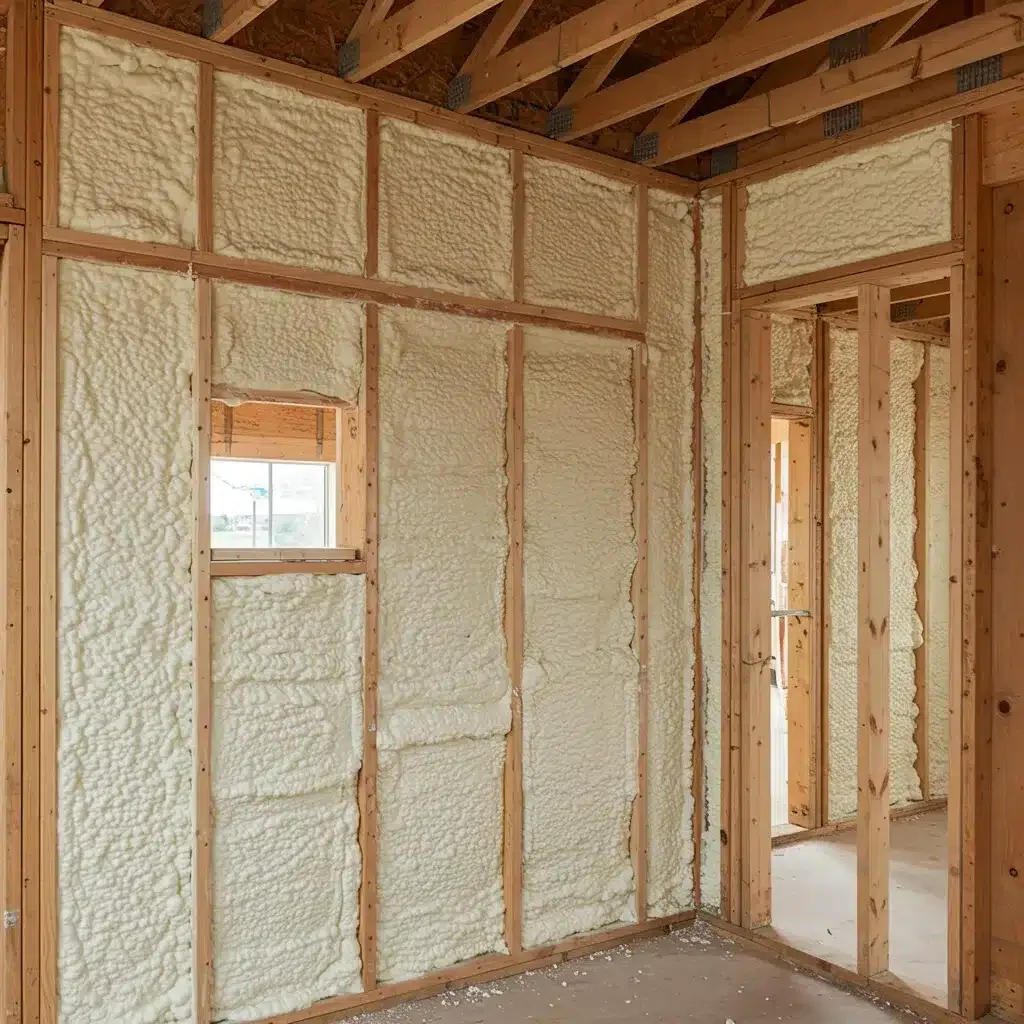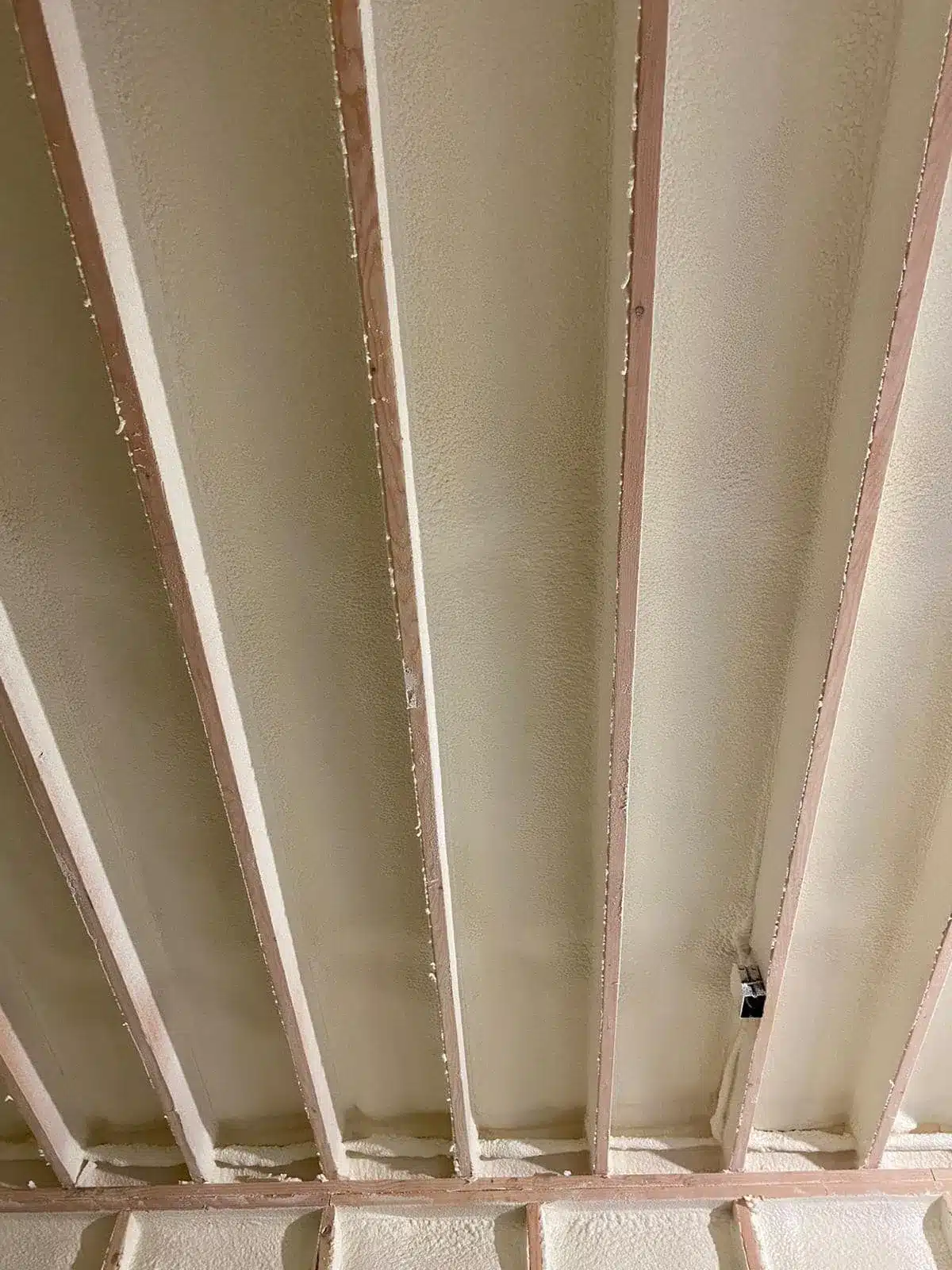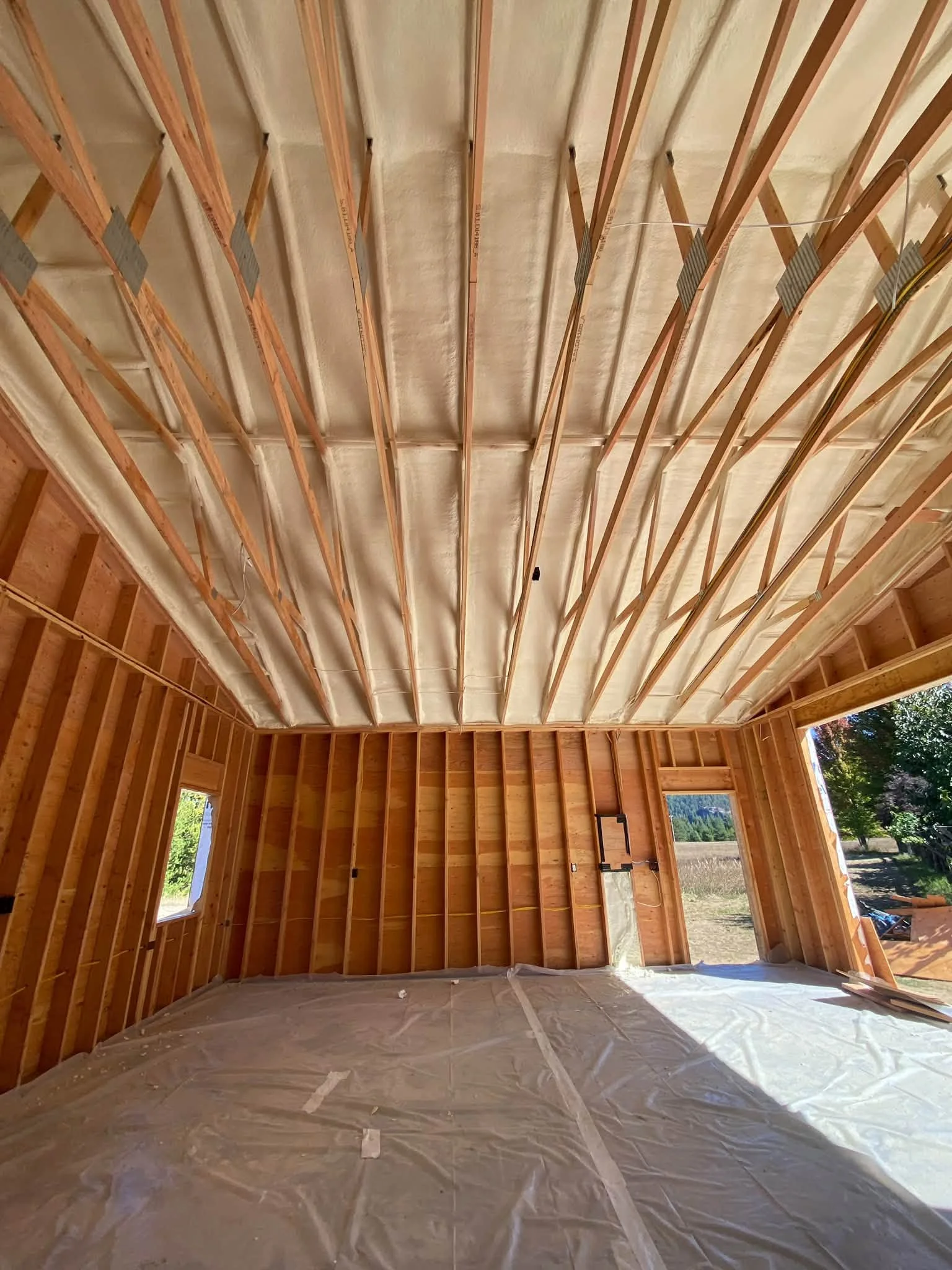
How Does Roof Design Influence Spray Foam Insulation Requirements in Dover, ID?
Your roof design is the primary factor that dictates how spray foam insulation should be installed. Because Dover, Idaho, experiences…


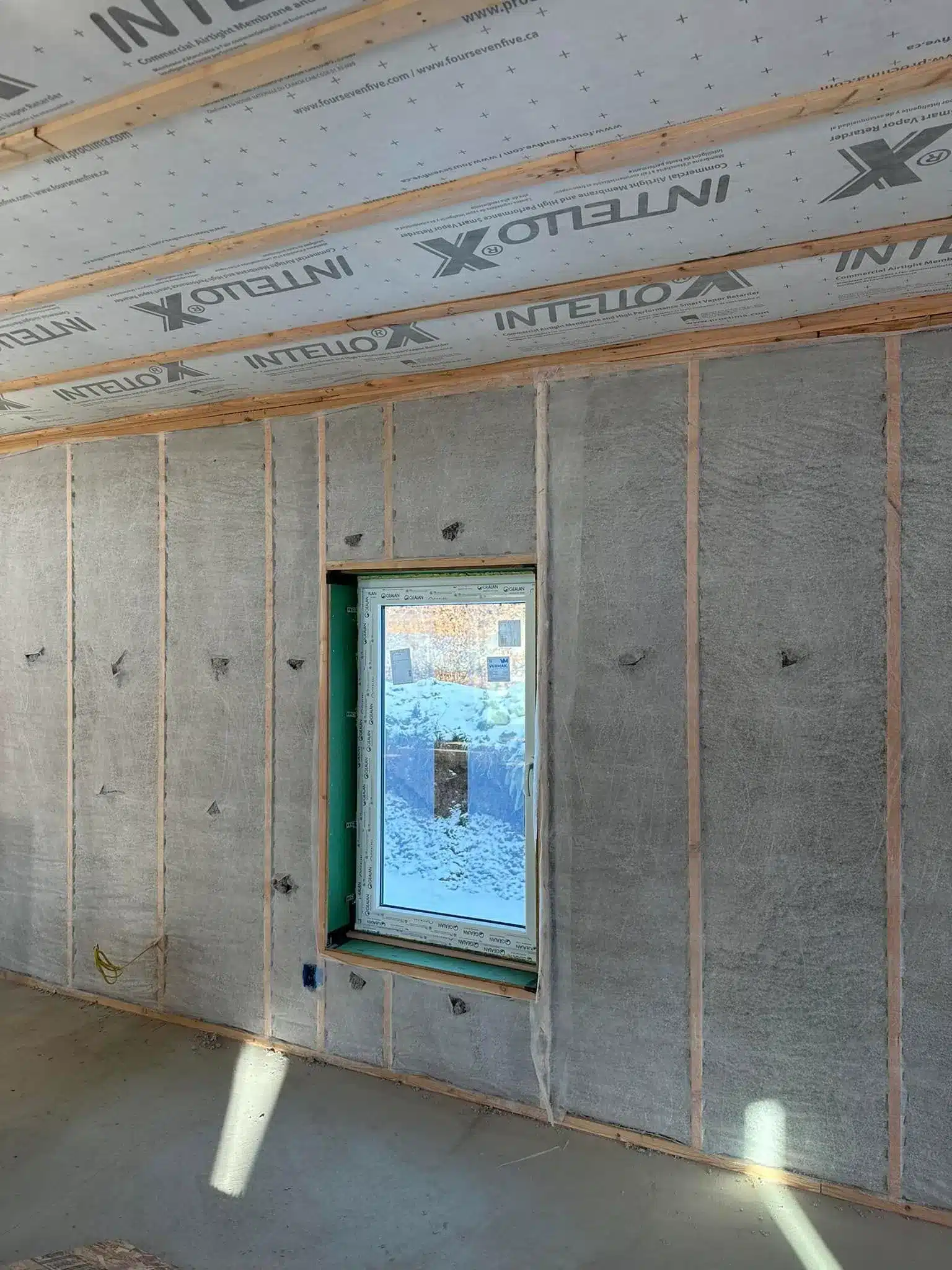
Dense pack cellulose insulation delivers year-round temperature stability by filling wall and ceiling cavities at a high density that blocks air movement and resists heat transfer in both directions. Unlike loose-fill fiberglass that can leave gaps around pipes, wiring, and framing, dense pack cellulose is blown into cavities under pressure, forcing the material into every crack and void. This creates a continuous thermal barrier that keeps heated air inside during winter and blocks outdoor heat from penetrating in summer. According to ENERGY STAR, sealing air leaks and adding insulation is often the most cost-effective way to improve both energy efficiency and indoor comfort. The right insulation approach depends on your climate zone, the construction type of your home, and whether you are building new or retrofitting an existing structure, but dense pack cellulose stands out as one of the strongest performers for thermal consistency across all seasons.
Cellulose insulation is made primarily from recycled newspaper and cardboard fiber, treated with borate-based fire retardants. As noted in the Wikipedia article on cellulose insulation, modern cellulose insulation has been in general use in the United States since the 1970s and is produced by grinding waste paper and adding fire retardant chemicals.
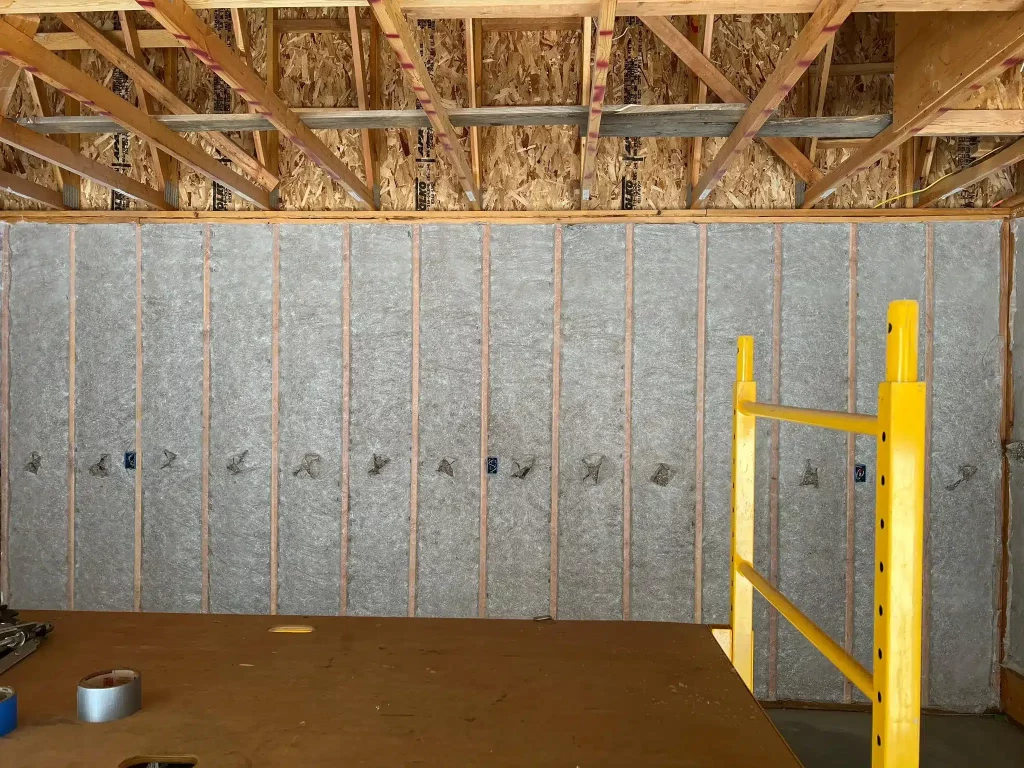
Dense pack installation takes this material a step further. Instead of simply pouring or loosely blowing cellulose into a cavity, our technicians use specialized blowing equipment to force the insulation into wall cavities at high pressure, typically reaching a density of 3.5 pounds per cubic foot or higher. This pressure-packed installation eliminates settling, which is a common problem with standard loose-fill applications where material can compact over time and leave uninsulated gaps at the top of wall cavities.
The home performance industry and its accrediting bodies support the dense-pack standard for insulating wall cavities because this method stops the stack effect and convective loops within walls, which are mechanisms that move air through cavities and carry heat out of the building during colder months.
Temperature stability inside a home depends on how effectively the building envelope resists heat transfer in both directions. In winter, warm indoor air wants to escape through any available path. In summer, outdoor heat pushes inward. Dense pack cellulose addresses both challenges through several mechanisms working together.
The primary way insulation fails to maintain stable temperatures is through air movement. Standard fiberglass batts, even when properly installed, allow air to circulate within the cavity, creating convective loops that carry heat from the warm side to the cold side. Dense pack cellulose, with its higher density and fiber structure, physically blocks this air movement. The Cellulose Insulation Manufacturers Association explains that high-density insulation inhibits the movement of air from warm to cold in winter and cold to warm in summer, with the higher the density of the material, the better it performs at restricting that air movement.
Cellulose is very good at conforming to irregular shapes inside wall cavities. It wraps around pipes, electrical boxes, and wiring, filling small cracks and voids that fiberglass batts cannot reach. According to the University of Colorado School of Architecture and Planning study referenced on Wikipedia, cellulose insulation lost 26.4% less heat energy over time compared to fiberglass in identical test structures, and tightened the building envelope more than 30%.
The density of packed cellulose also provides a degree of thermal mass, meaning the material absorbs and slowly releases heat rather than allowing sharp temperature swings. This moderating effect helps indoor temperatures remain more even throughout the day, reducing the workload on heating and cooling systems and improving overall comfort.
The borate treatment in cellulose insulation also helps manage moisture. The hygroscopic nature of the material allows it to absorb and redistribute moisture from areas of higher to lower concentration, preventing damaging moisture buildup within wall assemblies. As CIMA notes, this is a key distinction between cellulose and other insulation types and provides a direct benefit for temperature stability since excess moisture in walls can significantly reduce thermal performance.
Understanding how dense pack cellulose compares helps homeowners and builders make informed decisions. Each material has trade-offs in thermal performance, cost, installation complexity, and secondary benefits.
| Insulation Material | R-Value Per Inch | Air Sealing Ability | Sound Control | Best Application | Key Consideration |
|---|---|---|---|---|---|
| Dense Pack Cellulose | ~3.7 | Excellent | Excellent | Wall cavities, retrofits | Requires professional installation |
| Loose Fill Cellulose | ~3.6 | Good | Very Good | Attics, floors | Can settle over time |
| Fiberglass Batts | ~3.2 | Moderate | Good | Standard wall studs | Can leave gaps around obstacles |
| Fiberglass Loose Fill | ~2.5–3.0 | Moderate | Moderate | Attics | Lower density, more air movement |
| Open Cell Spray Foam | ~3.6–3.8 | Very Good | Good | Walls, attics, crawlspaces | Requires specific equipment |
| Closed Cell Spray Foam | ~5.5–6.5 | Excellent | Good | Walls, crawlspaces, basements | Highest cost per R-value |
Dense pack cellulose occupies a strong middle ground, offering air sealing performance that approaches spray foam at a lower material cost, while also delivering superior sound control and environmental benefits that foam products cannot match. The Cellulose Insulation Manufacturers Association states that both cellulose and closed-cell foam insulation have much higher density than fiberglass, making both more efficient at inhibiting air movement within building cavities.
Not every project is the same, and the benefits of dense pack cellulose vary depending on the building type, climate exposure, and project goals.
| Project Type | Why Dense Pack Works Well | Priority Level |
|---|---|---|
| Older homes with empty wall cavities | Fills voids left by degraded or missing original insulation without removing interior wall finishes | High |
| New construction with advanced framing | Completely fills cavities around dense plumbing and electrical runs where batts would leave gaps | High |
| Homes in cold climates | High-density fill stops the stack effect and convective loops that cause significant winter heat loss | High |
| Homes near busy roads or commercial areas | Sound damping properties reduce exterior noise transmission by 80% or more at NRC ratings above 0.80 | Medium |
| Crawlspaces and rim joists | Dense packing into rim joist areas blocks one of the most common sources of air infiltration in a home | Medium |
| Multi-story buildings | Fills floor-to-ceiling cavities that experience significant stack effect pressure differences | Medium |
In the 83864 area and throughout the broader northern Idaho region, cold winters and warm summers make dense pack cellulose an especially practical choice. The material performs well in both heating-dominant and mixed-climate conditions, which is exactly what our local weather patterns demand.
Choosing the right installer matters as much as choosing the right material. Dense pack cellulose requires specific equipment, training, and attention to detail to deliver its full thermal performance. Here are indicators of a qualified team:
Selkirk Energy Solutions brings years of insulation expertise to homeowners and builders throughout northern Idaho. Whether you are retrofitting an older home with empty wall cavities or insulating a new build, our team uses proven dense pack techniques to deliver the temperature stability, energy savings, and comfort that cellulose insulation is known for. We take on projects of all sizes, from single-room retrofits to full-home insulation upgrades, and we pair every insulation job with thorough air sealing to maximize performance.
Request a Free Quote | Schedule an Insulation Assessment
Reach us at [email protected] or call (208) 295-9780 to discuss your project. We will walk you through the right insulation strategy for your home and deliver results you can feel from day one.
Dense pack cellulose is blown into wall cavities under significantly higher pressure, reaching a density of around 3.5 pounds per cubic foot versus the lighter application used in attics. This higher density prevents settling, blocks convective air loops, and creates a tighter seal against air infiltration.
Yes. Our technicians drill small access holes through the exterior or interior wall surface, blow the cellulose into the cavity under pressure, and then patch and finish the holes. This retrofit approach is one of the most practical ways to upgrade insulation in older homes.
Dense pack cellulose resists heat transfer in both directions, blocking outdoor heat from entering during summer and keeping indoor warmth from escaping during winter. This dual-direction performance is what makes it effective for year-round temperature stability.
When properly installed at the correct density, cellulose insulation does not settle and will last the life of the building. The National Association of Home Builders has noted that cellulose insulation will last a lifetime as long as it is kept dry and away from direct UV exposure.
All cellulose insulation is treated with fire retardants, primarily borate compounds, and must meet federal safety standards. When properly installed, dense pack cellulose has demonstrated fire resistance that can outperform fiberglass in wall assemblies, and some manufacturers have qualified multi-hour firewall designs using cellulose insulation.