How Can Spray Foam Insulation Help Reduce Persistent Drafts in Garwood, ID Homes?
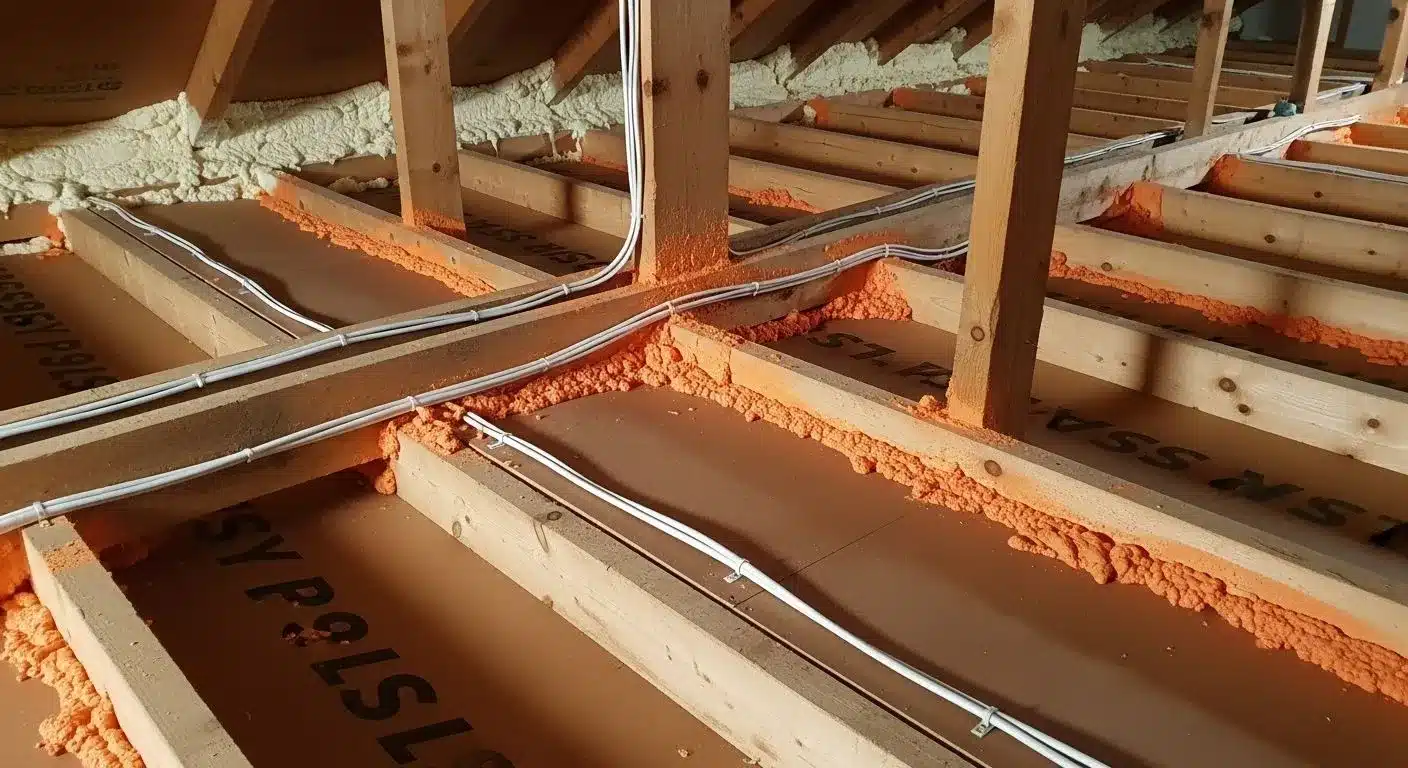
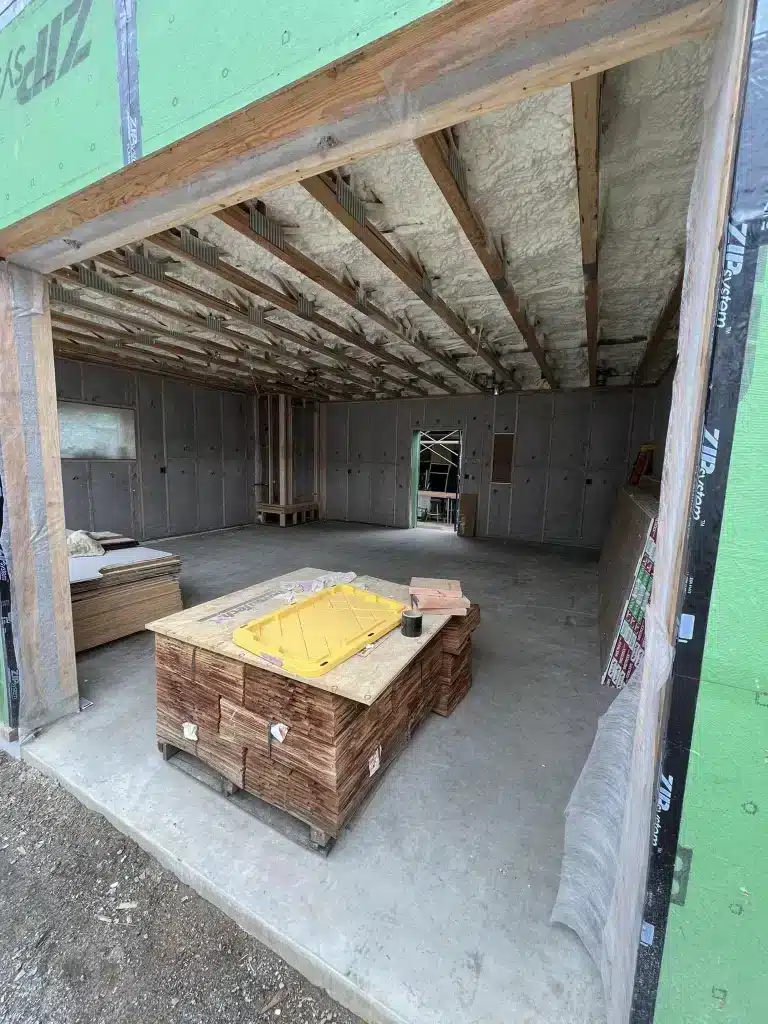
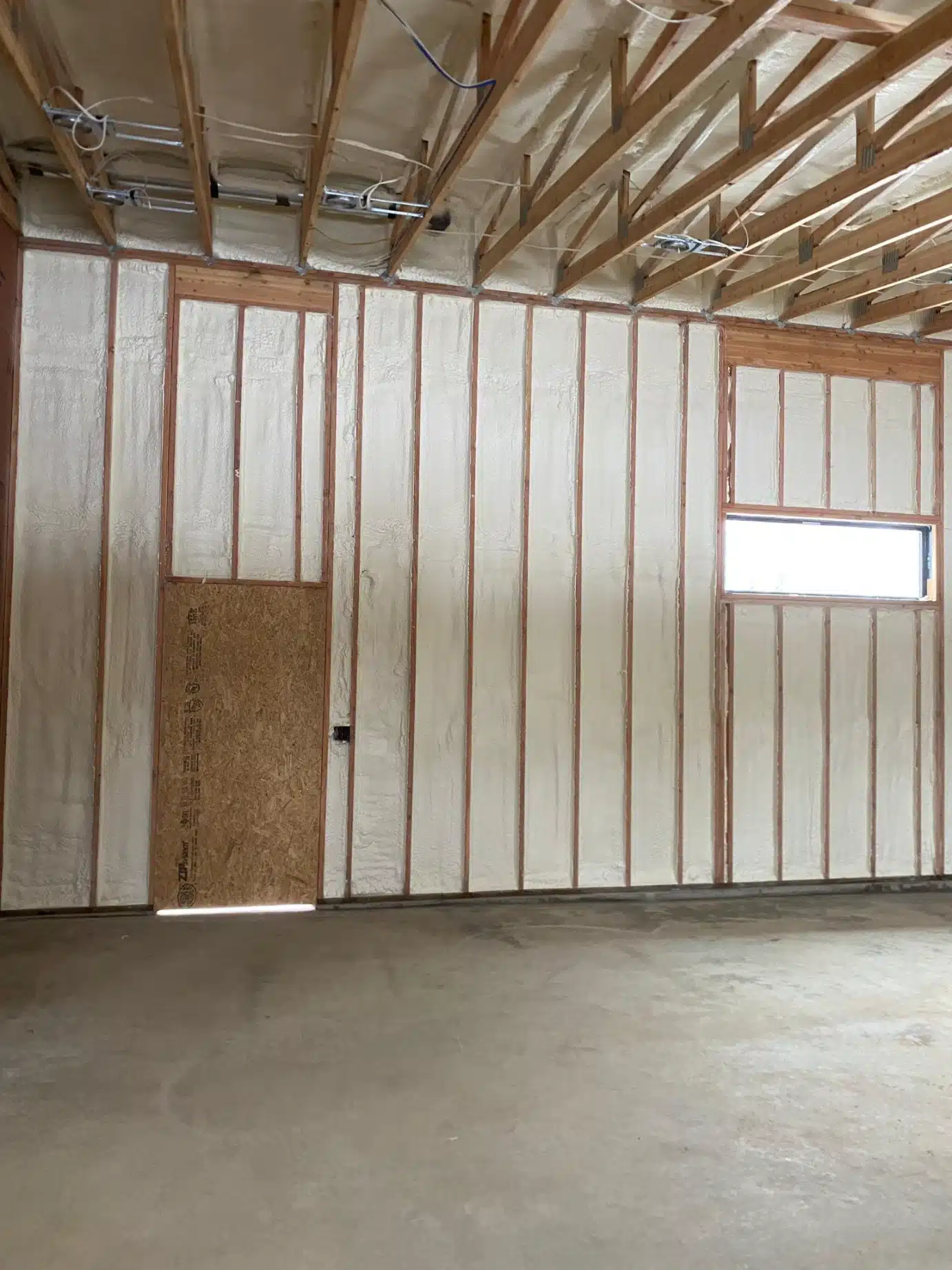
Spray foam insulation reduces persistent drafts because it works as an insulation and an air barrier in a single application.…


The most common air leaks in Dalton Gardens, ID homes are found in the attic, basement rim joists, recessed lighting, plumbing and electrical penetrations, and around windows and doors. These hidden gaps force your heating system to work overtime during cold winters by allowing warm air to escape and cold air to infiltrate. Air sealing these problem areas with spray foam in Dalton Gardens, ID, caulk, and weatherstripping stops uncontrolled airflow, improves indoor comfort, and reduces energy waste. The EPA estimates homeowners can save an average of 15% on heating and cooling costs by properly air sealing their homes and adding insulation in attics, crawlspaces, and basements.
Most homeowners in Dalton Gardens notice drafts near windows and doors and assume those are the main sources of air leakage. In reality, the largest and most damaging air leaks are hidden behind walls, above ceilings, and below floors. According to ENERGY STAR, if you add up all the hidden air leaks in a typical home, they can equal a hole the size of an open window left year-round. That is a massive amount of uncontrolled airflow, especially during a Dalton Gardens winter when temperatures regularly drop well below freezing.
Air leakage does more than waste energy. It carries moisture into wall and ceiling cavities, where condensation can form on cold surfaces. Over time, this moisture leads to mold growth, wood rot, and structural damage. As noted in research from Building Science Corporation, air leaks are the second-most-destructive force acting on a home’s building envelope, behind only rain. Stopping uncontrolled airflow is one of the most important steps you can take to protect the durability of your home.
Based on building science research and our experience working in homes across the 83864 zip code, these are the most common air leak locations we encounter.
The intersection between your home’s ceiling drywall and the top plate of the wall framing is the single largest source of air leakage in most houses. As warm indoor air rises through the stack effect, it finds every gap, crack, and penetration in the attic floor and escapes into the unconditioned attic space. The Insulation Institute reports that air sealing the top plate to attic drywall can deliver the greatest impact of all locations identified, with potential air changes per hour reductions of up to 1.6 exchanges. Common penetration points include:
The rim joist (also called the band joist) sits at the top of the foundation wall where the wood framing begins. This area creates long, continuous cavities along the entire perimeter of the basement or crawlspace. In Dalton Gardens, where many homes have partial basements or vented crawlspaces, the rim joist is a major pathway for cold winter air to enter the home. ENERGY STAR identifies the rim joist as one of the most significant basement air leakage locations because outside air can be drawn in through cracks and gaps where the house framing sits on top of the foundation.
Recessed lights create sizable holes in the ceiling plane, and even fixtures labeled “airtight” require proper sealing to the drywall surface. Electrical boxes for light fixtures, outlets, and switches on exterior walls also allow air to pass through, especially when the wall cavity connects to an attic or crawlspace above or below.
Every plumbing drain, water supply line, and HVAC duct that passes through floors, walls, and ceilings creates an air leakage pathway. Gaps around these penetrations are rarely sealed during original construction, leaving open channels between conditioned and unconditioned spaces.
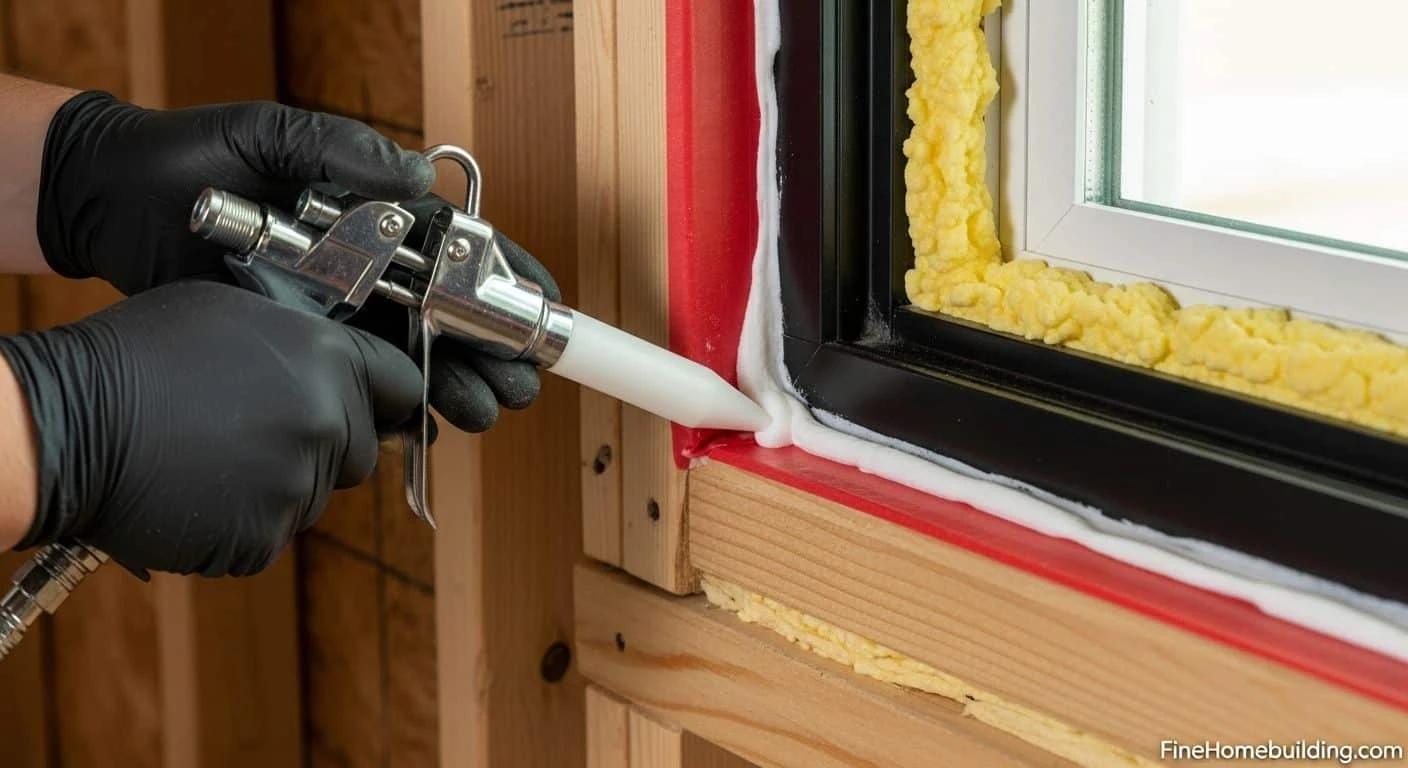
While windows and doors are not the largest source of air leakage, they do contribute measurable losses. Gaps between the window frame and rough opening, missing or worn weatherstripping, and uninsulated areas behind exterior trim all allow air to pass through.
Dalton Gardens experiences cold winters with substantial temperature differences between indoor and outdoor air. This temperature differential drives what building scientists call the stack effect. During winter, warm air inside your home rises naturally, creating positive pressure at the top of the building and negative pressure at the bottom. This pressure difference pushes warm air out through attic leaks while simultaneously pulling cold air in through basement and crawlspace gaps.
According to Building Science Corporation’s research on airflow control, approximately 30% to 50% of space conditioning energy consumption in well-insulated buildings is directly attributable to air leakage through the building enclosure. The stack effect operates continuously throughout the cold season, meaning the energy penalty compounds day after day, month after month. This is why sealing the high points (attic) and low points (basement/crawlspace) of your home yields the greatest reduction in air leakage overall.
Different air leak locations require different sealing approaches. Here is a breakdown of the most effective methods:
| Air Leak Location | Recommended Sealing Method | Material Used | Expected Benefit |
|---|---|---|---|
| Top plate to attic drywall | Spray foam from the attic side | Low-expansion spray foam or two-component foam | Largest single reduction in whole-home air leakage |
| Rim joist / band joist | Rigid foam board + spray foam | Cut rigid insulation sealed with canned foam | Eliminates long continuous perimeter leakage paths |
| Recessed can lights | Airtight covers + caulk | IC-rated covers, fire-rated caulk | Stops direct ceiling-to-attic airflow |
| Plumbing penetrations | Spray foam or caulk | Fire-stop caulk or low-expansion foam | Seals individual penetration points |
| Windows and doors | Weatherstripping + foam sealant | Compression weatherstrip, backer rod, caulk | Reduces drafts at operable components |
| Duct boot to drywall/subfloor | Mastic sealant or foam | Duct mastic, spray foam | Prevents conditioned air loss to unconditioned spaces |
| Attic hatch/pull-down stairs | Rigid foam insulated cover | Insulated lid with weatherstrip gasket | Seals large, often-overlooked opening |
| Garage-to-house wall | Full drywall continuous seal | Drywall, caulk, fire-rated foam | Blocks air and contaminant transfer |
Our team has evaluated and sealed hundreds of homes in the Dalton Gardens area. Here are representative examples of the air leak problems we find and how we address them:
| Scenario | Home Type | Problem | Solution | Outcome |
|---|---|---|---|---|
| 1970s ranch with unfinished basement | 1,800 sq ft single-story | Open rim joist cavities allowing cold air infiltration, ice forming on interior basement walls | Sealed rim joists with R-10 rigid foam board and spray foam | Eliminated drafts in floor above basement, reduced heating runtime |
| 1990s two-story with vaulted ceilings | 2,400 sq ft | Multiple unsealed recessed can lights and an unsealed attic hatch pulling warm air into attic | Installed airtight covers on all can lights, built insulated attic hatch cover | Measurable reduction in second-floor temperature variance |
| New construction crawl space | 2,100 sq ft | No air sealing at rim joist or floor penetrations despite new build | Applied closed-cell spray foam to entire rim joist band and all penetrations | Prevented moisture issues and cold floors before they started |
| Remodeled home with new HVAC | 2,800 sq ft | Unsealed duct boots in attic and crawlspace losing significant conditioned air | Sealed all duct boots with mastic and spray foam at floor and ceiling registers | Improved airflow to previously hard-to-heat rooms |
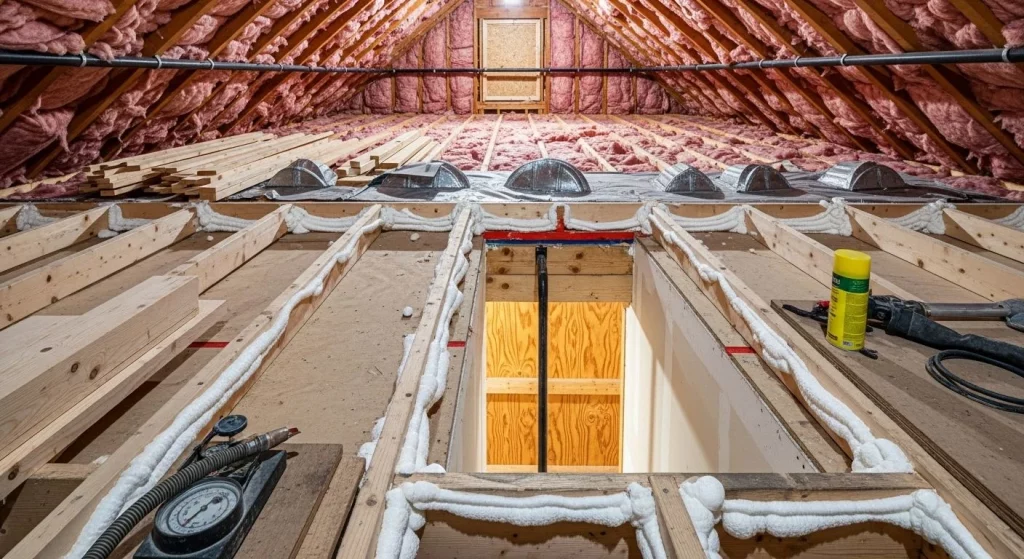
Several variables determine how well your air sealing investment will perform in Dalton Gardens.
Building age and construction type matter because older homes tend to have more penetration points, fewer built-in air barriers, and framing details that are difficult to access. Newer construction may have fewer obvious leaks but can still suffer from poor detailing at transitions and intersections.
Climate zone classification directly affects the stakes. Dalton Gardens is located in northern Idaho’s cold climate zone, where the temperature difference between indoors and outdoors during winter can exceed 60 degrees Fahrenheit. Larger temperature differences create stronger stack effect pressures, meaning even small leaks cause disproportionately high energy losses.
Sealing material durability is another factor. Caulk applied in cold temperatures may not cure properly, and some foams become brittle in extreme cold. Our team selects materials rated for the temperature swings common in the Inland Northwest.
Ventilation balance is a critical consideration. As noted by the Department of Energy, the recommended strategy is to reduce air leakage as much as possible and to provide controlled ventilation as needed. A house that is sealed tightly without adequate mechanical ventilation can develop indoor air quality issues. We always assess ventilation needs as part of our air sealing process.
If you are dealing with cold floors, high heating bills, or drafty rooms, here are the steps to take:
Selkirk Energy Solutions has worked on homes throughout the area, and we know exactly where to look for the air leaks that are driving up your energy bills and making your home uncomfortable. Our team uses diagnostic testing and professional-grade materials to seal every gap, crack, and penetration that is letting your conditioned air escape. Whether you need targeted air sealing or a full insulation upgrade, we have the experience and equipment to get it done right the first time.
Request a Free Quote | Schedule an Air Leakage Assessment
Call us at (208) 295-9780 or email [email protected]. We are ready to help you stop the drafts, cut the waste, and start saving.
Cold drafts near floors and walls, uneven temperatures between rooms, high heating bills, and visible dust streaks on carpet or ceiling paint at wall-to-ceiling joints are all common indicators of air leakage in homes.
Surface-level sealing like weatherstripping doors and adding outlet gaskets is manageable as a DIY project, but attic and crawlspace air sealing requires specialized equipment and knowledge to be done safely and effectively.
Air sealing alone will not cause issues when paired with proper mechanical ventilation. In fact, controlling where air enters your home improves indoor air quality by preventing unfiltered, polluted air from entering through random leaks.
Most air sealing projects in Dalton Gardens homes between 1,500 and 2,500 square feet can be completed in a single day, though larger homes or those requiring insulation removal may take additional time.
Air sealing should always be completed before adding insulation. Insulation cannot stop airflow through gaps and cracks, so sealing first ensures your new insulation performs at its full rated R-value.