How Does Roof Design Influence Spray Foam Insulation Requirements in Dover, ID?
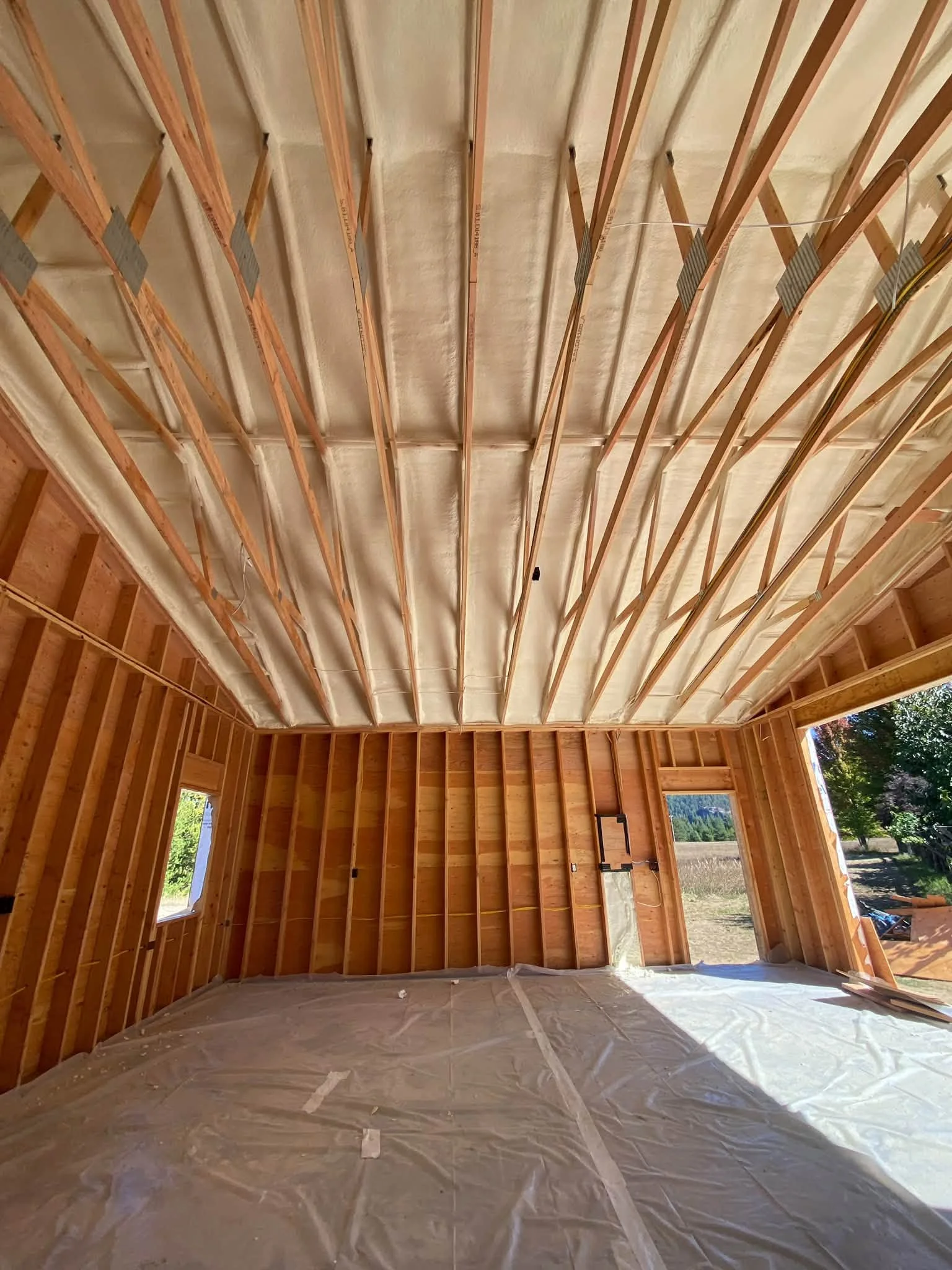
Your roof design is the primary factor that dictates how spray foam insulation should be installed. Because Dover, Idaho, experiences…


If you have ever noticed drafty rooms, uneven temperatures from one room to the next, or climbing energy bills despite a newer HVAC system, the culprit is likely hiding inside your walls. Most homes in the United States are under-insulated, and the gaps, cracks, and voids in standard insulation create a slow, steady drain on comfort and efficiency. Closed cell spray foam insulation services has become one of the most effective solutions available for addressing these problems at their source. It does more than just slow down heat transfer. It seals air leaks, blocks moisture, and even adds structural strength to the building assembly.
We have installed closed cell spray foam in hundreds of homes and buildings across the region, and the results speak for themselves. This guide brings together everything we have learned through years of hands-on work, building science study, and real-world troubleshooting. Whether you are a homeowner researching options for a retrofit project, a builder designing a high-performance envelope, or someone simply trying to understand what all the R-value talk means, this guide covers it from the ground up.
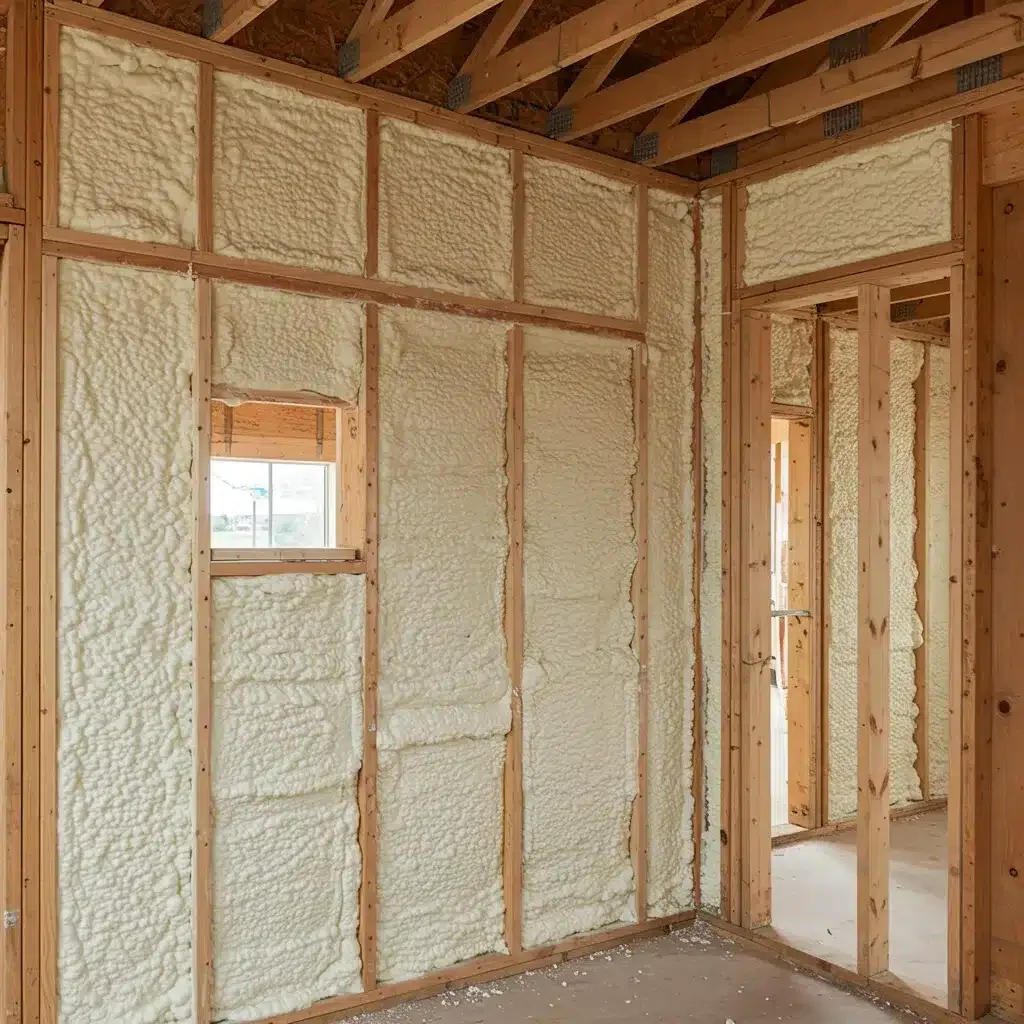
Closed cell spray foam is a type of cellular plastic insulation that is mixed on-site and sprayed into wall cavities, attics, crawlspaces, rim joists, and other building assemblies. As the name suggests, the foam is made up of tiny, closed cells that are packed tightly together. These cells are filled with a blowing agent rather than air, which gives the material its high thermal resistance per inch of thickness. According to the Wikipedia article on Building Insulation, polyurethane foam is listed among the most effective bulk insulation materials used in modern construction, and closed cell spray foam is one of the densest and highest-performing forms of it.
Unlike fiberglass batts or loose-fill cellulose, spray foam expands to fill the space where it is applied. It conforms to irregular shapes, seals around framing members, penetrations, and electrical boxes, and creates a continuous barrier. This combination of high R-value and air sealing in a single application is what sets spray foam apart from most other insulation products.
The material starts as two liquid chemicals, an isocyanate (the “A side”) and a polyol resin blend (the “B side”), which are kept in separate tanks and heated. At the tip of a spray gun, they meet, react, and expand rapidly, typically reaching 20 to 30 times their original liquid volume within seconds. The result is a rigid, solid plastic foam that bonds to whatever surface it touches.
Key Takeaways: What Makes Closed Cell Different
Understanding why closed cell spray foam performs the way it does requires a quick look at the chemistry. The two components, the A side and B side, undergo an exothermic chemical reaction when they combine. This reaction generates heat and produces carbon dioxide as a byproduct, which helps the foam expand. In closed cell formulations, the blowing agent used in the B side formulation (historically HFCs, now increasingly HFOs due to environmental regulations) gets trapped inside the closed cells. Because these blowing agents have lower thermal conductivity than air, the foam achieves a higher insulating value than you would get from an open cell structure filled with ordinary air.
The foam cures quickly. Within minutes, it is tack-free and can be trimmed. Within hours, it reaches full structural rigidity. The cured material is a solid polymer that adheres strongly to wood, concrete, metal, and most other common building materials. This adhesion is not just a bonus feature, it is part of what makes the air sealing work so well. Traditional insulation sits in a cavity but does not connect to the surrounding surfaces. Spray foam becomes part of the assembly.
Expert Tip: Temperature matters during installation. When substrate temperatures are too low (below roughly 50 degrees Fahrenheit on the surface being sprayed), the foam may not expand and cure properly. Professional installers monitor both ambient and surface temperatures closely, and in cold conditions, they may need to heat the space or use heated hoses and equipment to ensure a quality result.
Not all closed cell spray foam is identical. The formulations vary by density, blowing agent type, and intended application. The most important distinction is between low-density and medium-to-high-density formulations.
This is the most common formulation used in residential wall cavities, rim joists, and crawlspaces. At a nominal density of about 2.0 pounds per cubic foot, it delivers an R-value of roughly R-6.0 to R-6.5 per inch. It is rigid enough to add measurable structural strength to a wall assembly, with testing showing it can increase racking strength by a significant margin when applied to stud walls.
This type is classified as a Class II vapor retarder at 1.5 inches of thickness, meaning it has a permeance rating low enough (below 1.0 perm) to slow moisture vapor transmission in most climate zones.
Higher density formulations are used in applications where greater compressive strength, higher R-values, or enhanced moisture resistance is needed. Roofing applications, exterior continuous insulation in commercial buildings, and below-grade foundations often use these denser foams. They deliver R-values approaching R-7.0 per inch and have even lower vapor permeance.
The blowing agent trapped inside those closed cells has gone through significant changes over the past two decades. Earlier formulations used hydrofluorocarbons (HFCs), which have a high global warming potential (GWP). The industry has been shifting toward hydrofluoroolefins (HFOs), which have a dramatically lower GWP while maintaining similar thermal performance. This transition means newer foam formulations have a smaller environmental footprint without sacrificing the R-value that makes closed cell foam effective.
R-value is the standard measure of thermal resistance in insulation. The higher the R-value, the better the material resists heat flow. Closed cell spray foam delivers an R-value of approximately R-6.0 to R-7.0 per inch, which is among the highest of any commonly available insulation material. For comparison, fiberglass batts typically rate around R-3.1 to R-3.8 per inch, and cellulose comes in around R-3.5 to R-3.7 per inch ENERGY STAR.
But R-value alone does not tell the whole story. As noted in the Wikipedia article on Thermal Insulation, the overall performance of insulation in a building depends heavily on air tightness and proper installation. Even a high-R-value material loses effectiveness if air can bypass it through gaps and cracks. Closed cell spray foam addresses this directly because it simultaneously insulates and air-seals the cavity.
This is why a 2×4 wall cavity filled with 3.5 inches of closed cell spray foam (roughly R-21 to R-24) can outperform a 2×6 wall cavity filled with fiberglass batts (R-19 to R-23 rated on paper) in real-world conditions. The spray foam eliminates the air leakage and thermal bridging that reduce the effective R-value of the fiberglass assembly.
| Thickness (inches) | Approximate R-Value | Common Application |
|---|---|---|
| 1.0 | R-6.0 to R-7.0 | Thin surface fills, some rim joist retrofits |
| 2.0 | R-12 to R-14 | Standard 2×4 wall cavity fill |
| 3.0 | R-18 to R-21 | 2×6 wall cavity fill, basement walls |
| 4.0 | R-24 to R-28 | Cathedral ceilings, flat roof assemblies |
| 5.0+ | R-30+ | Attic flat ceilings, extreme cold climate walls |
Expert Tip: In wall cavities, spray foam is typically applied to fill the full depth of the framing. Partial fills (leaving an air gap behind drywall, for instance) are not recommended and do not perform as well because the air gap creates a convective loop that undermines the insulation.
Understanding the right applications helps avoid spending money where a less expensive material would do the job just as well. Here are the areas where closed cell spray foam delivers the most value.
The rim joist area, where the floor framing meets the exterior wall, is one of the most leaky and under-insulated parts of most homes. Standard fiberglass batts rarely fit well in these awkward, irregular spaces, and the gaps around each framing member allow air infiltration. Closed cell spray foam fills every void, seals the gaps, and provides continuous insulation in an area where it makes a significant difference in comfort and energy use.
Crawlspaces are notorious for moisture problems, musty smells, and cold floors above. Closed cell spray foam applied to the crawlspace walls and rim joist area seals out humid air, prevents condensation on surfaces, and keeps ground moisture from entering the conditioned space. When applied to basement walls, it provides both insulation and a moisture-resistant barrier without the mold risk that comes with fiberglass in damp basements.
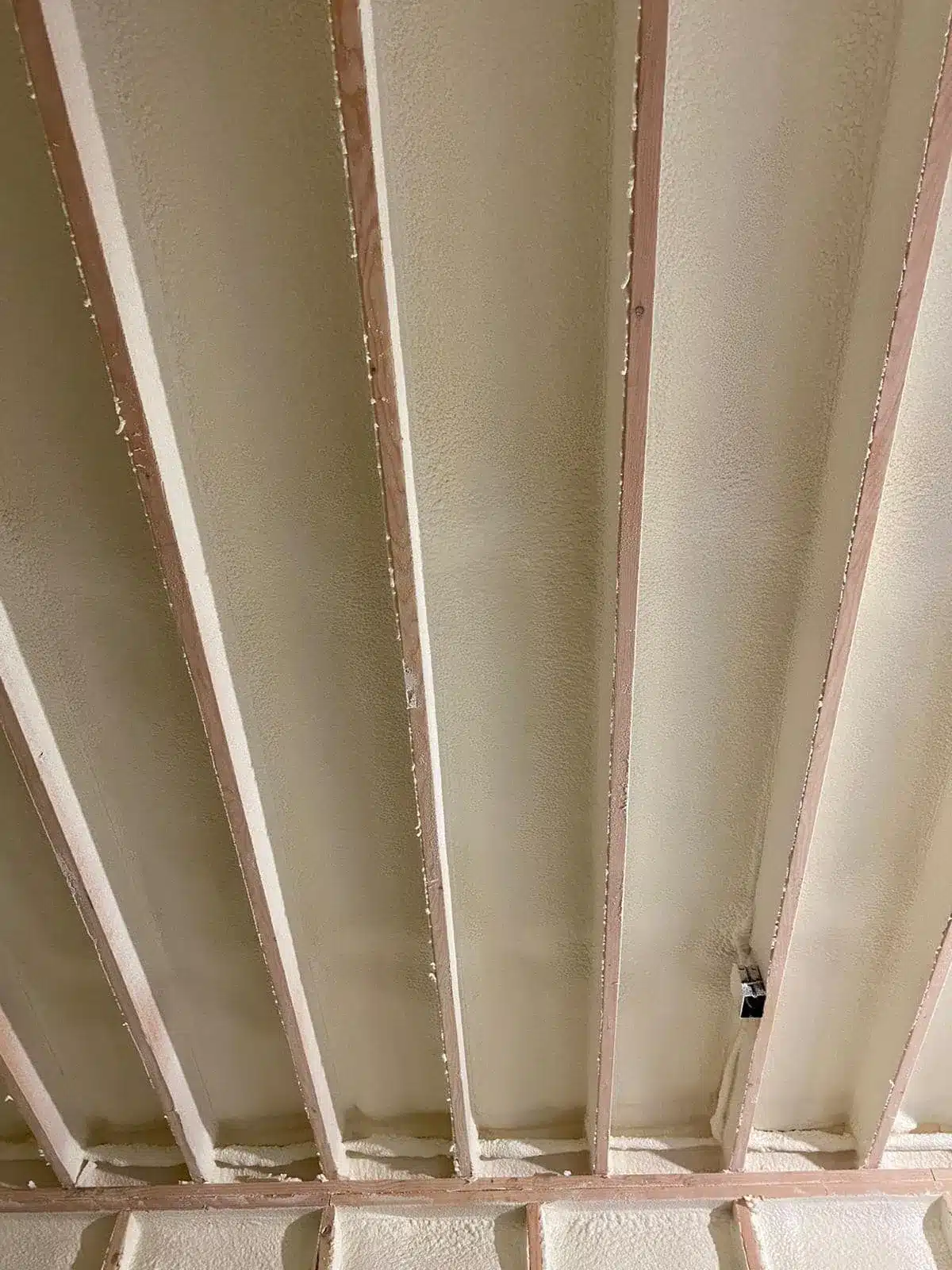
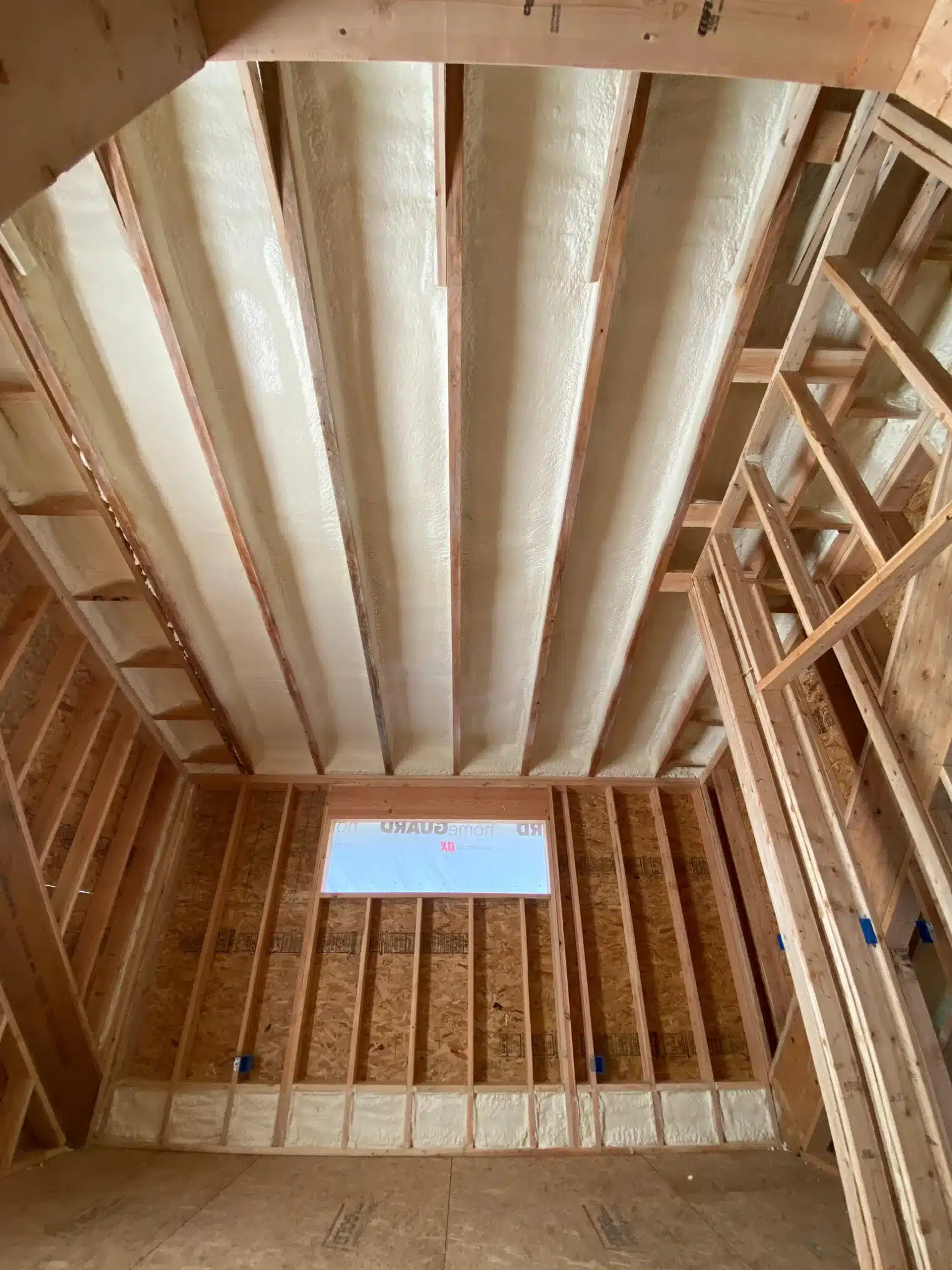
In vented attics, spray foam is typically applied to the attic floor (the ceiling plane below). In unvented attic designs, which are increasingly popular in high-performance construction, closed cell foam is sprayed directly to the underside of the roof deck. This approach brings the HVAC ductwork and any storage or living space into the conditioned envelope, eliminating the temperature extremes that cause ice dams, shorten roof life, and waste energy.
In new construction, closed cell spray foam in wall cavities delivers maximum R-value in standard framing depths while providing air sealing. In retrofit projects, it can be injected into existing wall cavities through small holes drilled through the exterior or interior, expanding to fill the cavity and seal around each stud, wire, and pipe.
Barndominiums, pole barns, warehouses, and other metal buildings are notoriously difficult and expensive to heat and cool. The thin metal skin conducts heat rapidly, and traditional insulation options are limited. Closed cell spray foam applied to the interior provides insulation, air sealing, and condensation control in a single application, which makes it one of the most practical solutions for these structures.
Air leakage accounts for a significant portion of energy loss in most buildings. As ENERGY STAR points out, sealing air leaks and adding insulation can provide up to a 10% savings on annual energy bills. Closed cell spray foam is one of the most effective air sealing materials available because it expands to fill gaps and bonds to surfaces, creating a continuous barrier that leaves no cracks unsealed.
Water is the enemy of building durability. When warm, moist air moves through wall and ceiling assemblies and hits a cold surface, condensation forms. Over time, this leads to mold, rot, and structural damage. Closed cell spray foam at 1.5 inches or more acts as a vapor retarder, slowing the movement of moisture vapor through the assembly. Its closed cell structure also resists liquid water absorption. If the foam gets wet (from a leak, for example), it does not hold water like fiberglass or cellulose would. It can typically dry out and retain its insulating properties.
The rigid nature of closed cell foam means it adds measurable shear and racking strength to wood-frame walls. This is a benefit that no batt or blown-in insulation can match. In areas prone to high winds or seismic activity, this added rigidity contributes to the overall structural resilience of the building.
Closed cell spray foam does not settle, sag, or degrade over time like some other insulation materials. Once it cures, it maintains its shape, R-value, and physical properties for the life of the building. This means the performance you get on day one is the performance you get decades later.
Expert Tip: When budgeting for insulation, look beyond the per-inch R-value and consider the full picture. Closed cell spray foam’s air sealing, moisture resistance, and structural benefits mean you may need less total insulation to achieve better real-world performance than a cheaper material that only addresses conduction.
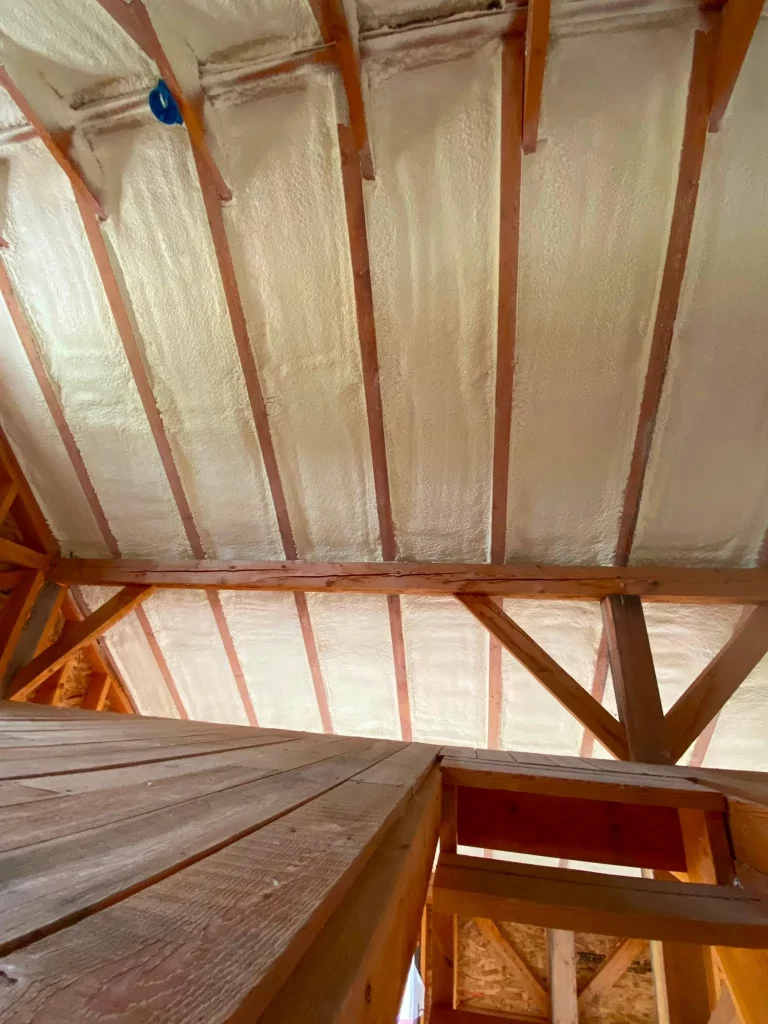
One of the most common questions we hear is about choosing between closed cell and open cell spray foam. They are both spray-applied polyurethane foams, but they behave very differently. Understanding the distinction helps ensure the right material ends up in the right place.
| Feature | Closed Cell Spray Foam | Open Cell Spray Foam |
|---|---|---|
| Cell Structure | Closed, gas-filled cells | Open, air-filled cells |
| Density | ~2.0 lb/ft3 and higher | ~0.5 lb/ft3 |
| R-Value per Inch | R-6.0 to R-7.0 | R-3.6 to R-3.8 |
| Vapor Retarder | Class II at 1.5 inches | Not a vapor retarder |
| Air Barrier | Yes (at 1.5 inches) | Yes (at full cavity fill) |
| Water Absorption | Very low | Can absorb and hold water |
| Expansion | 20-30x liquid volume | 100-150x liquid volume |
| Structural Rigidity | High | Low (soft and flexible) |
| Best For | Crawlspace walls, rim joists, basements, metal buildings | Wall cavities in dry climates, attics in vented assemblies |
Open cell foam has its place. It is less expensive per inch, fills wall cavities more completely in some retrofit scenarios, and provides excellent air sealing. But where moisture is a concern, where space is limited, or where structural strength matters, closed cells are the better choice.
Closed cell spray foam installation is not a DIY project. The chemicals involved require specialized equipment, proper training, and strict safety protocols. Here is a general overview of the process.
Before the crew arrives, the area needs to be cleared. In an attic, that means removing stored items and ensuring the space is accessible. In a crawlspace or basement, standing water and debris must be addressed. Any areas that should not receive foam (electrical boxes, windows, vents) are masked off with plastic or tape.
A trained installer, wearing appropriate personal protective equipment including a respirator, sprays the foam in passes, building up the thickness to the specified depth. The foam expands on contact and begins curing within seconds. The installer monitors the thickness using depth gauges to ensure the target R-value is achieved consistently.
After the foam cures, any material that has expanded beyond the framing cavity (called “flash” or “overspray”) is trimmed flush. In most wall applications, the foam is left exposed within the cavity, and drywall is installed directly against it. A thermal or ignition barrier may be required by code in certain applications, particularly in attics and crawlspaces where the foam remains exposed.
Expert Tip: Ask your installer about their quality control process. A reputable spray foam contractor will measure and document foam thickness at multiple points in every job, not just eyeball it. This documentation is important for building inspections and for verifying that the specified R-value was actually achieved.
Building codes regulate how spray foam insulation can be used, and the rules vary by jurisdiction and climate zone. In the United States, the International Residential Code (IRC) and International Energy Conservation Code (IECC) set the baseline requirements.
In occupied spaces, spray foam that is left exposed must be covered with an approved thermal barrier, typically half-inch drywall or an equivalent material, unless the foam itself has been tested and listed as having an ignition barrier property. In unoccupied spaces like attics and crawlspaces, the requirements are less stringent, but an ignition barrier (such as an intumescent coating) is often still required.
Because closed cell spray foam at 1.5 inches or more functions as a Class II vapor retarder, it changes the moisture dynamics of the wall or ceiling assembly. In cold climates, this means the foam should typically be applied on the interior (warm-in-winter) side of the assembly. In hot-humid climates, the vapor profile needs to be evaluated carefully to avoid trapping moisture inside the wall.
Most jurisdictions require a building permit for spray foam insulation projects, particularly in new construction or when the work involves adding insulation to areas where code compliance will be verified. The installation crew should be prepared to demonstrate that the product is code-listed and that the installation meets the specified R-value requirements.
Any discussion of spray foam insulation needs to address indoor air quality. During and immediately after installation, spray foam off-gasses volatile organic compounds (VOCs) and other chemicals. The occupants should not re-enter the home during application, and a ventilation period of 24 to 72 hours (depending on the product and conditions) is typically recommended before the space is re-occupied.
The EPA’s Indoor AirPlus program emphasizes that proper construction practices and material specifications are essential for minimizing airborne pollutants in new homes. This includes using low-emission insulation products and ensuring adequate ventilation after installation.
Closed cell spray foam makes a building significantly tighter. That is good for energy efficiency, but it means the mechanical ventilation system becomes more important. In a tight home, you need controlled fresh air exchange to remove moisture, odors, and indoor pollutants. Without it, you risk condensation, mold, and poor indoor air quality. Building codes in most jurisdictions now require mechanical ventilation in new construction, and any home receiving spray foam insulation should have a properly sized ventilation strategy, whether that is an HRV (heat recovery ventilator), ERV (energy recovery ventilator), or other approved system.
Key Takeaways: Air Quality and Ventilation
The real test of any insulation job is how the home performs afterward, not what the labels say. Here are the ways to verify that your closed cell spray foam investment is delivering results.
The most practical indicator is your energy bill. After a comprehensive insulation upgrade, many homeowners notice a measurable reduction in heating and cooling costs, particularly during the first full season after installation. The savings depend on your climate, the condition of the home before the work, and your HVAC system, but 15 to 30 percent reductions are common when spray foam is addressing significant air leakage and under-insulation.
A blower door test measures the air tightness of a building. It uses a powerful fan to depressurize the home while measuring how much air flows through the fan. The result is expressed in air changes per hour (ACH) at a standard pressure. Before and after testing provides a clear, objective measure of how much the spray foam improved the air tightness. This is the single best diagnostic tool for verifying that the air sealing benefit was actually achieved.
Infrared cameras can reveal temperature variations on building surfaces, highlighting areas where insulation is missing, thin, or compromised. A thermal scan after installation can confirm that the foam is providing consistent coverage without gaps or voids.
Expert Tip: If you are planning a major insulation project, ask for a blower door test before and after the work. The data gives you a clear picture of the improvement and helps verify that the installer delivered what was promised.
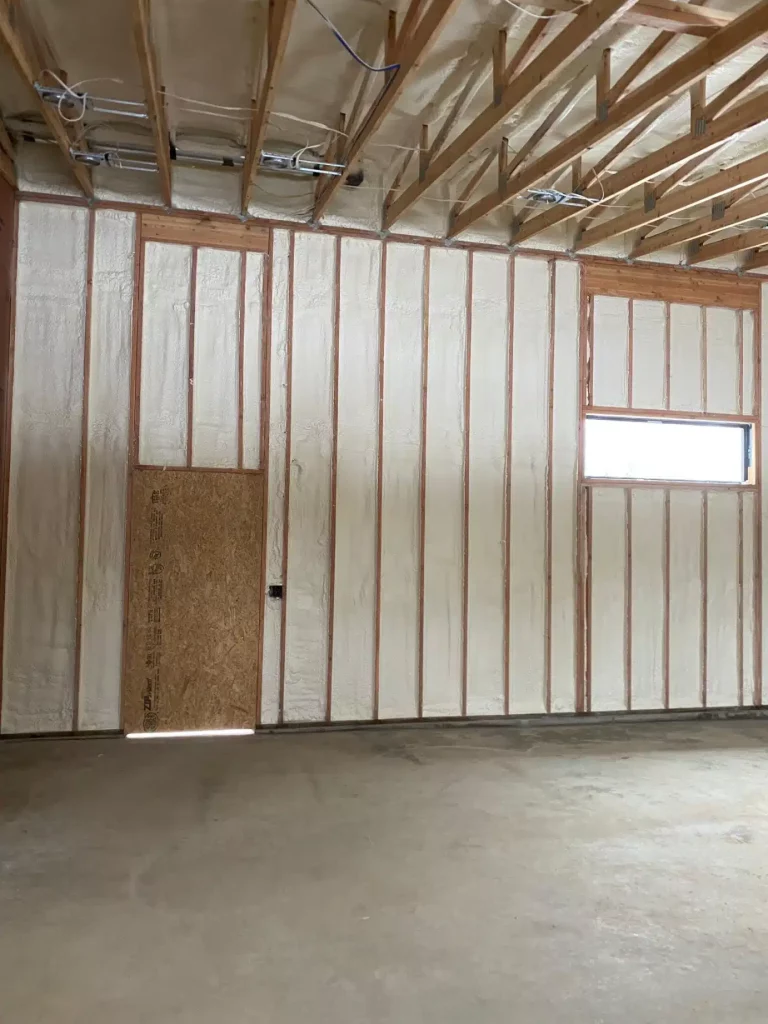
If you have made it this far, you now have a solid understanding of what closed cell spray foam is, how it works, where it belongs, and why it matters. Here is a quick summary of the most important points to carry forward.
Closed cell spray foam delivers the highest R-value per inch among common insulation materials, provides superior air sealing, resists moisture, and adds structural strength to the building. It excels in rim joists, crawlspaces, basement walls, metal buildings, and unvented roof assemblies. Choosing between closed cell and open cell comes down to the specific needs of the project: moisture exposure, available cavity depth, structural requirements, and budget.
The quality of the installation matters as much as the material itself. Work with experienced, credentialed installers who follow industry safety protocols, document their work, and stand behind their results. Pair your insulation upgrade with proper mechanical ventilation, and verify the results with diagnostic testing.
Keep this guide as a reference as you plan your project. Every building is different, and the best insulation strategy is one that accounts for your climate, your building’s specific conditions, and your long-term goals for comfort and efficiency.
Deciding on the right insulation approach for your home or building is easier with someone who has been through it before. If you are considering closed cell spray foam and want to talk through the options, Selkirk Energy Solutions is here to help. You can reach our team at [email protected] or call us at (208) 295-9780. We will walk through your specific situation and help you figure out what makes the most sense for your building and your budget.
For most homeowners and builders, the answer comes down to what you need the insulation to do. If you need air sealing, moisture resistance, and high R-value in a limited cavity depth, closed cell spray foam is difficult to beat. The upfront cost is higher than fiberglass or cellulose, but the performance gains in energy savings, comfort, and building durability often justify the investment over time.
Closed cell spray foam is dimensionally stable and does not settle, shrink, or degrade under normal conditions. When installed correctly, it performs for the life of the building without requiring replacement or maintenance.
Yes. In retrofit applications, small holes are drilled through the exterior sheathing or interior drywall, and the foam is injected into each wall cavity. The foam expands to fill the cavity and seals around framing members and penetrations. The holes are then patched and finished.
At 1.5 inches of thickness or more, closed cell spray foam functions as a Class II vapor retarder on its own. In most applications, an additional separate vapor barrier is not needed. In some mixed-climate scenarios, a building science professional should evaluate the specific assembly to ensure proper moisture management.
Once fully cured, closed cell spray foam is chemically inert and does not off-gas at levels that would affect indoor air quality. The concern about emissions is during the application and curing process. After the manufacturer-recommended re-occupancy time has passed and the foam is fully cured, it is considered safe for occupancy.
Both are closed cell foam insulation materials, but spray foam is applied as a liquid that expands and cures in place, conforming to irregular surfaces and sealing gaps as it goes. Rigid foam board is manufactured in sheets and must be cut, fitted, and fastened manually. Spray foam provides better air sealing but is more expensive and requires professional installation.