How Can Spray Foam Insulation Help Reduce Persistent Drafts in Garwood, ID Homes?
Spray foam insulation reduces persistent drafts because it works as an insulation and an air barrier in a single application.…


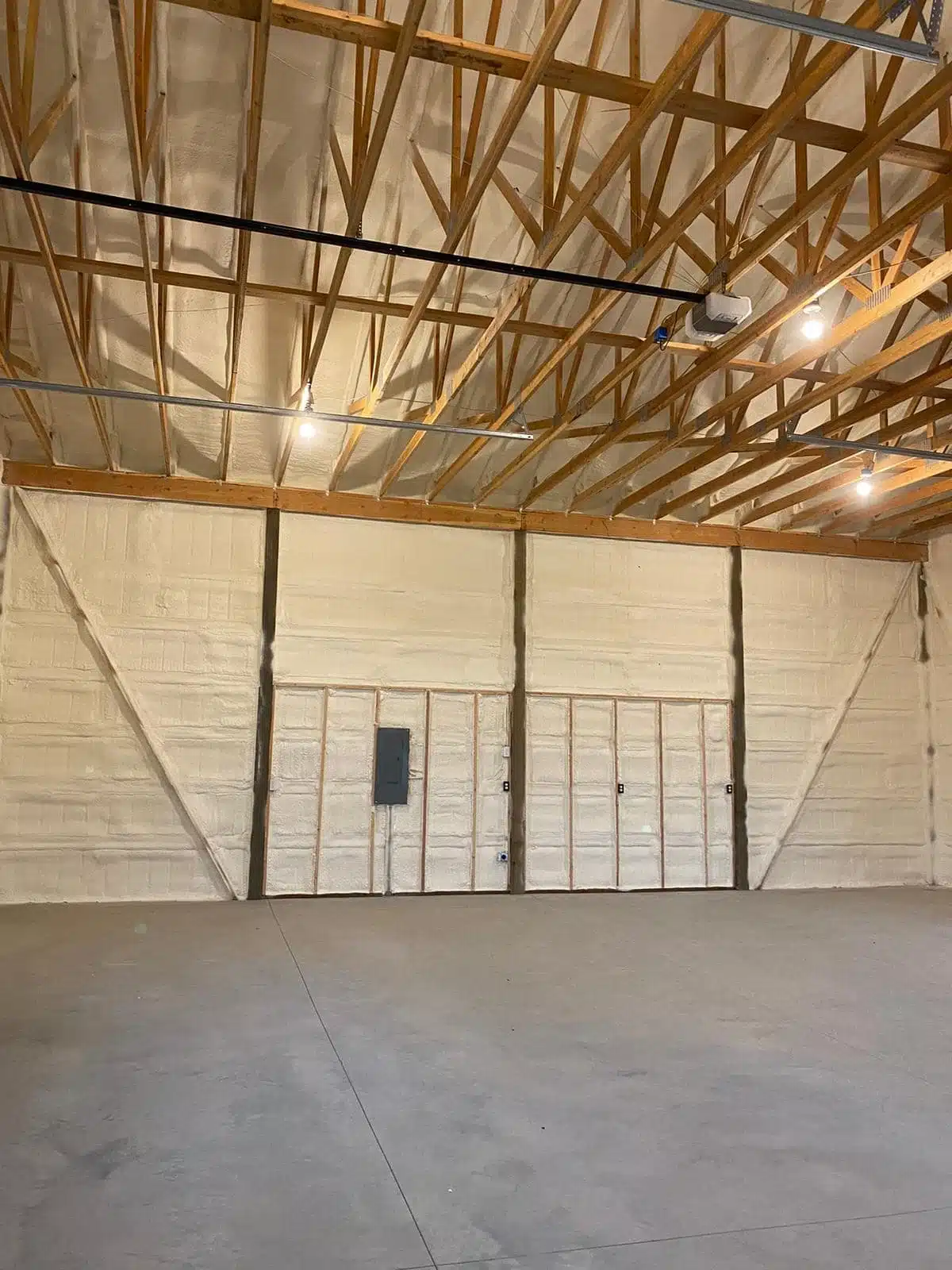
Commercial insulation prevents condensation in metal buildings by raising interior surface temperatures above the dew point, blocking moisture migration through vapor retarders, and creating an airtight seal that stops warm, humid air from reaching cold metal panels. The right insulation system depends on your climate zone, building use, and whether the structure is new construction or a retrofit. Insulation alone is not enough, though. It works as part of a broader system that includes proper vapor retarder placement, air sealing, and ventilation to keep moisture under control.
Metal buildings present a unique condensation challenge because the metal panels are highly conductive. Steel changes temperature rapidly with outdoor conditions, which means the roof and wall panels can drop below the dew point of the interior air within hours of a temperature shift. When warm indoor air carries moisture and contacts those cold metal surfaces, condensation forms almost immediately.
According to the Metal Building Manufacturers Association (MBMA), there are two categories of condensation that building owners need to watch for. Visible condensation appears as water, frost, or ice on exposed surfaces such as framing members, ceilings, and skylights. Concealed condensation is more dangerous because it forms inside wall and roof cavities, leading to corrosion, mold growth, delaminating surfaces, and degraded thermal performance in the insulation itself.
The National Weather Service (NOAA) explains that the dew point is the temperature at which air becomes fully saturated and can no longer hold moisture. Once a surface drops below that temperature, water vapor condenses into liquid. The higher the moisture content in the air, the higher the dew point, and the more likely condensation becomes on any surface that is even slightly cooler than the ambient air.
Commercial insulation serves three interconnected roles in preventing condensation inside metal buildings. Each function addresses a different part of the moisture problem.
The primary role of insulation is to create a thermal barrier between the interior conditioned space and the exterior metal panels. By slowing heat transfer, insulation keeps the interior-facing surfaces of the building envelope warm enough to stay above the dew point. In properly designed systems, the insulation is thick enough to maintain the vapor retarder surface temperature above the dew point of the warm interior air, which prevents condensation from forming on any exposed interior surface.
A vapor retarder is a material layer that resists the diffusion of water vapor through the building envelope. Wikipedia notes that vapor retarders are classified by their permeability, with Class I materials rated at less than 0.1 US Perm offering the strongest resistance to moisture transmission. In metal building systems, the vapor retarder is typically laminated to the insulation facing and placed on the warm side of the assembly. The insulation and vapor retarder work together: the insulation prevents surfaces from cooling below the dew point, and the retarder blocks moisture from reaching any surfaces that do.
Vapor barriers and air barriers serve different functions, and this distinction matters in metal buildings. Vapor retarders slow diffusion, while air barriers block the movement of air itself. Since air currents account for more than 98% of water vapor movement through building cavities, sealing air leaks is essential. Unsealed seams, holes around penetrations, and gaps at framing connections allow warm, humid air to bypass the vapor retarder and reach cold metal panels directly. Air sealing closes those pathways, and proper pressure balance from the HVAC system prevents moisture-laden air from being driven through the envelope.
Different insulation materials offer varying levels of thermal resistance, air sealing, and moisture control. The right choice depends on the building application, climate, and budget.
| Insulation Type | Avg. Price Per Sq Ft | Condensation Control Method | Air Sealing | Best Applications |
|---|---|---|---|---|
| Closed cell spray foam | $2.45 | Thermal break + vapor barrier in one | Excellent | Cold storage, high-humidity facilities, retrofits |
| Open cell spray foam | $0.60 | Thermal break + air seal | Very good | Warehouses, standard commercial, mixed climates |
| Air sealing | $1.00 | Seals gaps and penetrations | Primary function | Supplement to any insulation system |
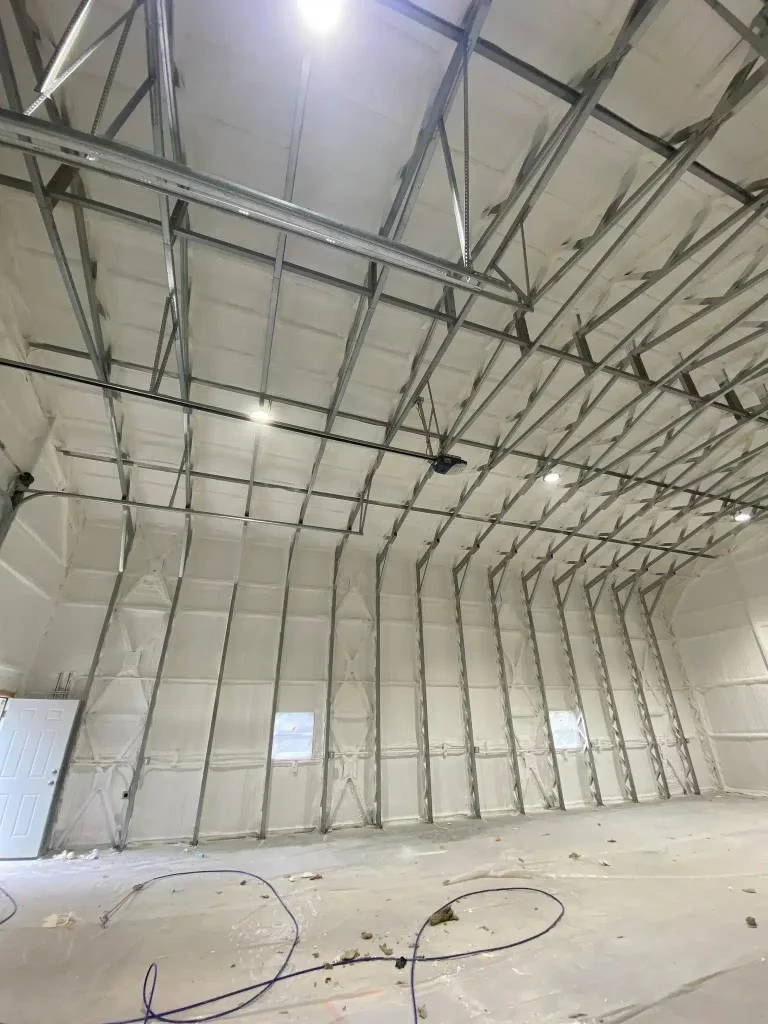
Closed cell spray foam delivers the highest performance for condensation control in metal buildings. It provides a high R-value per inch, acts as both an air barrier and a vapor retarder, and adheres directly to metal surfaces to eliminate thermal bridging at framing members. For buildings with high interior humidity, such as livestock facilities, indoor pools, or manufacturing plants, closed cell spray foam is often the most reliable choice because it addresses all three condensation pathways in a single application.
Open cell spray foam offers strong air sealing at a lower material cost. While it does not serve as a vapor retarder on its own, it fills cavities completely and stops air leakage, which is the dominant moisture transport mechanism. When paired with a separate vapor retarder facing, open cell spray foam provides effective condensation control for warehouses, workshops, and standard commercial buildings in moderate climate zones.
In some cases, the existing insulation in a metal building is adequate but the vapor retarder has been compromised by tears, unsealed seams, or construction penetrations. Air sealing addresses these specific weak points without requiring full insulation replacement. Our team identifies problem areas using diagnostic tools and seals them with foam and tape systems to restore the integrity of the building envelope.
The approach to condensation control changes depending on where the building is located. In cold climates, the dominant concern is warm interior air escaping outward and condensing on cold exterior panels. The vapor retarder should be placed on the interior, warm side of the insulation assembly. In hot and humid climates, the risk reverses: warm, moist exterior air can infiltrate and condense on cooler interior surfaces. In these regions, the vapor retarder may need to be placed on the exterior side of the insulation, between the fiberglass and the metal panels.
Metal Construction News reports that buildings in colder climate zones tend to experience the most severe condensation problems because the temperature differential between warm indoor air and cold exterior metal is greatest during winter months. Buildings in these zones require higher insulation levels and more carefully sealed air barriers.
Recognizing condensation early prevents costly structural damage. Visible signs include water dripping from the ceiling or roof panels, rust stains on framing members and fasteners, and frost or ice forming on interior metal surfaces during cold weather. Concealed signs are harder to spot but include damp or sagging insulation between purlins, mold or mildew on walls and ceilings, peeling paint, and bubbling or blistering on laminated surfaces. Any of these indicators suggest that moisture is reaching cold surfaces within the building envelope.
| Building Type | Recommended Insulation | Why It Works |
|---|---|---|
| Cold storage / food processing | Closed cell spray foam | High thermal resistance + built-in vapor barrier handles extreme temperature differentials |
| Warehouses and distribution | Open cell spray foam with vapor retarder | Cost-effective air sealing and thermal performance for large footprints |
| Manufacturing facilities | Closed cell spray foam or multi-layer fiberglass with sealed vapor retarder | Addresses high internal heat and humidity loads |
| Agricultural / livestock | Closed cell spray foam | Tolerates very high moisture environments and provides durable condensation protection |
| Office and retail metal buildings | Open cell spray foam or fiberglass with air sealing upgrades | Balances energy efficiency with budget considerations |
Choosing an insulation contractor who understands metal building condensation requires looking beyond basic installation skills. A qualified partner will assess your building’s current pressure balance and humidity levels before recommending a system. They should explain why a specific insulation type and vapor retarder placement suits your climate zone and building use, rather than applying a one-size-fits-all approach. Good contractors also address the role of ventilation and HVAC integration, since insulation alone cannot solve condensation if the mechanical system is oversized or the building has no fresh air exchange. Finally, look for clear communication about what the insulation will and will not do, with realistic expectations tied to your specific building conditions.
Selkirk Energy Solutions provides commercial insulation services designed to stop condensation at the source for metal buildings across the Sandpoint, Idaho area and beyond. Our team evaluates each building individually, recommending the right combination of insulation, vapor retarder placement, and air sealing to match your climate zone and building use. Whether you are dealing with an existing condensation problem or planning insulation for new construction, we bring the expertise to get it right the first time.
Request a Free Quote | Schedule a Condensation Assessment
Call us at (208) 295-9780 or email [email protected] to get started.
Insulation is the primary defense, but it works best when combined with a properly installed vapor retarder, sealed air barrier, and adequate ventilation. No single component eliminates condensation on its own.
Look for rust stains on framing members, sagging insulation between purlins, mold or mildew spots on walls and ceilings, and peeling paint. An infrared inspection can also reveal cold spots where condensation is likely forming behind visible surfaces.
Closed cell spray foam provides superior condensation control because it combines insulation, air sealing, and vapor retarder functions in one material. Fiberglass can work effectively when paired with a sealed vapor retarder facing and proper air barrier detailing.
In cold climates, the vapor retarder should be placed on the interior, warm side of the insulation. This prevents warm indoor air from carrying moisture into the assembly where it could condense on cold exterior metal panels.
Condensation can cause visible rust and corrosion on exposed metal within weeks. Concealed condensation inside wall and roof cavities can degrade insulation and cause structural damage over months if left unaddressed.