How Does Open-Cell Spray Foam Adhere to Different Building Materials in Bonners Ferry, ID?
Open-cell spray foam bonds as it expands against a clean, dry surface, so adhesion depends more on moisture, dust, and…


Open-cell spray foam bonds as it expands against a clean, dry surface, so adhesion depends more on moisture, dust, and temperature than on the material itself. On every open-cell spray foam insulation project in Bonners Ferry, ID, we check wood moisture, concrete cure time, and surface temperature before we spray. Get those right, and the foam stays put.
Adhesion starts the second the liquid touches the surface. Those first moments decide whether the foam stays bonded or pulls away later.
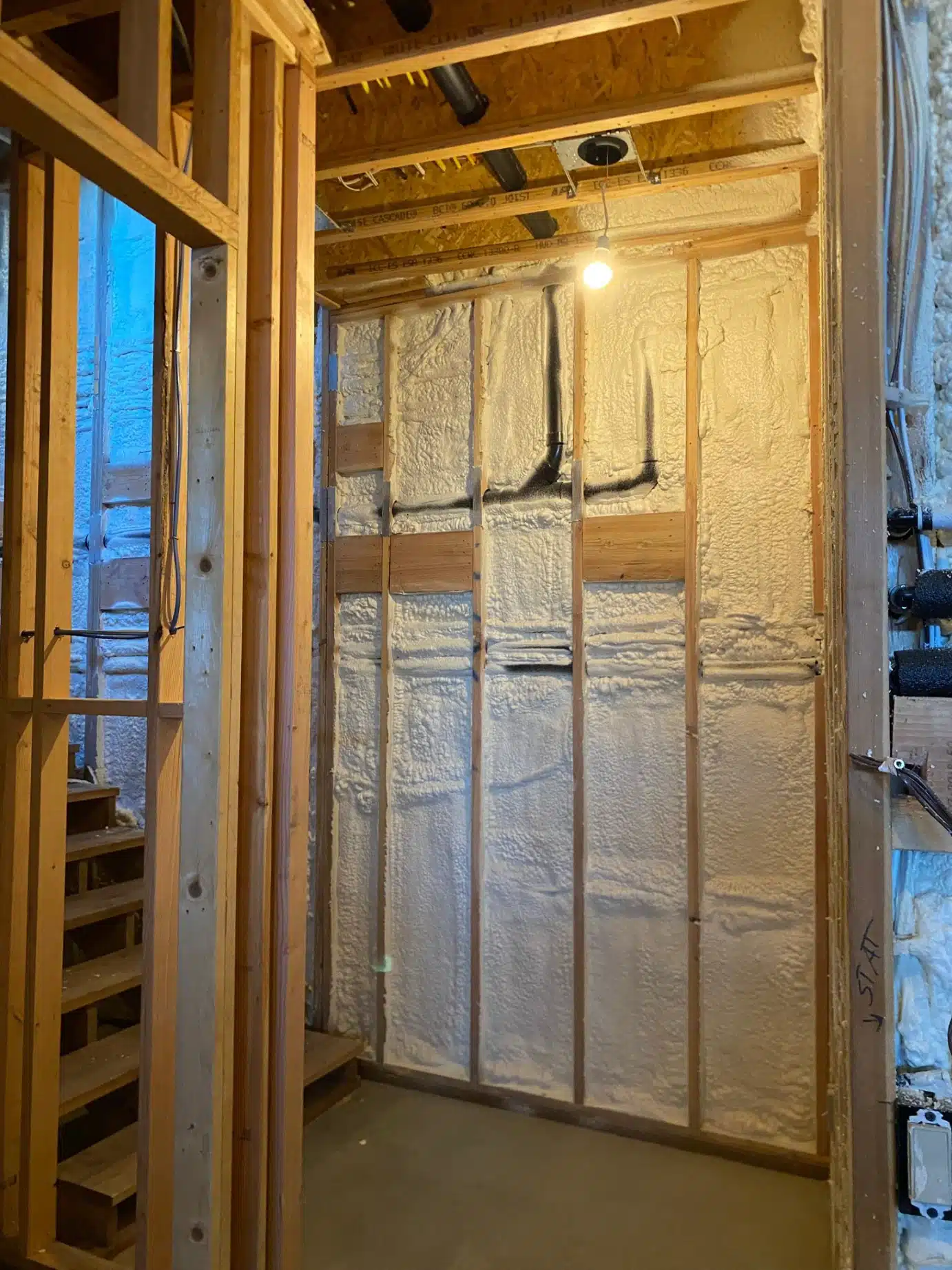
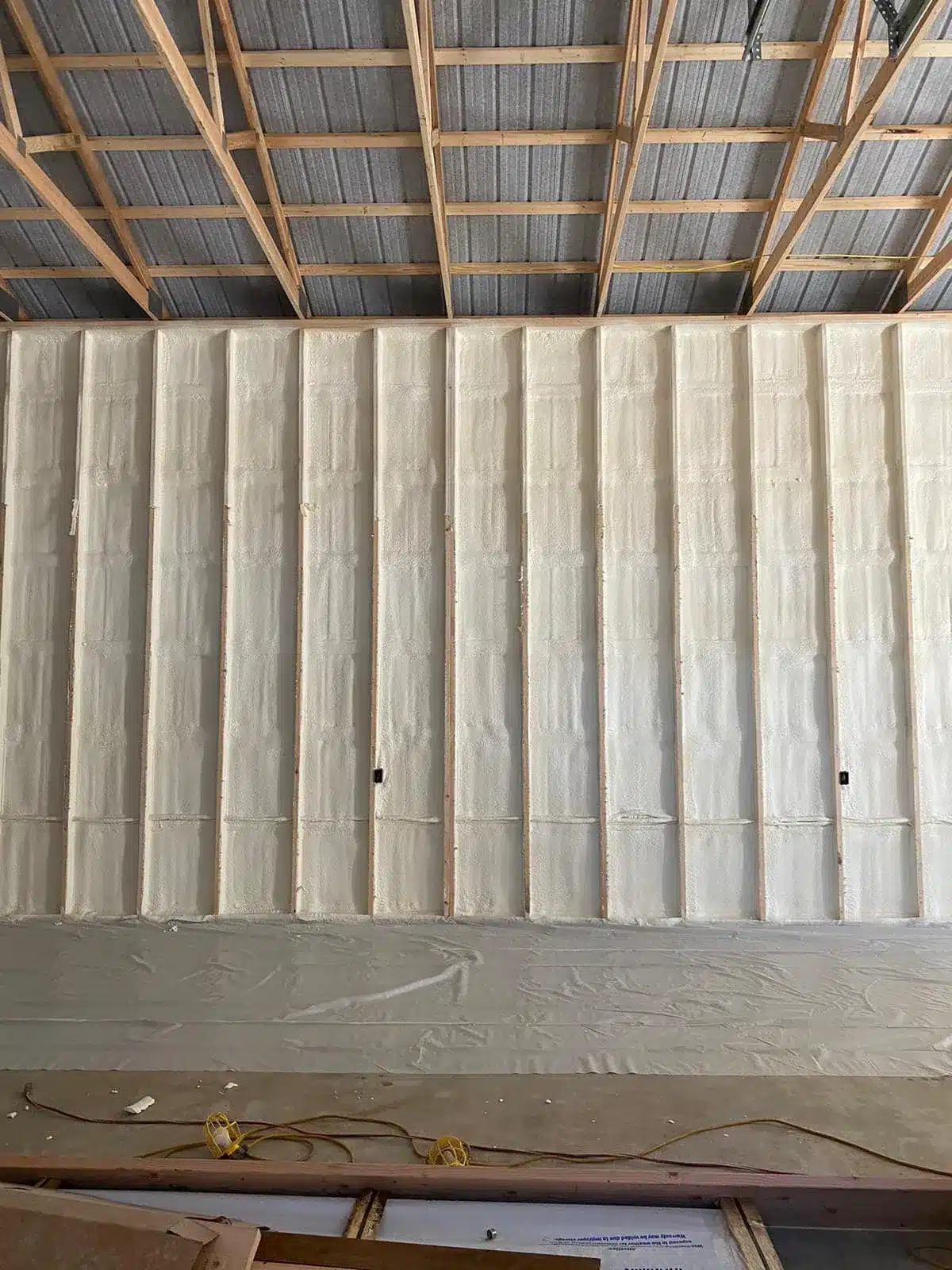
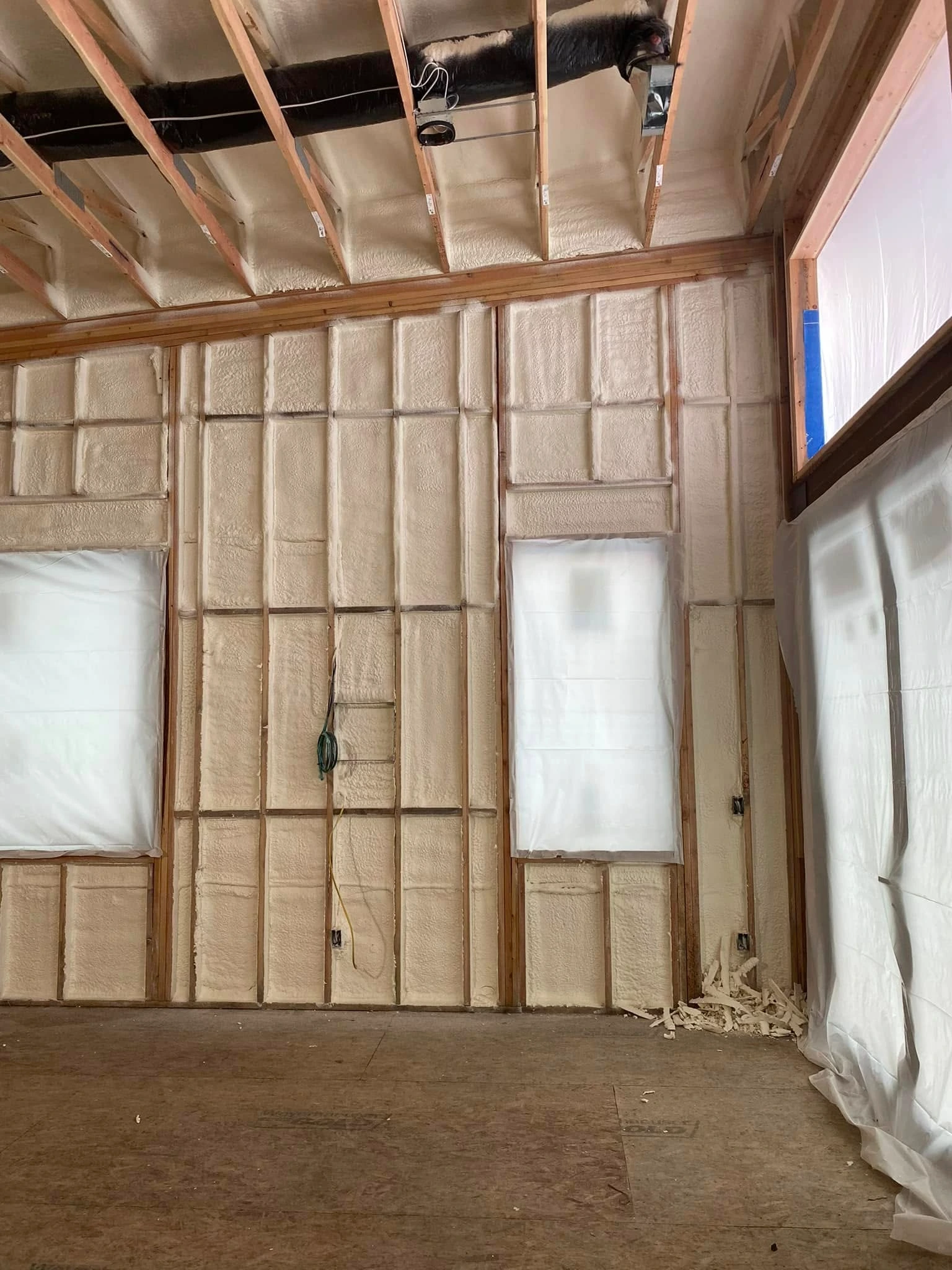
Open-cell foam goes on as a liquid mix and expands into a light, spongy layer that grips whatever it touches. Good Open-Cell Foam Application needs a surface that’s clean, dry, and warm enough for the mix to react properly.
Moisture is a major troublemaker. The Journal of Light Construction explains that damp surfaces act like a blowing agent, reacting with one side of the mix and leaving foam with weak properties and poor adhesion.
Each material holds moisture and heat differently, so each one needs its own check. Here’s what we look at on the surfaces common in North Idaho homes, barns, and shops.
Spray foam on wood surfaces bonds well when the lumber is dry. Owens Corning lists a moisture limit under 18% for lumber, OSB, and plywood.
We test with a moisture meter at several spots. Framing can soak up rain and snow while a build sits open, so one reading isn’t enough.
Spray foam on concrete takes more patience. Owens Corning calls for a 28-day minimum cure and adds 10°F to the minimum spray temperature for dense materials like concrete.
Concrete can also look dry while still holding water. The Journal of Light Construction notes that the foam’s heat can pull that moisture to the surface, which hurts the bond. A small test patch tells us whether the slab or wall is ready.
Metal needs to be clean of oils and dry, according to Owens Corning. Rust and grease block the bond too, so we clean them off before any foam goes on.
North Idaho winters, damp spring mornings, and cold nights all change how foam reacts. A wall that looks fine at noon can be frosted or dewy at seven.
Spray foam adhesion in Bonners Ferry, ID, starts with temperature. BASF sets minimum ambient temperatures of 45°F for wood and 55°F for heat sink surfaces like concrete and metal.
BASF also says surfaces must be free of frost, dew, and moisture. When relative humidity climbs above 80%, it warns that foam can blister and lose adhesion, so the work needs frequent inspection. When readings fall short, we wait rather than spray and hope.

A weak bond rarely shows up on day one. It shows up as gaps, drafts, and cold spots months later.
Gaps along framing let cold air back in, which defeats the reason you insulated. Fixing them means cutting out foam and respraying, and that costs more than a few extra days of prep.
Open-cell foam isn’t the answer for every surface. The Journal of Light Construction points out that its open structure lets liquid water in, so damp or water-prone concrete spots may call for a different product. We’ll tell you straight if your project needs one.
A little prep on your end helps the foam bond. Here’s what we ask of every customer.
If you’re planning insulation work in Bonners Ferry, ID, we’ll look at your wood, concrete, and metal surfaces and explain what needs to happen before we spray. Selkirk Energy Solutions offers free quotes, so you’ll know where you stand before you commit.
Phone: (208) 295-9780 Email: [email protected]
Usually not. The foam needs to bond to the framing and sheathing, so old insulation typically has to come out first.
Often no. Owens Corning’s open-cell guide says a primer is generally not required unless the product specifies one, and we follow the manufacturer’s directions.
It often can, if the surface is clean, dry, and within moisture limits. Pressure-treated lumber tends to hold extra moisture, so we meter it first and test a small area.
Yes. A pin-type moisture meter reads wood, and for concrete you can tape a plastic sheet down and look for condensation or darkening after 16 hours.
Look along the edges of studs and rafters for gaps or lifted foam. Well-bonded foam stays tight to the framing and doesn’t peel away when you press on it.