How Does Roof Design Influence Spray Foam Insulation Requirements in Dover, ID?
Your roof design is the primary factor that dictates how spray foam insulation should be installed. Because Dover, Idaho, experiences…


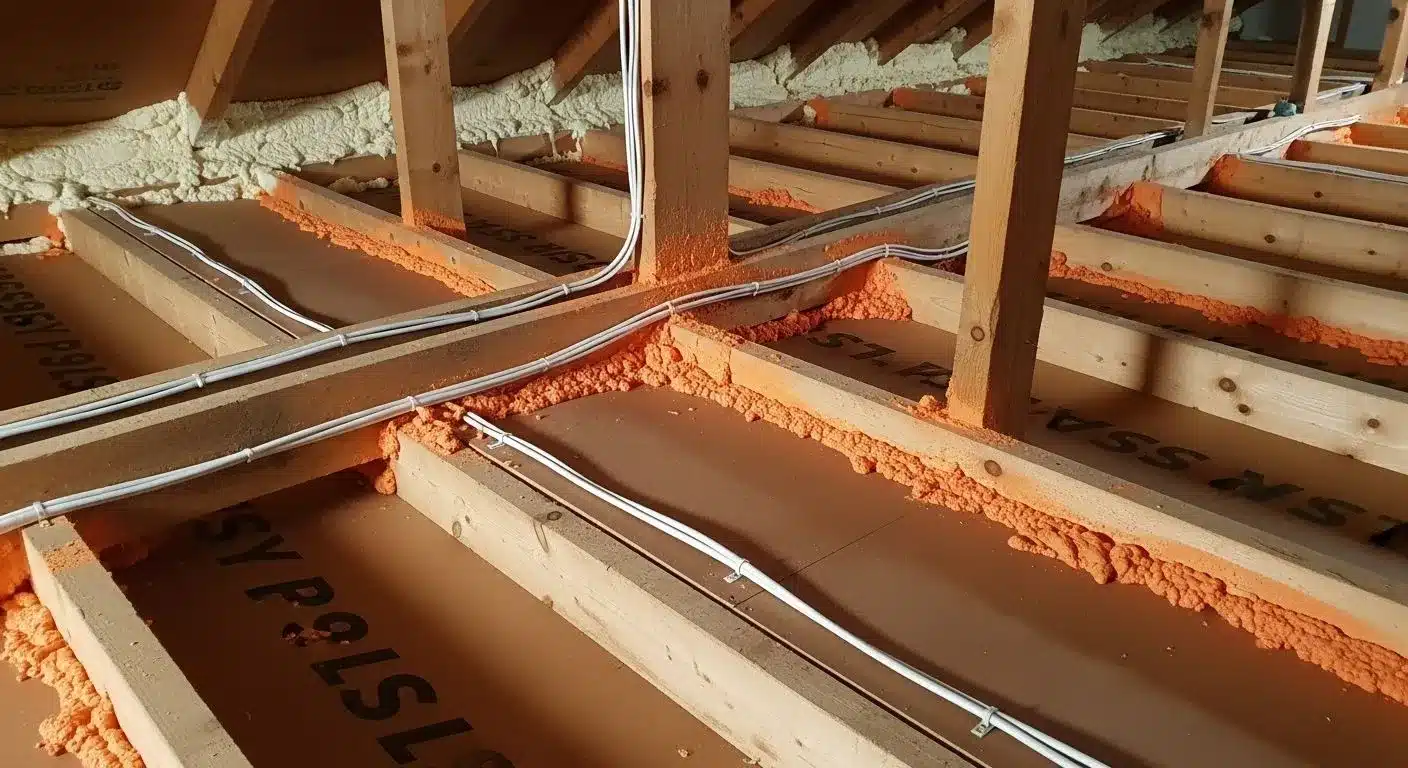
Yes. Spray foam insulation is one of the most effective ways to seal hidden air leaks because it expands into the gaps, cracks, and cavities that batts and blown-in material slide past. For homes in Thompson Falls, MT, where January temperatures average in the high 20s and record lows have hit 25 below zero, every unsealed gap works against your furnace all winter. A guide to spray foam insulation benefits and costs explains how the right fix depends on where your leaks are and what your home is built from. Open cell foam suits large attic and wall cavities, closed cell foam handles rim joists and moisture-prone crawlspace areas, and targeted air sealing covers smaller trouble spots. Below, we break down where hidden leaks hide, how each approach performs, and how to choose the best combination for your home.
Thompson Falls sits in the Clark Fork Valley at about 2,400 feet, and its winters are long and cold. December and January average highs sit near freezing, lows run in the mid-20s, and the record low reached 25 below zero. Your heating system runs hard from late fall through early spring, so any gap in the building envelope leaks heated money all season long.
The leaks that matter most are rarely the ones you can see. Drafty windows get the blame, but the biggest losses come from spots you never inspect: attic hatches, top plates, recessed lights, plumbing chases, dropped soffits, kneewalls, and rim joists. The EPA’s ENERGY STAR program estimates that sealing leaks and adding insulation can cut up to 10% off total annual energy bills, with bigger gains in northern climates. Many older homes in Sanders County were built before modern air sealing codes, and InterNACHI notes that only about 20% of homes built before 1980 are adequately insulated. That combination of older housing stock and long heating seasons makes hidden air leaks a year-round expense here.
Insulation slows heat transfer; it does not stop airflow. InterNACHI uses a useful analogy: fiberglass batts are like a sweater, but on a windy day you need a windbreaker. Air sealing is the windbreaker, and spray foam is both garments in one.
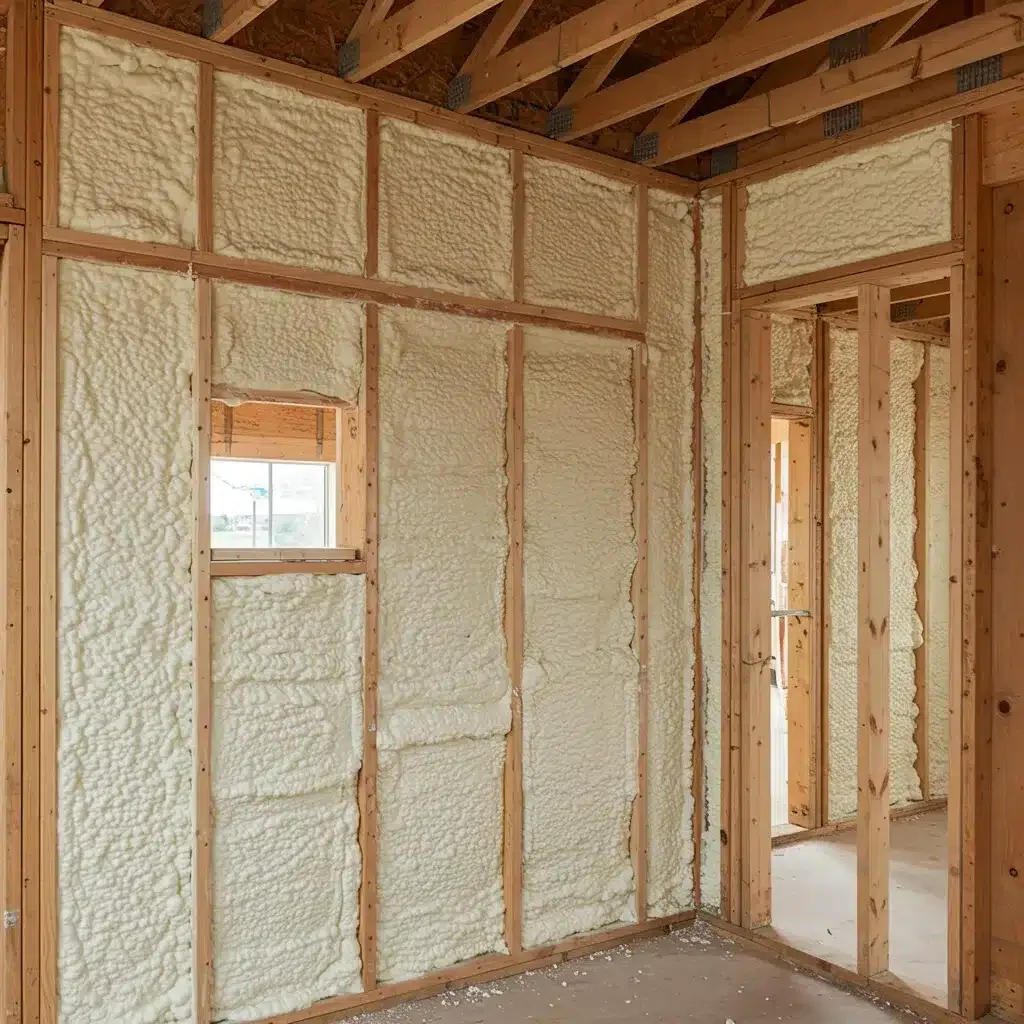
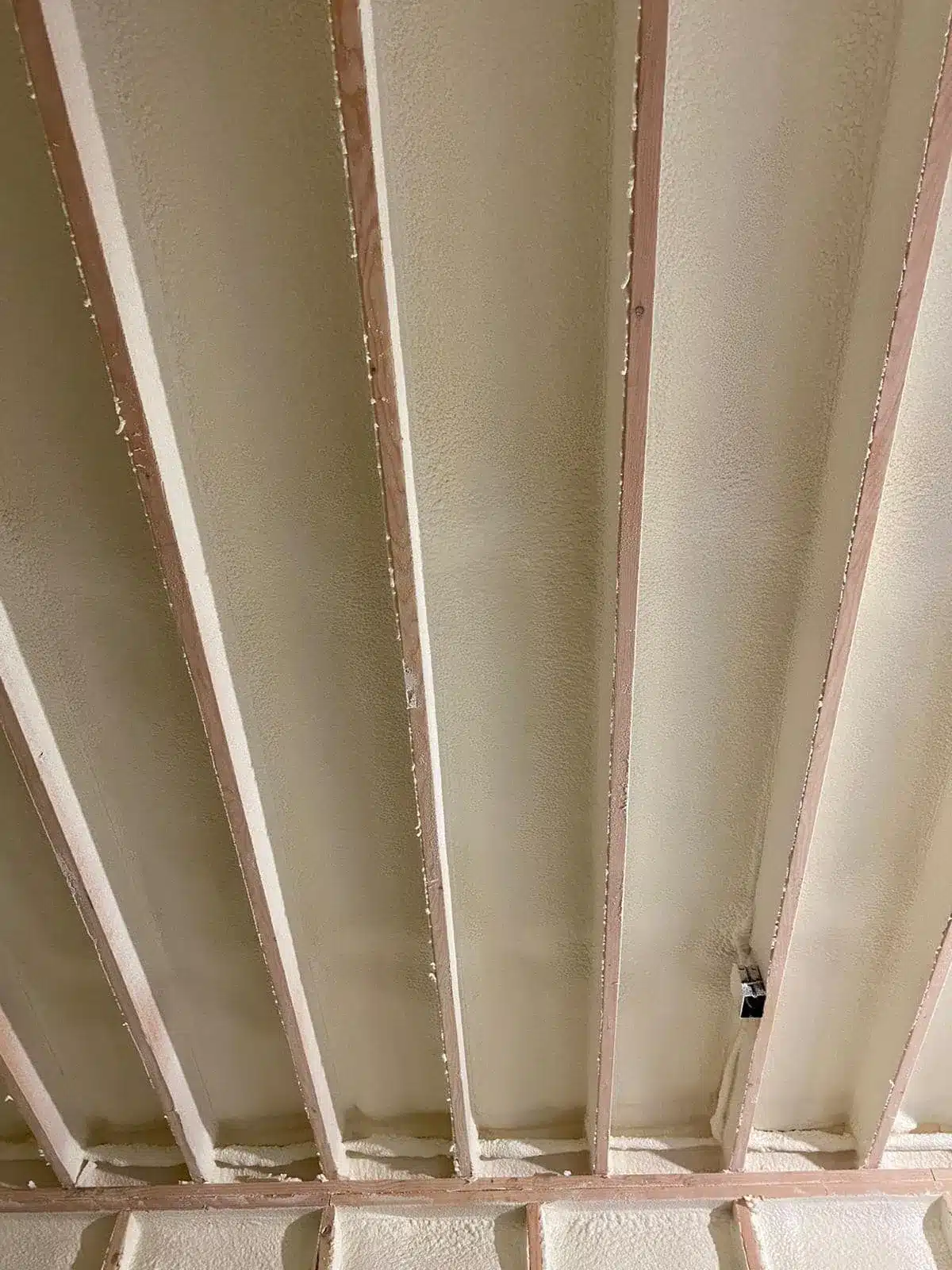
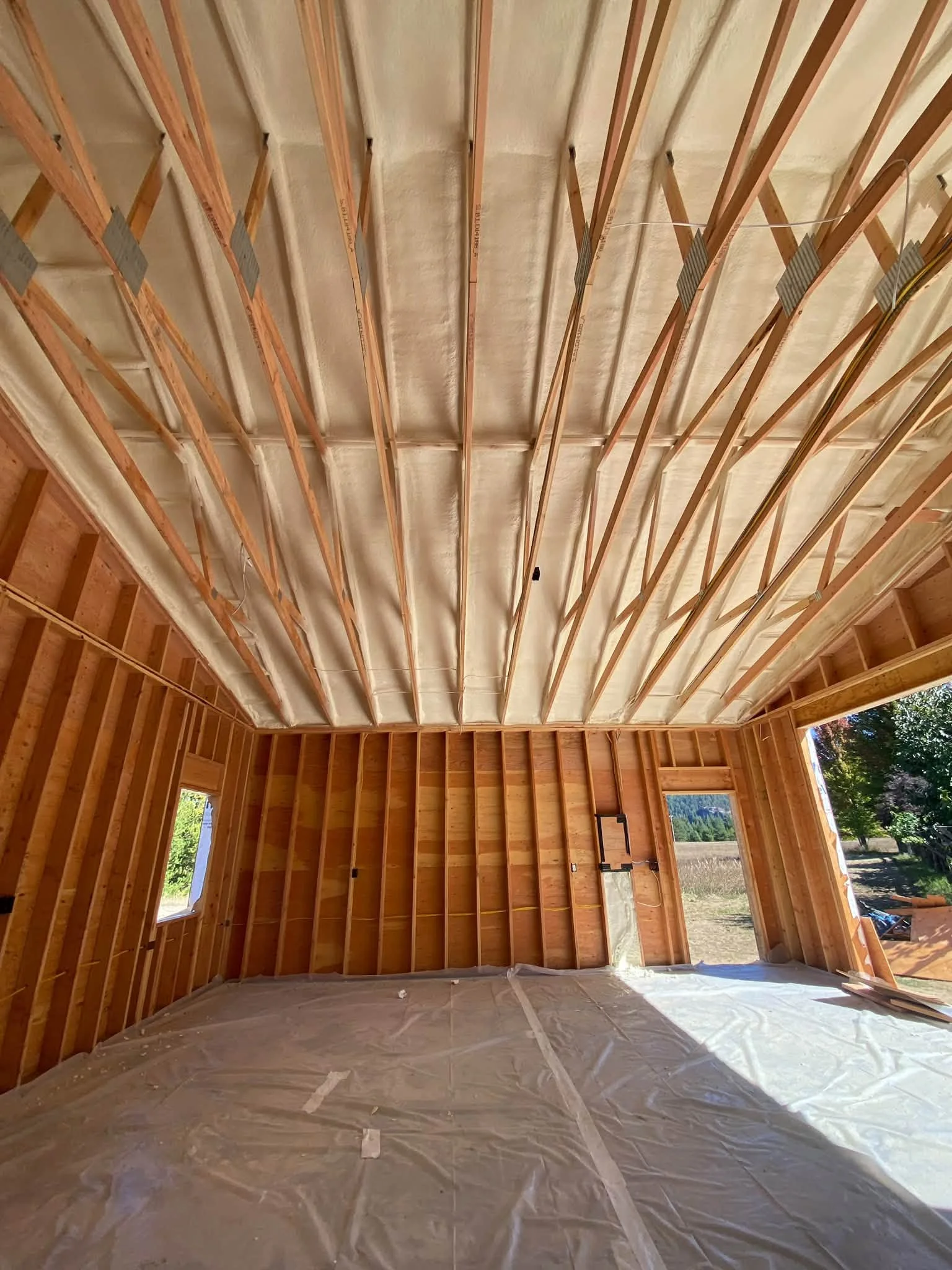
When applied, foam expands to fill irregular cavities, penetrations, and joints, then hardens into a continuous layer. InterNACHI’s guide points out that spray foam insulation in Thompson Falls, MT, and rigid foam are the only common insulation materials that create an air barrier and a thermal barrier together, as long as the application is continuous. Foam also shows you evidence of its work: dirty insulation in an attic is a visible sign that air has been pushing dust through it for years, and those streaked areas mark exactly where foam belongs.
Professional building research has identified 19 repeat offender locations. We find the same pattern in Thompson Falls homes, especially attics and crawlspaces:
| Leak Location | Why It Leaks | Best Fix |
|---|---|---|
| Attic hatch and pull-down stairs | Rarely gasketed, large surface | Weatherstripping, insulated cover, foam |
| Top plates and wiring chases | Open cavities act like chimneys | Open cell spray foam or caulk |
| Recessed can lights | Old fixtures are not airtight | ICAT fixtures or sealed covers |
| Rim joists and sill plate | Gaps where framing meets foundation | Closed cell spray foam |
| Crawlspace rim and penetrations | Dirt floors, open joist bays | Closed cell foam with vapor control |
| Dropped soffits and kneewalls | Hidden bypasses into the attic | Foam plus blocking |
| Ducts in unconditioned spaces | Leaky joints pull in attic or crawlspace air | Mastic sealing, then insulation |
A blower door test before work begins pinpoints which of these matter in your specific home, because every house leaks differently.
Both foams seal air leaks, but they behave differently and suit different applications:
| Factor | Open cell spray foam | Closed cell spray foam |
|---|---|---|
| Typical price per sq ft | $0.45 low, $0.60 average, $0.75 high | $1.90 low, $2.45 average, $2.80 high |
| Structure | Softer, expands more | Rigid, dense |
| Best for | Attic floors, wall cavities, large open areas | Rim joists, crawlspace walls, moisture-exposed areas |
| Added benefit | Sound dampening | Moisture resistance and added rigidity |
| Limitations | Not a vapor barrier | Higher material cost |
Pricing from our current project sheet shifts with jobsite conditions: difficult access, low crawlspace heights, moisture or mold issues, material price changes, and travel distance all push costs up, while clean, easy-access sites keep them down. A spray foam insulation company can assess these factors before providing a project estimate. Most homes we work on in the area fall between 1,500 and 4,000 square feet, so project totals vary widely. For comparison, standalone air sealing at trouble spots runs $0.50 to $2.00 per square foot, and insulation removal and replacement runs $2.50 to $4.50 per square foot when old, contaminated material must come out first.
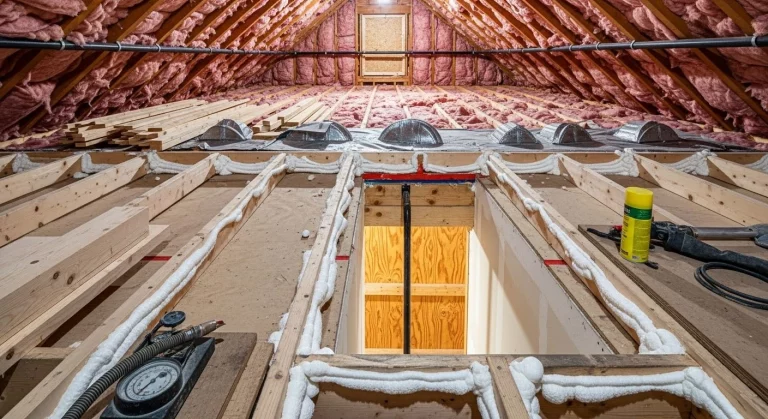
Order matters more than most homeowners realize. Vermont’s state energy guidance is direct: adding insulation without sealing air leaks first significantly reduces how well that insulation performs. Air moving through loose-fill insulation strips heat out of it through convection, which is exactly what happens in leaky attics every winter.
Our recommended sequence for a Thompson Falls retrofit:
That last step is not optional. A tighter home needs controlled ventilation, and fuel-burning appliances must be checked for back-drafting after air sealing. This is the difference between a home that performs and a home that develops moisture or air quality problems.
The EPA’s modeling estimates average savings of 15% on heating and cooling costs, or 11% on total energy costs, from cost-effective air sealing and insulation. Homes in the coldest climate zones (5 through 8) model even higher, from 12% up to 19% on heating and cooling. Thompson Falls homes fall into that cold-climate band, and whole-house retrofits on leaky older homes can land at the top of the range. Air sealing also reduces the warm air escaping into your attic, which lowers the risk of ice dams along the eaves, a familiar problem in snowy Clark Fork Valley winters.
At Selkirk Energy Solutions, we find and seal the hidden air leaks that Thompson Falls winters punish the most, using open cell foam, closed cell foam, and targeted air sealing matched to your home’s construction. Our team tests, seals, insulates, and verifies, so you get measurable results instead of guesswork. Call us at (208) 295-9780 or email [email protected] to get started.
Request a Quote | Schedule an Air Leak Assessment
Your home should hold the heat you pay for, and our crew can make that happen before the next cold snap rolls down the Clark Fork.
Yes, in most cases. Foam seals the hidden bypasses in attics, rim joists, and wall cavities where drafts actually originate, and older homes typically have the most of them.
Yes. Insulation slows heat flow but does not stop air, so sealing first prevents air from moving through the new insulation and cutting its effectiveness.
Closed cell spray foam. It seals tightly, resists moisture, and stiffens the framing in areas exposed to ground dampness and cold.
Most residential attic, rim joist, or crawlspace projects are completed in one to two days once access is clear. Tight or low crawlspaces and moisture remediation add time.
It can without proper ventilation. That is why we check combustion safety and ventilation as part of every tightening project, following established weatherization practice.