How Does Roof Design Influence Spray Foam Insulation Requirements in Dover, ID?
Your roof design is the primary factor that dictates how spray foam insulation should be installed. Because Dover, Idaho, experiences…


Spray foam insulation is one of the most practical upgrades a homeowner can make in an older house, especially in a cold climate like Bonners Ferry, ID. The combination of superior air sealing, high thermal resistance, and moisture control makes it particularly well suited for homes that were built decades before modern energy codes existed. The Ultimate Spray Foam Guide explains how the right approach depends on factors like your home’s age, construction type, which areas need attention most, and your budget. Understanding the differences between open cell and closed cell spray foam, where each performs best, and how pricing works in our local market helps you make informed decisions about where to invest.
Bonners Ferry sits in Boundary County, part of the northern Idaho panhandle, which falls squarely within DOE Climate Zone 6. This zone carries approximately 8,000 heating degree days annually, meaning homes here experience long, cold winters where heating dominates energy use for roughly seven to eight months of the year.
The IECC recommends R-60 for attics, R-13 cavity plus R-10 continuous insulation for walls, and R-25 for floors above unconditioned spaces in Zone 6. Most older homes in our area were built long before these standards existed. Many have little to no insulation in wall cavities, under-insulated attics with degraded or missing material, and vented crawlspaces that let cold air pour through the floor above. Spray Foam for Fresher Indoor Air directly addresses these gaps because it expands into irregular spaces, seals air leaks as it insulates, and adheres to surfaces that traditional batt insulation simply cannot cover effectively.
Reducing air infiltration is the least intrusive, most cost-effective retrofit strategy available, and air sealing combined with insulation can reduce energy costs substantially in older homes.
Spray polyurethane foam is applied as a liquid that expands and hardens into a continuous insulating layer. The EPA classifies spray foam into two primary categories for residential building applications: open cell (low density, half-pound) and closed cell (medium density, two-pound).
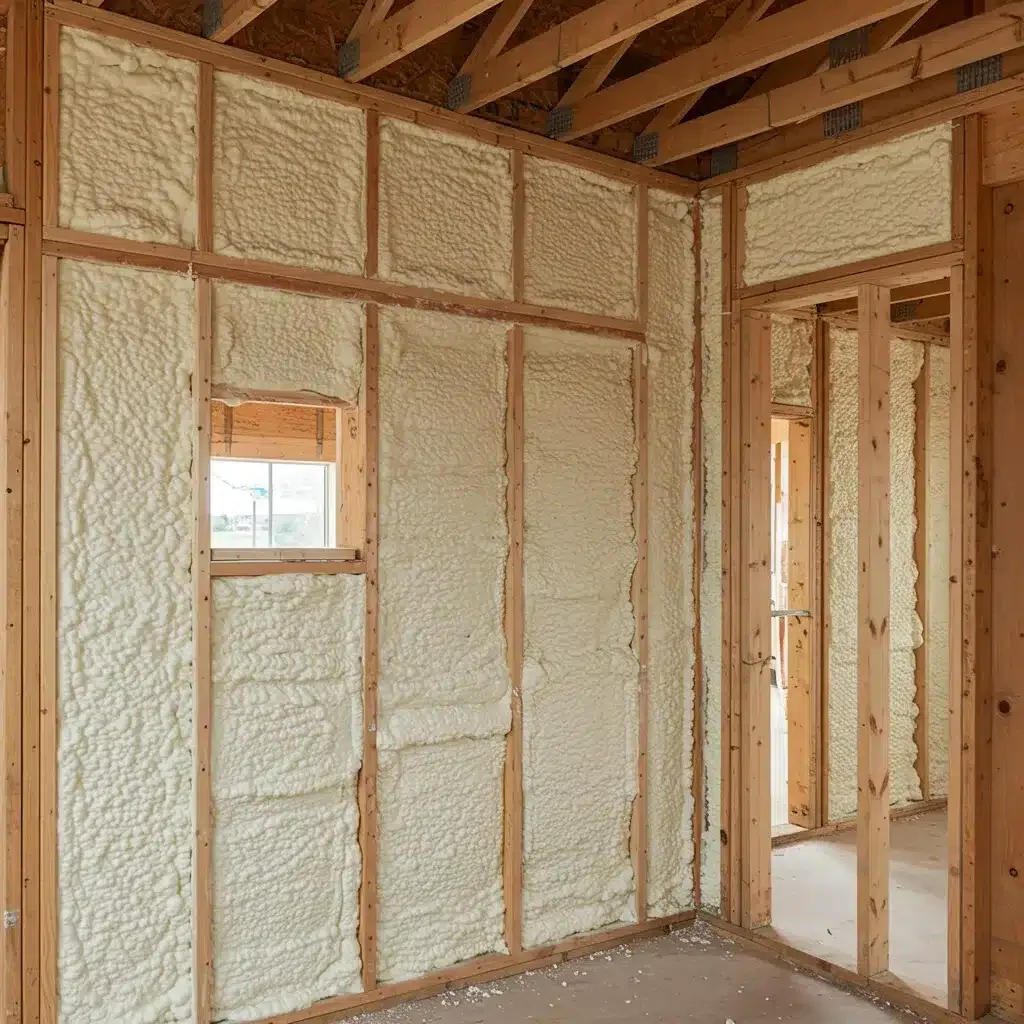
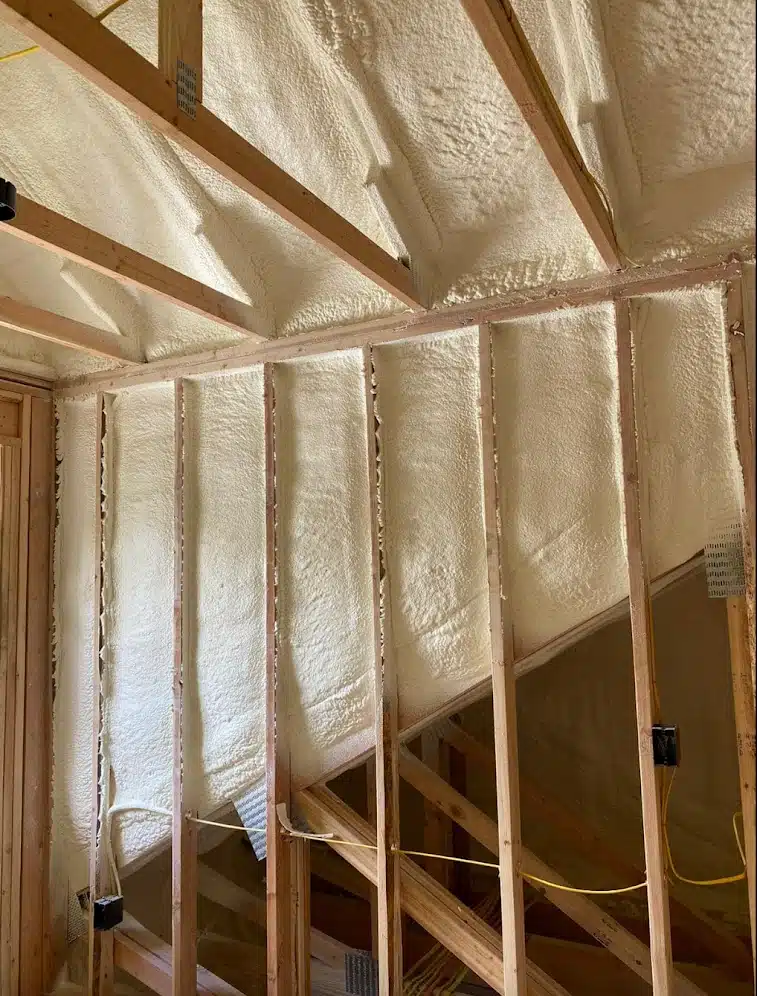
Open cell foam expands aggressively during application, filling cracks, crevices, and voids before drying to a semi-rigid, sponge-like texture. It delivers roughly R-3.5 to R-3.8 per inch according to the EPA. Because of its expansion characteristics, it is especially effective in wall cavities, attics, and between floor joists where irregular framing creates gaps that batt insulation cannot reach. It acts as an air barrier when applied at sufficient thickness, helping block convective heat loss. However, it does not serve as a vapor barrier, which means it allows moisture vapor to pass through. In a cold climate like ours, this can actually be beneficial in certain wall assemblies where trapped moisture needs a path to dry.
Closed cell foam expands less aggressively and cures to a rigid, dense material with a higher R-value of approximately R-6.5 per inch. The Wikipedia entry on spray foam notes that closed cell polyurethane foam has the highest R-value of readily available spray foam insulation and serves as both a vapor barrier and an air barrier when installed at minimum thicknesses. This makes it the preferred choice for crawlspaces, rim joists, basement walls, and cathedral ceilings in Zone 6, where controlling moisture infiltration is just as important as stopping heat loss.
| Property | Open Cell | Closed Cell |
|---|---|---|
| R-Value per Inch | ~3.5 to 3.8 | ~6.5 |
| Density | Low (half-pound) | Medium (two-pound) |
| Vapor Barrier | No | Yes |
| Air Barrier | Yes (at sufficient thickness) | Yes |
| Best Applications | Wall cavities, attics, floor joists | Crawlspace walls, rim joists, basements |
| Expansion | Aggressive | Moderate |
| Rigidity | Semi-rigid, sponge-like | Rigid |
Not every area of an older home needs spray foam. The most impactful areas to address first are those where both air leakage and missing insulation compound energy loss.
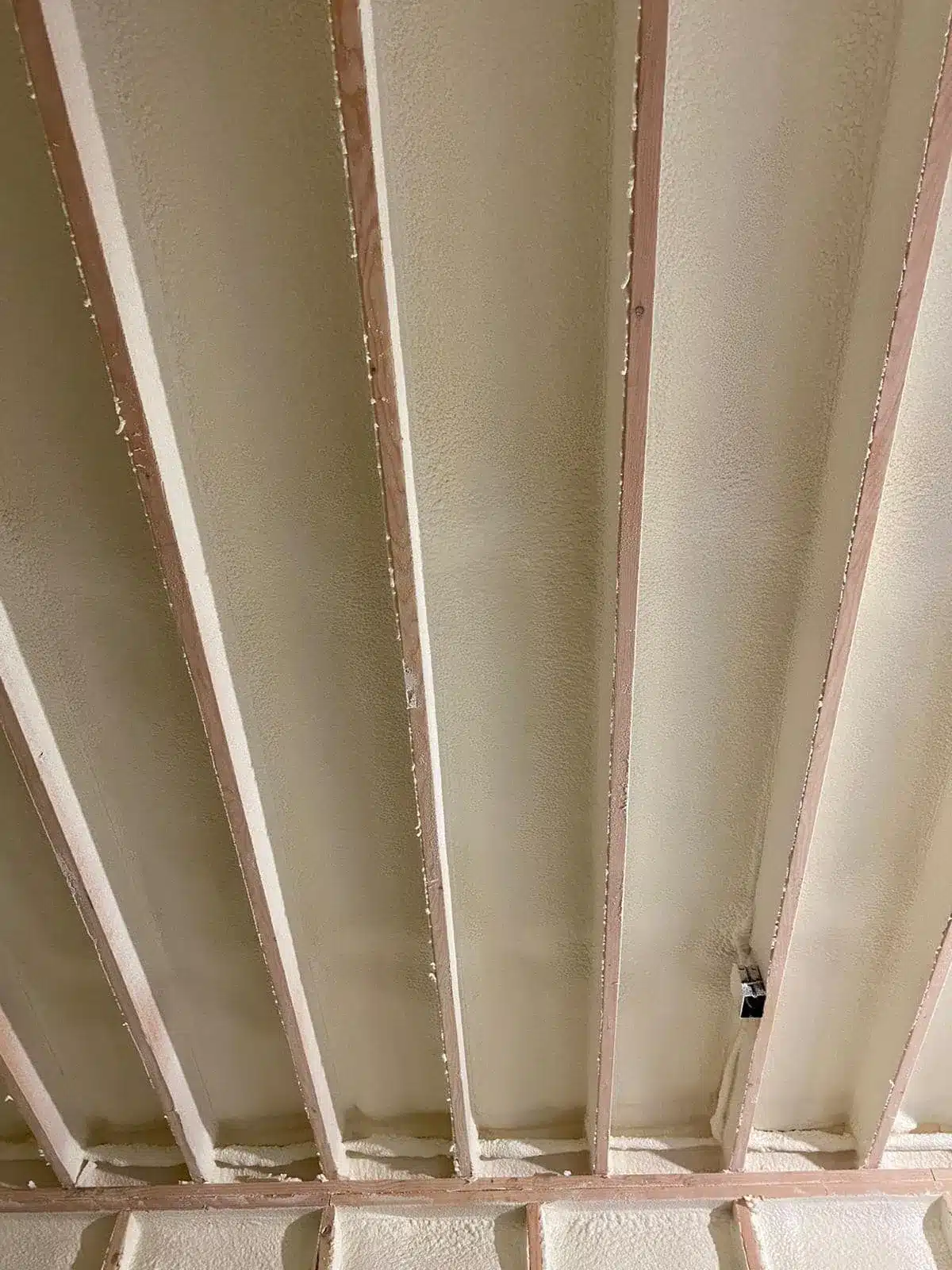
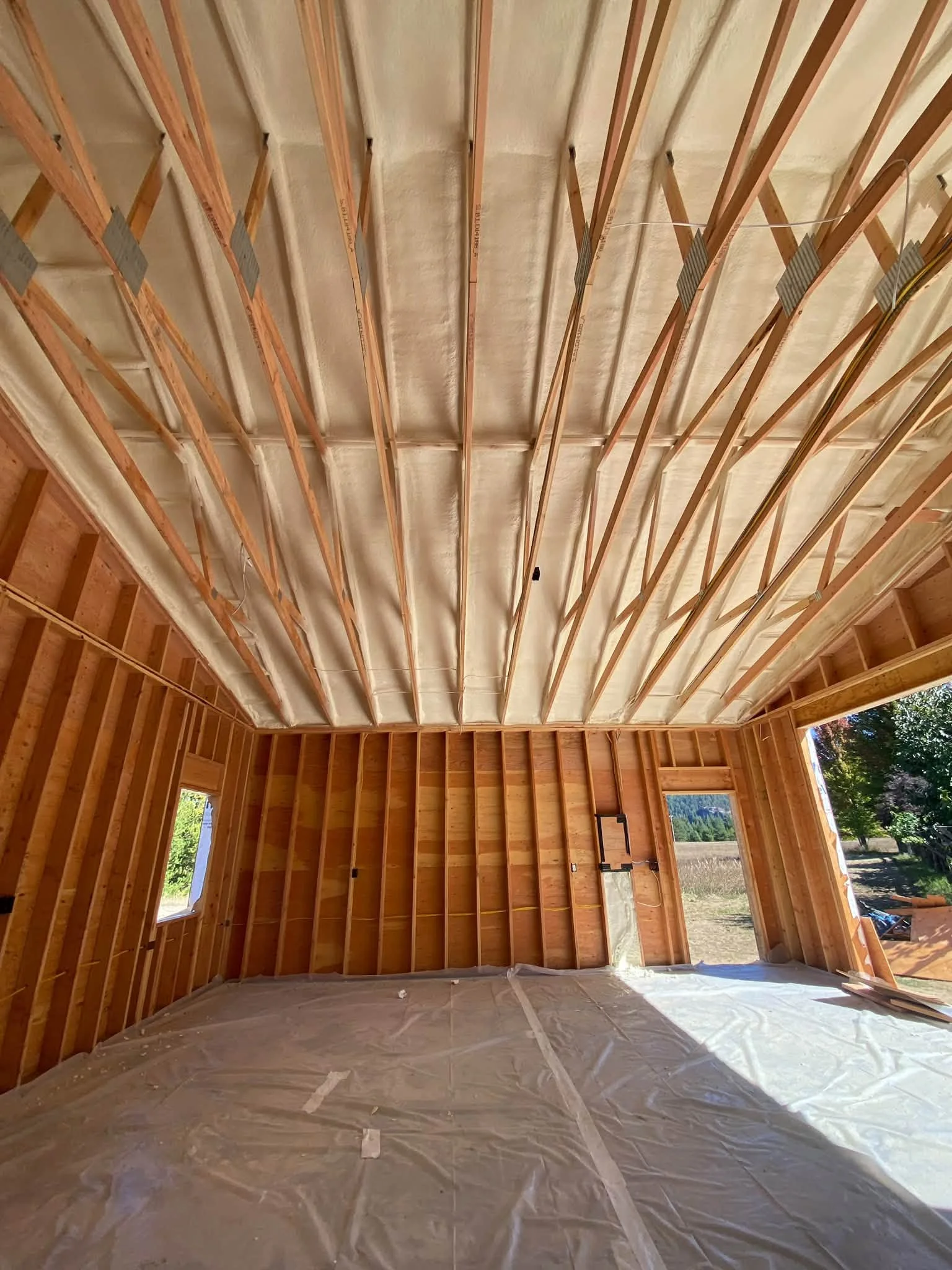
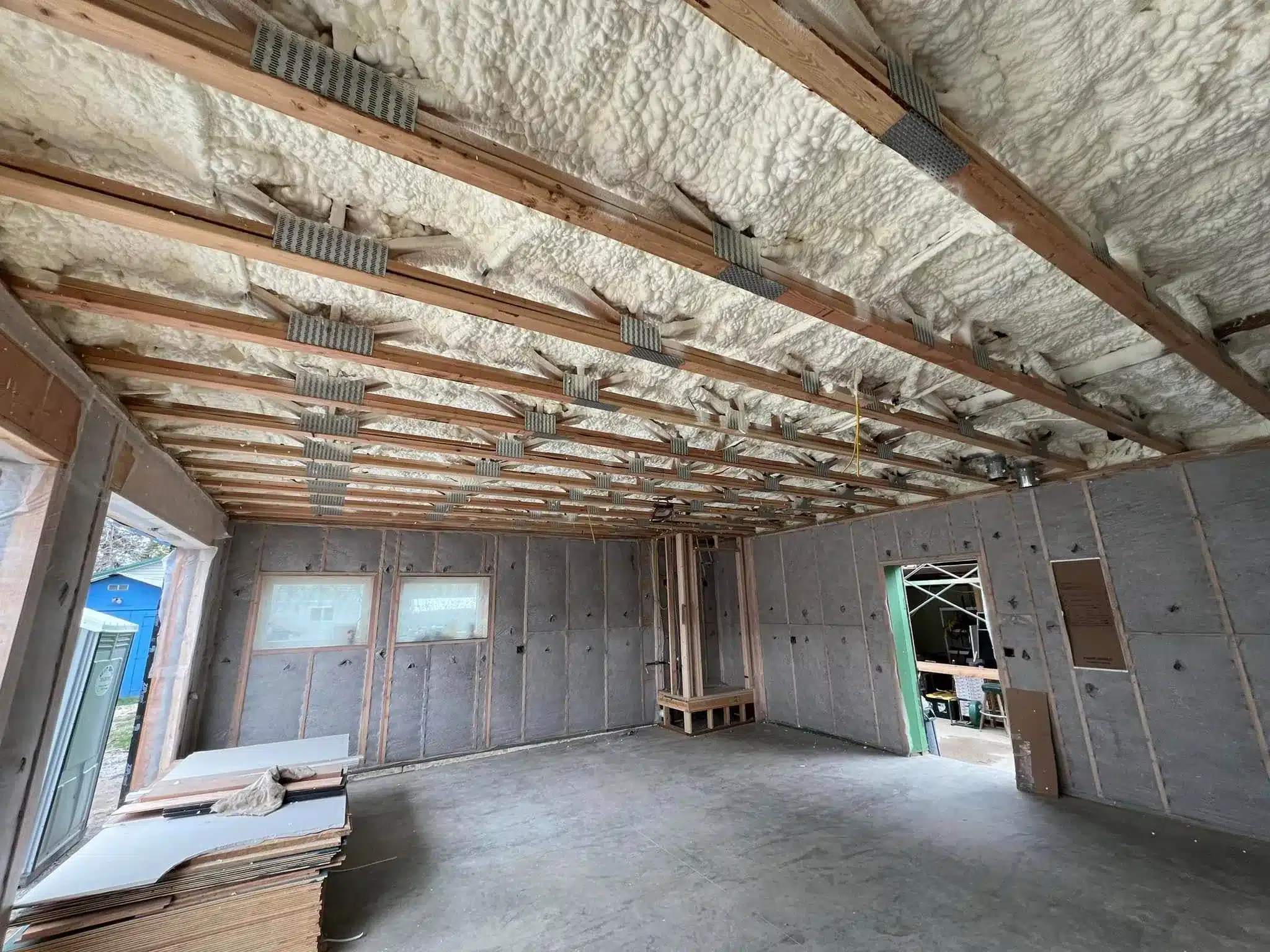
The attic floor is typically the largest source of heat loss in an older home. Warm indoor air rises through gaps around recessed lights, plumbing stacks, electrical wiring, and chimney chases, then escapes through whatever insulation may be present. Spray foam applied to the attic floor seals these penetrations while insulating simultaneously. For homes with cathedral ceilings or finished attics, closed cell foam applied to the rafter bays provides insulation without the need for venting, meeting the Zone 6 R-49 cathedral ceiling requirement in less depth than fiberglass would require.
In Bonners Ferry, many older homes sit over vented crawlspaces. Cold outside air enters through foundation vents and cools the floor above, making rooms above the crawlspace uncomfortable and driving up heating bills. Sealing and insulating crawlspace walls with closed cell spray foam turns the space into a conditioned zone, which eliminates the stack effect pulling cold air through the floor and helps protect pipes from freezing. Our team handles crawlspace insulation projects regularly throughout Boundary County, and this application consistently delivers noticeable comfort improvements.
The rim joist area, where the floor framing meets the foundation wall, is one of the most leaky areas in any home. It is also difficult to insulate with fiberglass because of the irregular framing and penetrating utilities. Spray foam fills these voids completely, providing both an air seal and thermal resistance. For basement walls, closed cell foam adds R-value while also acting as a moisture barrier against ground moisture.
Pricing for spray foam installation varies based on the type of foam, access conditions, and the specific areas being treated. Here is a breakdown of average pricing for our 83864 service area:
| Service | Low Per Sq Ft | Average Per Sq Ft | High Per Sq Ft |
|---|---|---|---|
| Open Cell Spray Foam | $0.45 | $0.60 | $0.75 |
| Closed Cell Spray Foam | $1.90 | $2.45 | $2.80 |
| Air Sealing | $0.50 | $1.00 | $2.00 |
| Insulation Removal and Replacement | $2.50 | $3.50 | $4.50 |
Several factors influence where a project falls within these ranges. Difficult access, such as tight crawlspaces or low-clearance attics, increases labor time and raises pricing. Existing moisture or mold issues require remediation before insulation can be installed, which adds cost. Clean job sites with easy access and clear working conditions help keep pricing at the lower end of the range.
Adding insulation without addressing air leaks is like wearing a thick coat with the zipper open. Tightening a building is essential for energy efficiency but must be paired with proper ventilation to avoid moisture buildup and indoor air quality problems.
In older homes, the stack effect drives warm air up and out through attic penetrations while pulling cold air in through lower-level gaps around foundations, rim joists, and windows. Spray foam interrupts this cycle by creating a continuous air barrier. When we combine spray foam insulation with targeted air sealing at penetrations, duct runs, and framing gaps, the result is a home that retains heated air more effectively and requires less energy to maintain comfortable temperatures.
Spray foam is a highly-effective and widely-used insulation and air sealant, which is why it is our go-to recommendation for older homes in Boundary County that need both thermal performance and air leakage control.
One of the concerns homeowners sometimes raise about spray foam in older homes is moisture. This is a valid consideration, particularly in cold climates. Adding insulation without understanding how the house manages moisture can cause condensation, mold, and wood deterioration.
The advantage of spray foam in this context is twofold. Closed cell foam acts as a vapor barrier, preventing moisture from infiltrating through crawlspace walls and basement surfaces. Open cell foam allows vapor diffusion, which can be preferable in above-grade wall assemblies where the building needs to dry in both directions. Our team assesses each home’s specific conditions before recommending which type and thickness of foam to use, ensuring that moisture control is built into the insulation strategy rather than treated as an afterthought.
The best insulation strategy for an older home in Bonners Ferry depends on the home’s construction, current insulation condition, and which areas are causing the most discomfort and energy waste.
| Home Scenario | Recommended Approach | Key Notes |
|---|---|---|
| Vented crawlspace, cold floors | Closed cell on crawlspace walls | Eliminates cold air infiltration, protects plumbing |
| Unfinished attic, degraded insulation | Air seal + spray foam on attic floor | Addresses stack effect, most cost-effective first step |
| Finished attic or cathedral ceiling | Closed cell foam in rafter bays | Achieves high R-value in limited cavity depth |
| Rim joist air leaks | Closed cell spray foam | Fills irregular framing, seals penetrations |
| Drafty walls with no existing insulation | Open cell foam via wall injection or drilled access | Improves comfort, allow proper drying potential |
Choosing the right installer matters as much as choosing the right product. Here are the indicators that a contractor will deliver a quality result:
Selkirk Energy Solutions serves homeowners throughout Bonners Ferry and Boundary County with professional spray foam insulation, air sealing, and crawlspace encapsulation. Our team evaluates each home individually to recommend the right type and thickness of spray foam for your specific conditions, ensuring you get the comfort and energy savings you are looking for. Whether your home needs crawlspace insulation, attic air sealing, or a full insulation retrofit, we have the experience and equipment to handle it.
Request a Quote | Schedule an Assessment
Call us at (208) 295-9780 or email [email protected] to get started with a free assessment. We will walk through your home, identify the areas where spray foam will make the biggest difference, and provide a clear, honest quote with no pressure.
Properly installed spray foam insulation is a permanent upgrade that does not settle, sag, or degrade over time. It bonds to the surfaces it is applied to and maintains its R-value and air sealing properties for the life of the building.
When applied correctly by trained professionals, spray foam will not damage framing, plaster, or other building materials. We assess your home’s construction before installation to select the right product and application method for your specific situation.
Spray foam is non-toxic once fully cured. Building occupants should follow the contractor’s guidance on safe re-entry times, which typically range from 12 to 24 hours after application, depending on the product used.
Yes, spray foam can be installed in cold weather conditions. The application equipment heats the chemical components during spraying, and we take precautions to ensure proper curing temperatures. Our team works year-round across Boundary County.
Not always. In some cases, such as attics with dirty or compressed fiberglass, air sealing and applying spray foam over clean areas can be done without full removal. In other situations, such as crawlspaces with mold or water-damaged material, removal is necessary before new foam is applied. We evaluate each space individually.