How Can Spray Foam Insulation Help Reduce Persistent Drafts in Garwood, ID Homes?
Spray foam insulation reduces persistent drafts because it works as an insulation and an air barrier in a single application.…


If your Hayden home feels drafty in winter despite running the heating system constantly, air leaks are likely the culprit, and open-cell spray foam installation is one of the most effective solutions for sealing those gaps and restoring comfort. Hayden’s cold winters mean that even small air infiltration points, like cracks around windows, gaps in wall framing, and unsealed penetrations from plumbing or wiring, allow warm air to escape and cold air to enter. This forces your HVAC system to work harder, drives up energy bills, and creates uneven temperatures throughout the house. The right insulation approach depends on the areas of your home that are leaking, the type of construction, and whether moisture management is a concern. For many Hayden homeowners, open-cell spray foam provides a combination of air sealing, thermal resistance , and moisture permeability that fits the local climate well, especially in wall cavities, attics, and crawlspaces.
Air leaks are essentially uncontrolled airflow through the building envelope, the boundary between conditioned living space and the outdoors. According to the EPA, outdoor air enters homes through infiltration, a process where air flows into the house through openings, joints, and cracks in walls, floors, ceilings, and around windows and doors .
When warm indoor air escapes through these gaps, your heating system must compensate. The result is higher energy consumption and a home that never quite feels comfortable. Beyond energy waste, air leaks introduce cold drafts that create uneven temperatures from room to room. Some areas of your home may feel warm while others remain persistently chilly, even with the thermostat set high.
Moisture is another concern. As warm indoor air moves through wall cavities and ceiling penetrations toward the colder exterior, it can condense on surfaces within the assembly. Over time, this trapped moisture can lead to mold growth, wood rot, and structural damage. The EPA notes that source control, including sealing air leaks, is usually the most effective way to improve indoor air quality and prevent moisture-related problems in the home .
Most homeowners in Hayden, ID notice air leak problems gradually, often after the first cold snap or when energy bills arrive higher than expected. Here are the most common indicators:
Drafts near windows, doors, and exterior walls. You feel cold air moving even when the heating system is running. These drafts are most noticeable on windy days or near exterior-facing walls.
Cold spots on walls, floors, or ceilings. Certain areas of a room feel noticeably colder than others, especially near exterior corners, above windows, or along the floor line. This often indicates missing or inadequate insulation combined with air infiltration.
Rising heating bills without changes in usage. If your energy costs increase year over year even though your habits have not changed, air leaks may be steadily worsening as building materials shift, settle, or degrade.
Visible condensation or frost on windows. When cold outdoor temperatures meet warm indoor air near poorly sealed windows, condensation forms on the glass. Persistent condensation can damage window frames and lead to mold growth on surrounding surfaces.
Dust streaks at electrical outlets and light switches. Air moving through wall cavities carries dust and particulates. Over time, dark streaks appear around outlets, switch plates, and baseboards where air is infiltrating.
Ice dams forming on the roof in winter. Warm air escaping from the living space into the attic melts snow on the roof, which then refreezes at the eaves. Ice dams are a direct sign that heat is escaping through air leaks in the ceiling or attic floor.
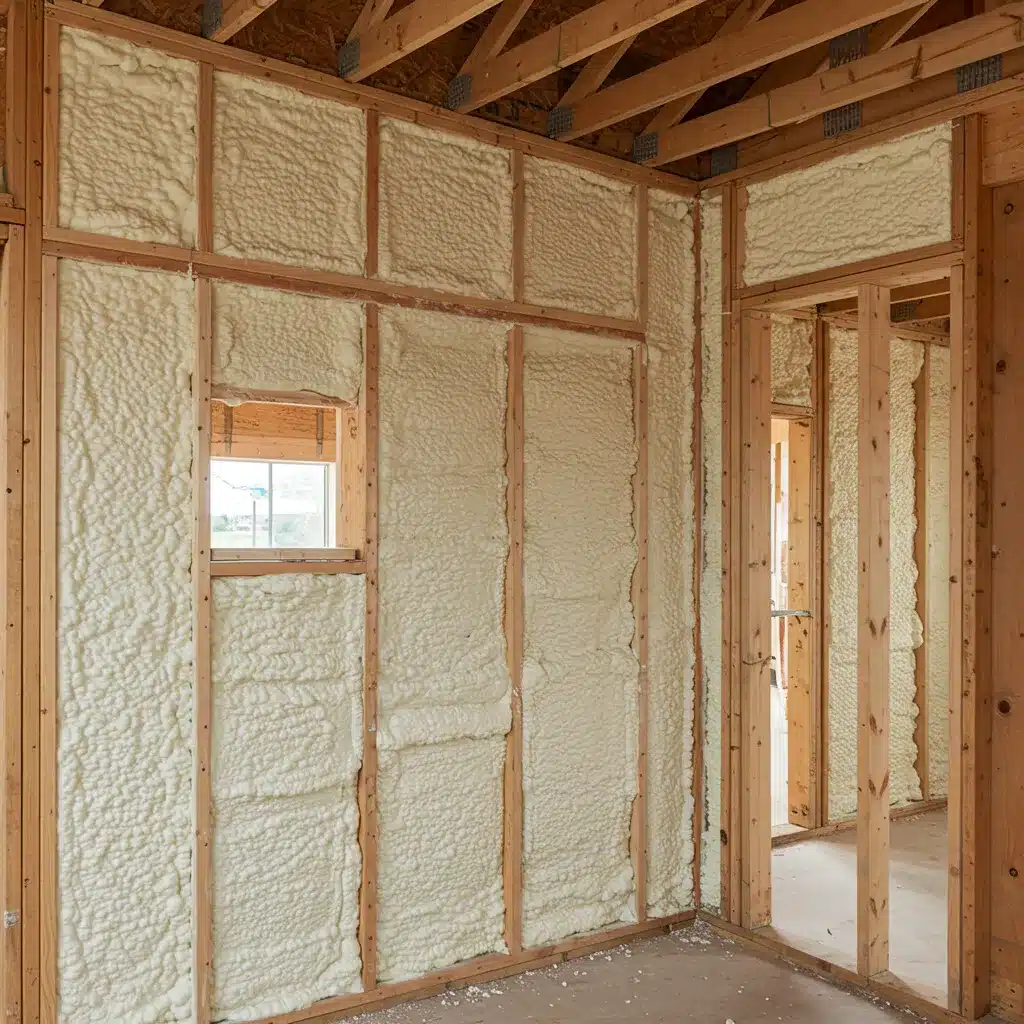
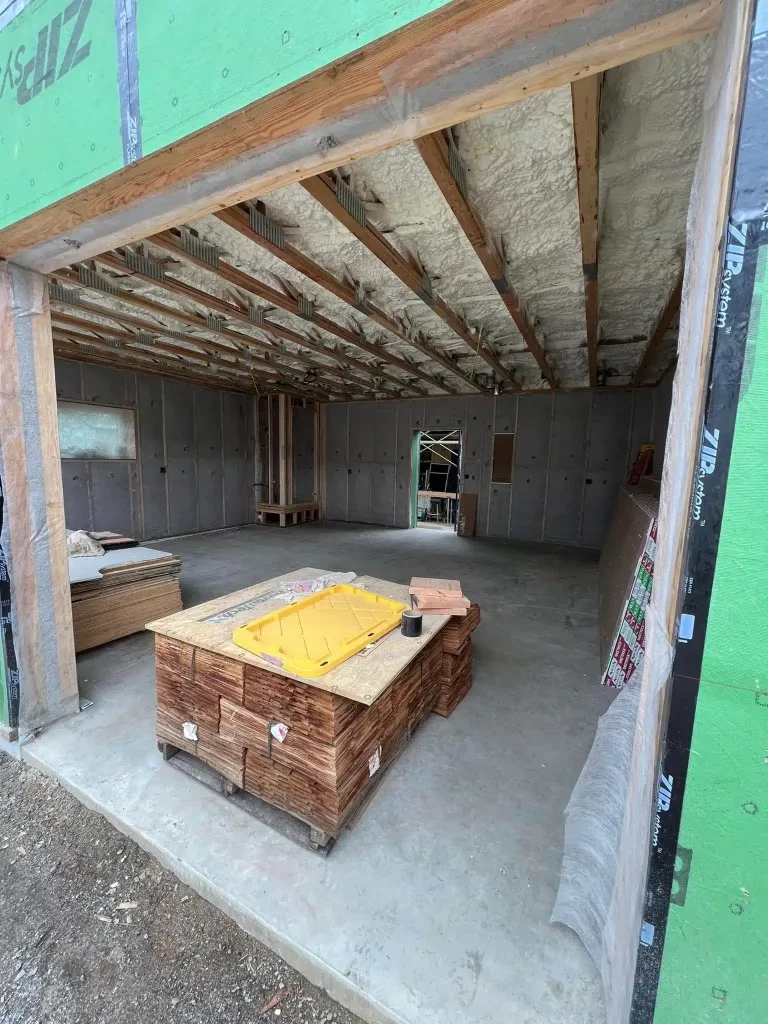
Open-cell spray foam is a polyurethane-based insulation material applied as a liquid that expands into a semi-rigid foam. As noted in research on polyurethane foams, open-cell structures have interconnected pores that are smaller in size and irregularly shaped, which gives them a lower density compared to closed-cell alternatives .
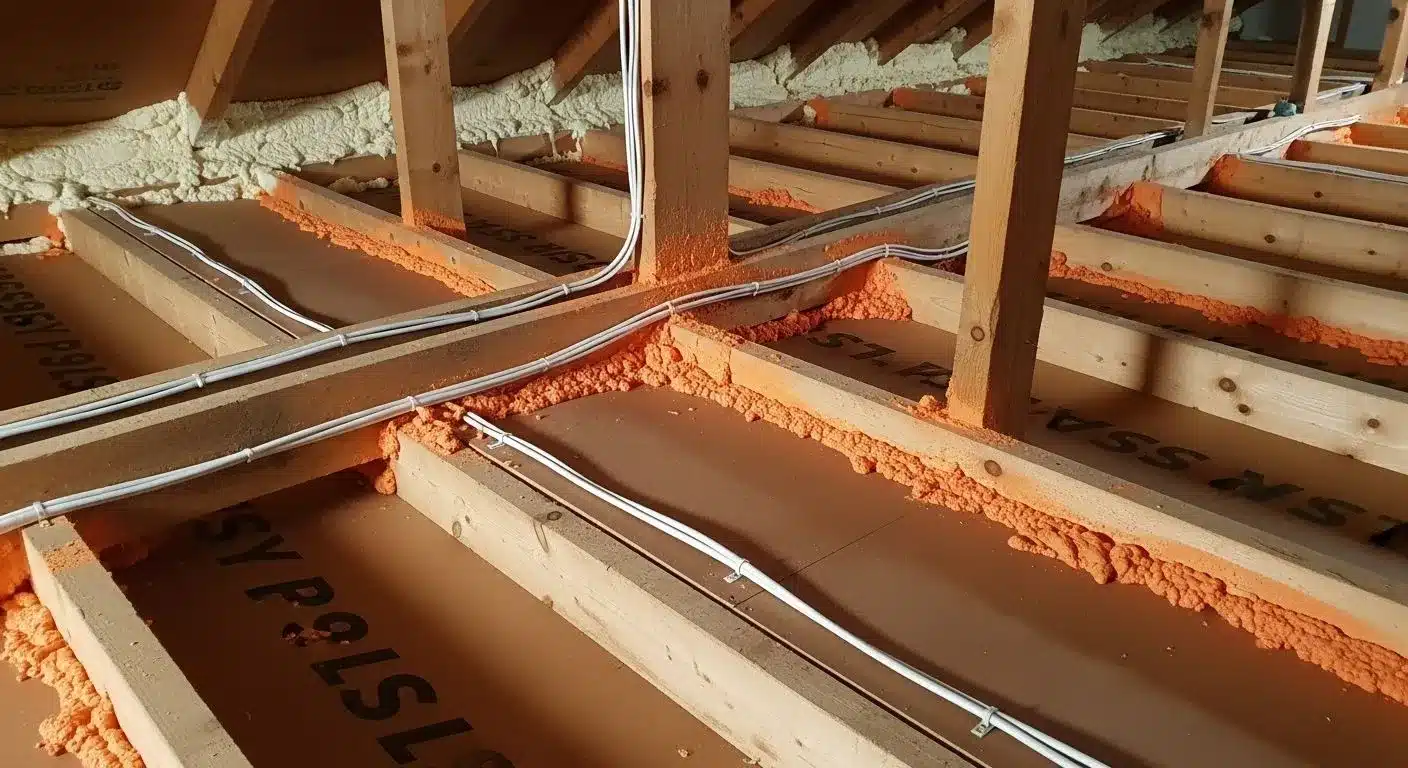
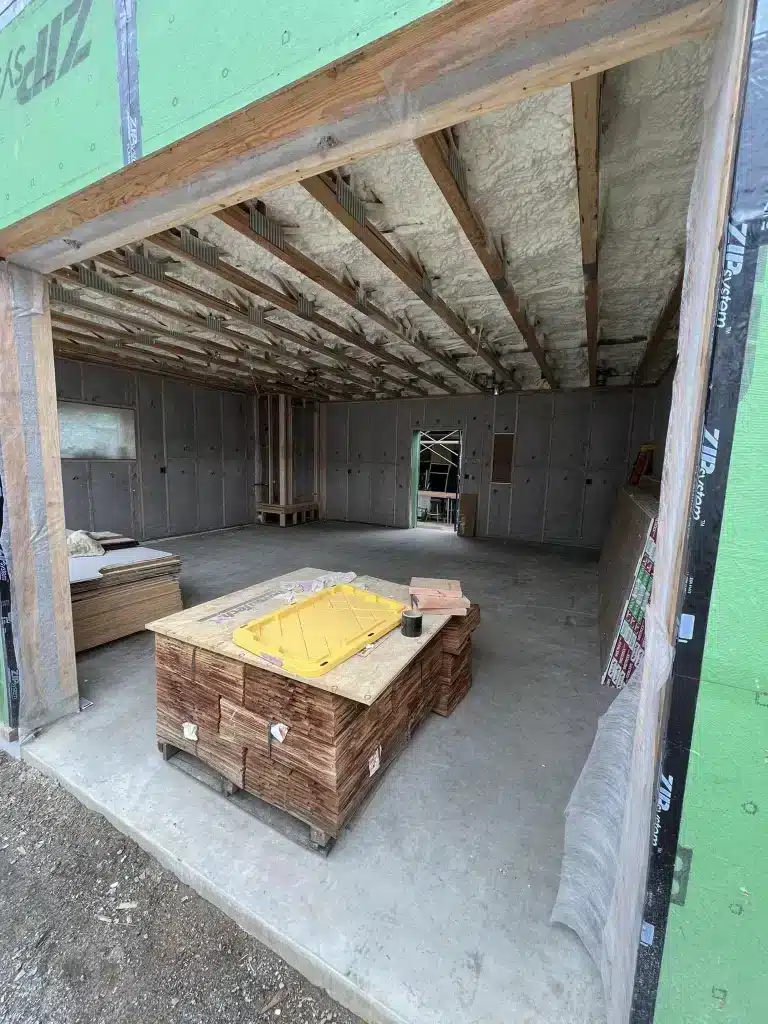
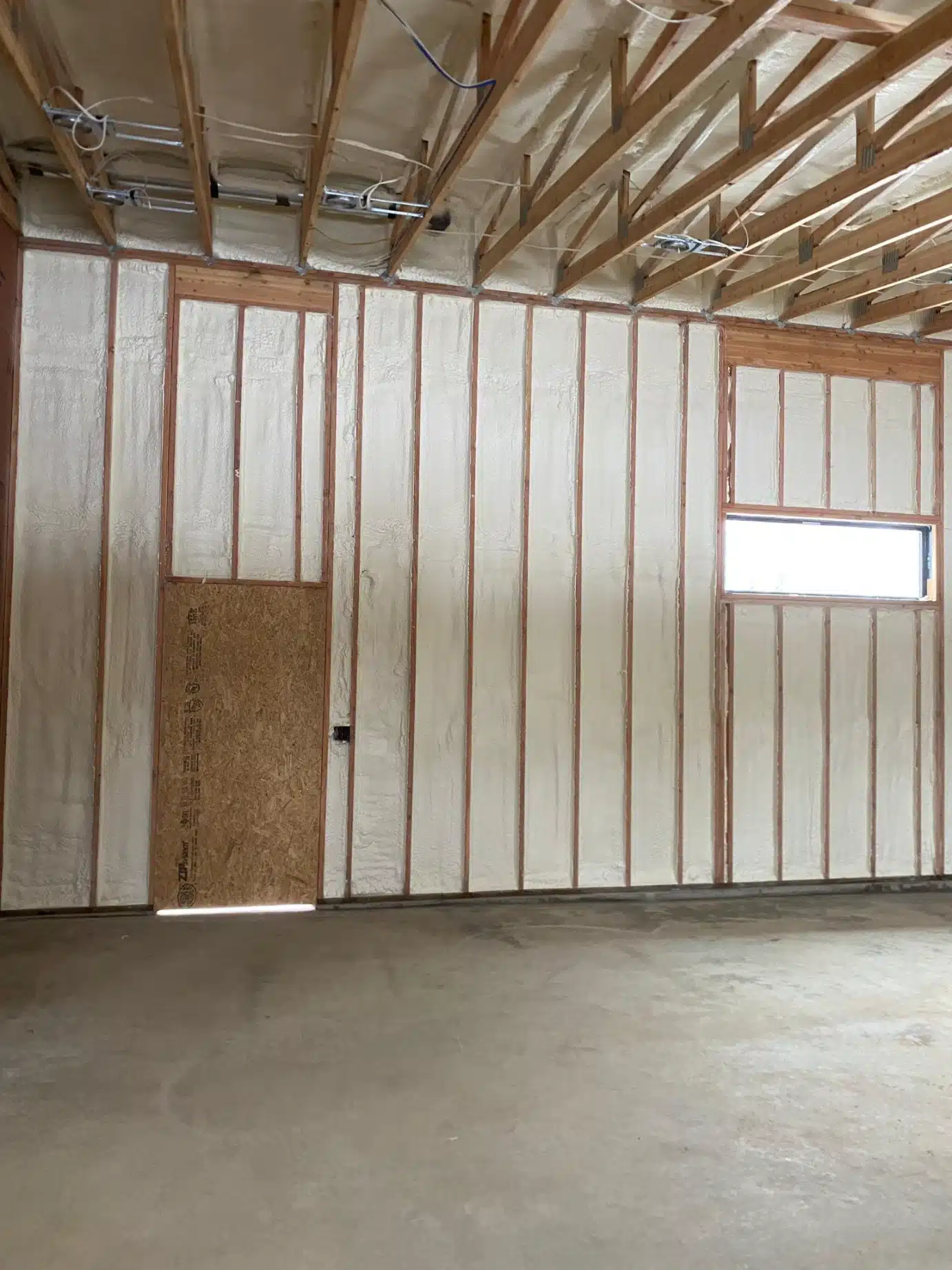
When sprayed into wall cavities, attics, or crawlspaces, the foam expands to fill gaps, cracks, and irregular spaces that fiberglass batts or blown cellulose cannot reach. This expansion is what makes spray foam particularly effective at air sealing. It does not just insulate, it physically blocks the pathways where air would otherwise infiltrate or escape.
For Hayden homeowners in a cold climate, this dual function of insulation plus air sealing in a single step is a major advantage. Traditional insulation materials like fiberglass can slow conductive heat transfer but do little to stop convective air movement through gaps and penetrations. Open-cell spray foam addresses both.
Building Science Corporation research emphasizes that the function of an air barrier is to retard the migration of air, which is distinct from a vapor barrier .
Not every insulation project requires open-cell spray foam, but there are specific applications where it outperforms other materials:
| Application | Why Open-Cell Foam Fits | What to Watch For |
|---|---|---|
| Wall cavities | Expands to fill irregular framing gaps and around wiring, plumbing, and electrical boxes where air leaks commonly occur | Ensure cavity depth is sufficient for the foam to expand fully |
| Attic floors and cathedral ceilings | Air seals the ceiling plane, preventing warm air from escaping into unconditioned attic space | Verify adequate ventilation in vented attics to prevent moisture buildup |
| Crawlspaces | Seals rim joist areas and floor cavities against cold air infiltration from below | Check for standing water or moisture issues before application |
| Bonus rooms over garages | Fills complex framing around cantilevers, soffits, and knee walls that are difficult to insulate with batts | Ensure proper thermal boundary is maintained at all transitions |
Hayden homeowners often ask whether open-cell or closed-cell spray foam is the better choice. The answer depends on the specific application, budget, and moisture conditions. Here is how they compare:
| Feature | Open-Cell Spray Foam | Closed-Cell Spray Foam |
|---|---|---|
| Density | Lower, lighter weight | Higher, more rigid |
| Air sealing | Excellent, fills gaps completely | Excellent, also fills gaps completely |
| Vapor permeability | Vapor permeable, allows drying | Vapor semi-impermeable, acts as a vapor retarder |
| R-value per inch | Approximately R-3.5 to R-3.8 | Approximately R-6 to R-7 |
| Best applications | Wall cavities, attics, crawlspaces, areas where drying potential is needed | Below-grade, flood-prone areas, exterior continuous insulation, thin cavity applications |
| Hayden climate suitability | Well suited for most residential cavity applications in a cold climate with proper design | Preferred where moisture drive is a concern or where higher R-value per inch is needed |
For most standard residential applications in Hayden, open-cell spray foam provides the right balance of air sealing, thermal performance, and moisture management. Closed-cell foam may be appropriate for specific situations like basement walls or where the insulation cavity is too shallow for open-cell to achieve the needed R-value.
The investment for open-cell spray foam insulation in the Hayden area varies based on the scope of work, access difficulty, and project conditions. Based on our project data:
Factors that influence project cost include access to the work area, crawlspace height, the presence of moisture or mold issues that need to be addressed first, material pricing, and travel distance to the jobsite. Clean, accessible work sites generally result in lower pricing, while tight crawlspaces, difficult attic entries, and extensive preparation work increase the overall investment.
Choosing the right contractor for spray foam insulation in Hayden matters as much as choosing the right material. Here are indicators that a contractor is worth your trust:
Selkirk Energy Solutions helps Hayden homeowners identify and eliminate air leaks with professional open-cell spray foam insulation and air sealing services. Our team assesses your home’s specific needs, recommends the right approach for each area, and completes every project with attention to detail and long-term performance in mind. Contact us at [email protected] or call (208) 295-9780 to discuss your project.
Request a Free Quote | Schedule an Insulation Assessment
Air leaks and insulation deficiencies often go hand in hand, but drafts, cold spots near exterior walls, and high energy bills are strong indicators that uncontrolled air infiltration is contributing to the problem.
Spray foam application requires specialized equipment, training, and safety precautions. Professional installation ensures proper coverage, correct thickness, and adherence to building codes.
The interconnected cell structure of open-cell foam provides effective acoustic dampening, making it a good choice for interior walls, bonus rooms, and shared walls in multi-family construction.
When properly installed, spray foam insulation is a permanent solution that does not settle, sag, or degrade over the life of the building.
Air sealing reduces uncontrolled infiltration, but your home still needs mechanical ventilation. Our team evaluates ventilation needs as part of every insulation assessment to maintain healthy indoor air quality.