How Does Roof Design Influence Spray Foam Insulation Requirements in Dover, ID?
Your roof design is the primary factor that dictates how spray foam insulation should be installed. Because Dover, Idaho, experiences…


Closed cell spray foam insulation delivers a combination of thermal performance, moisture resistance, and air sealing that addresses the specific building challenges in Libby, MT. The Guide to Closed Cell Spray Foam explains how these benefits support moisture-prone building areas. With a continental climate classified as humid continental (Dfb), Libby receives roughly 19 inches of annual precipitation and over 48 inches of snowfall, with 125 average precipitation days per year and temperatures swinging from minus 46 to 110 degrees Fahrenheit Libby, Montana – Wikipedia. Buildings in this environment face constant pressure from moisture infiltration, condensation risk, and heat loss. Closed cell spray foam answers all three problems in a single application, which is why it has become a preferred insulation strategy for basements, crawlspaces, and wall assemblies in the Libby area.
Libby sits in the Kootenai Valley at roughly 2,100 feet of elevation, surrounded by the Cabinet and Purcell mountain ranges. The climate data tells a clear story about why moisture management is not optional here, but essential. The town averages about 125 days of precipitation per year, with the wettest months of October through December each producing over two inches of moisture. Winter temperatures regularly drop below zero, while summer highs can exceed 100 degrees.
According to research on building insulation in damp environments, moisture and high humidity can degrade thermal performance. Some insulation materials see thermal conductivity increase by up to 45% when exposed to high humidity conditions, while polyurethane foam (PUR) shows only about a 5% increase. This stability matters in a place where indoor-outdoor temperature differentials can exceed 70 degrees for months at a time, driving condensation risks in wall and ceiling cavities.
The U.S. insulation standards based on ASHRAE 90.1 categorize requirements by climate zone, and Montana’s cold climate zone demands some of the highest R-values in the country for wall assemblies. Meeting those targets with standard batt insulation alone leaves buildings vulnerable to air leakage, which accounts for more than 98% of water vapor movement through building cavities.
Understanding why closed cell spray foam works well in moisture-prone areas requires comparing it to the alternatives. The material is a rigid polyurethane foam with a closed-cell structure, meaning the individual gas-filled cells within the foam are not interconnected. This structure is fundamentally different from open-cell foams, fiberglass, and mineral wool.
The Wikipedia entry on polyurethane foam describes rigid foams as having a closed-cell structure where pores are not interconnected, giving them low thermal conduction and good dimensional stability. This cellular structure is what allows closed cell spray foam to serve simultaneously as insulation, an air barrier, and a vapor retarder.
| Property | Closed Cell Spray Foam | Open Cell Foam | Fiberglass Batts | Mineral Wool |
|---|---|---|---|---|
| R-value per inch | R-5.5 to R-6.5 | R-3.6 | R-3.1 to R-4.3 | R-2.5 to R-3.85 |
| Vapor permeability | Class I (<0.1 perm) | Semi-permeable | Permeable | Permeable |
| Air sealing | Excellent | Good | Poor | Poor |
| Moisture absorption | Negligible | Can absorb water | Can absorb water | Can absorb water |
| Structural support | Adds wall rigidity | Minimal | None | None |
The R-value data comes from the R-value (insulation) reference on Wikipedia, which lists closed-cell polyurethane spray foam at R-5.5 to R-6.5 per inch, significantly outperforming both fiberglass and mineral wool per unit of thickness. In practical terms, achieving the same thermal resistance requires less cavity depth, which preserves usable floor space in tight areas like crawlspace bays and older homes with narrow framing.
In heating-dominated climates like Libby, vapor retarders should be placed toward the interior, heated side of the wall assembly. Closed-Cell Spray Foam Waterproof performance helps address moisture concerns because warm indoor air holds more moisture than cold outdoor air, and that vapor wants to drive toward the exterior. When it hits a cold surface inside the wall cavity, condensation forms, which leads to mold, wood rot, and degraded framing.
The Wikipedia article on vapor barriers classifies vapor retarders into three classes: Class I materials are impermeable at less than 0.1 US perm, Class II materials are semi-impermeable between 0.1 and 1.0 perm, and Class III materials are semi-permeable between 1.0 and 10.0 perm. Closed cell spray foam falls into Class I, making it one of the most effective vapor retarders available without needing a separate polyethylene sheet or kraft facing.
This matters because the article notes that air movement accounts for more than 98% of water vapor movement in building cavities. A vapor retarder alone does not stop air leakage, but closed cell spray foam handles both. It blocks vapor diffusion through the material itself while simultaneously sealing the air leaks that would carry moisture-laden air through the envelope.
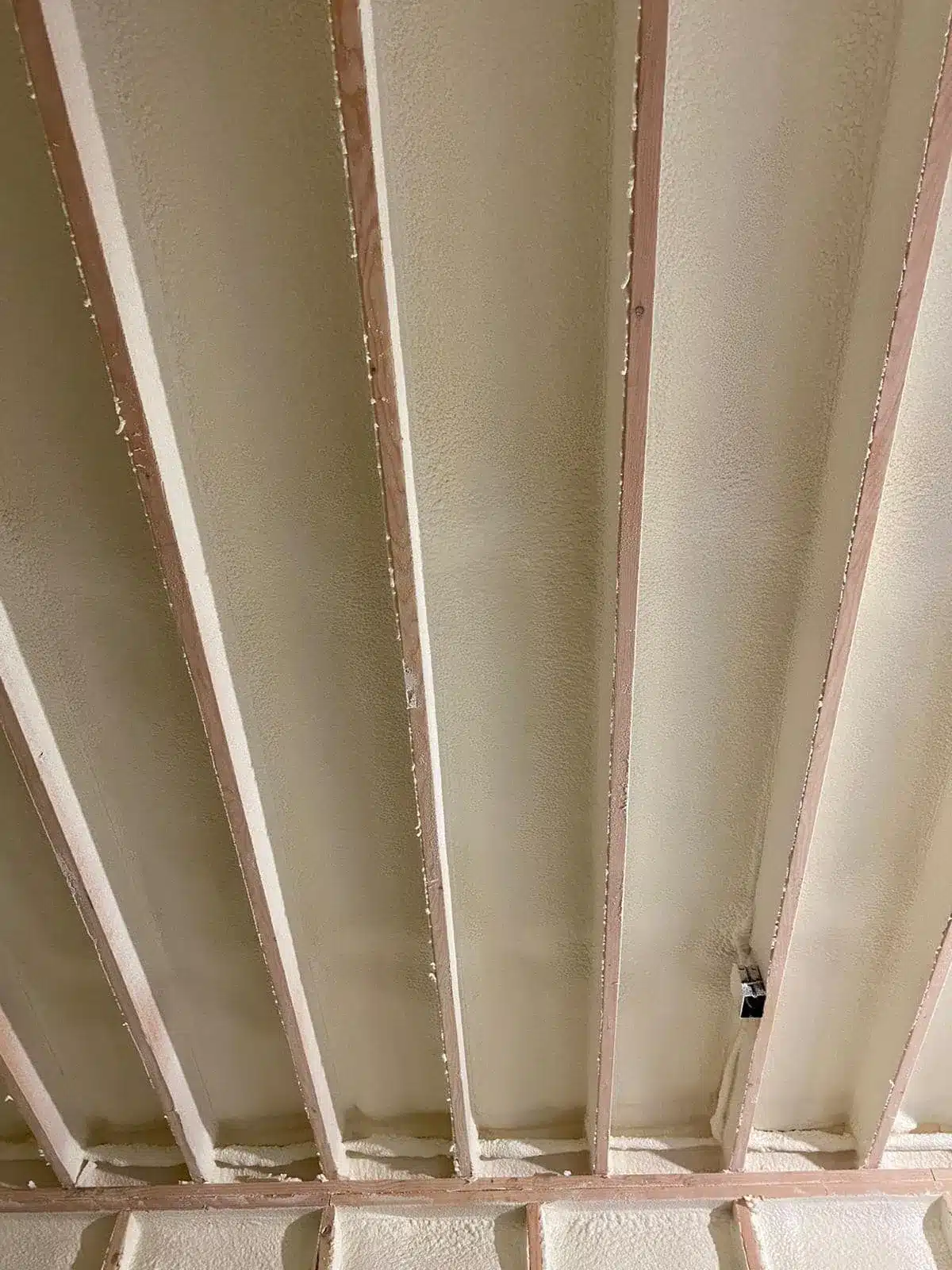
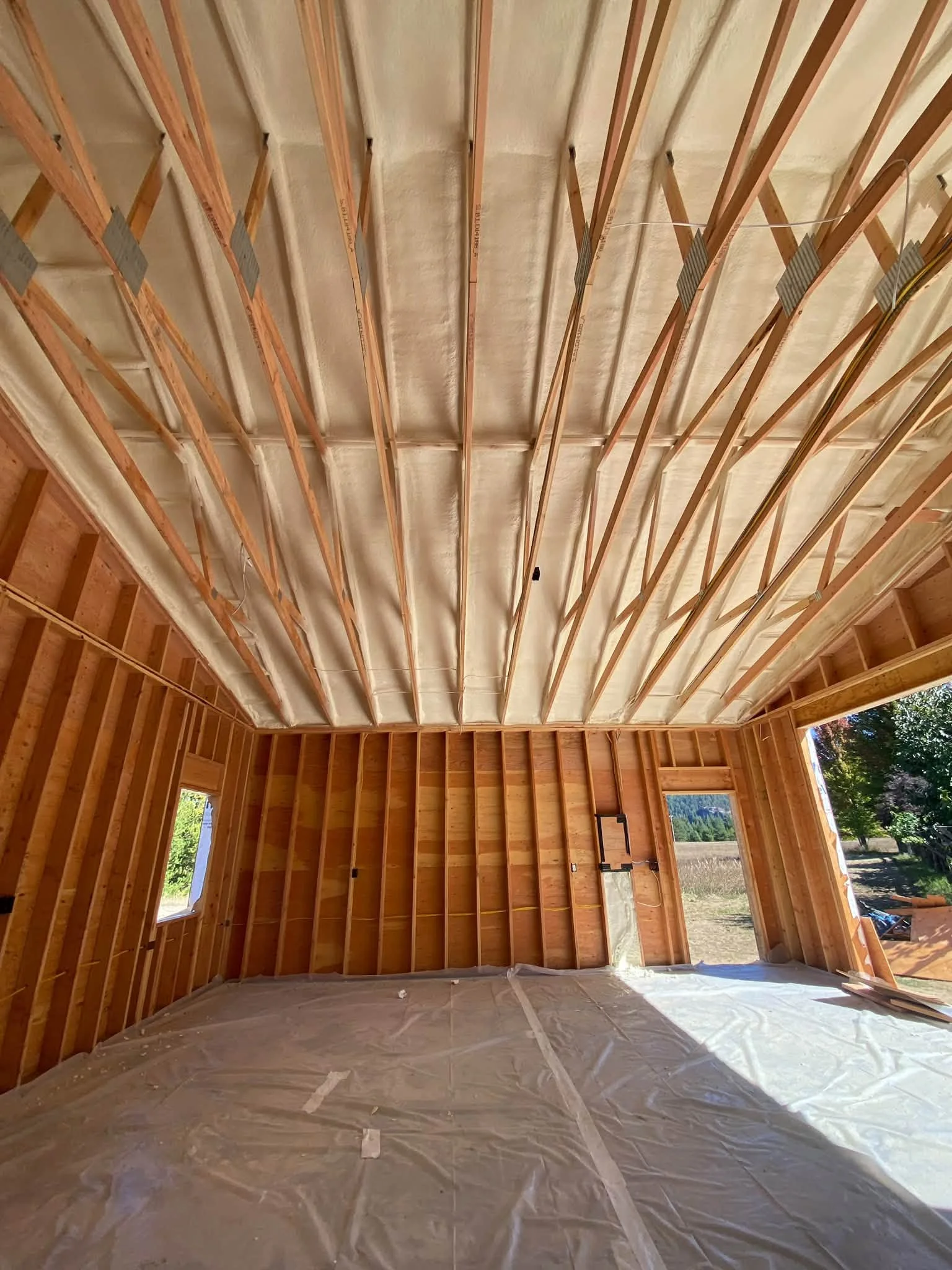
In a heating-dominated climate, the correct approach is to pair an interior vapor retarder with a venting path on the cold side. Closed cell spray foam applied to the interior face of exterior walls or the underside of roof decking creates that interior retarder while the exterior sheathing and cladding provide the drying path to the outside.
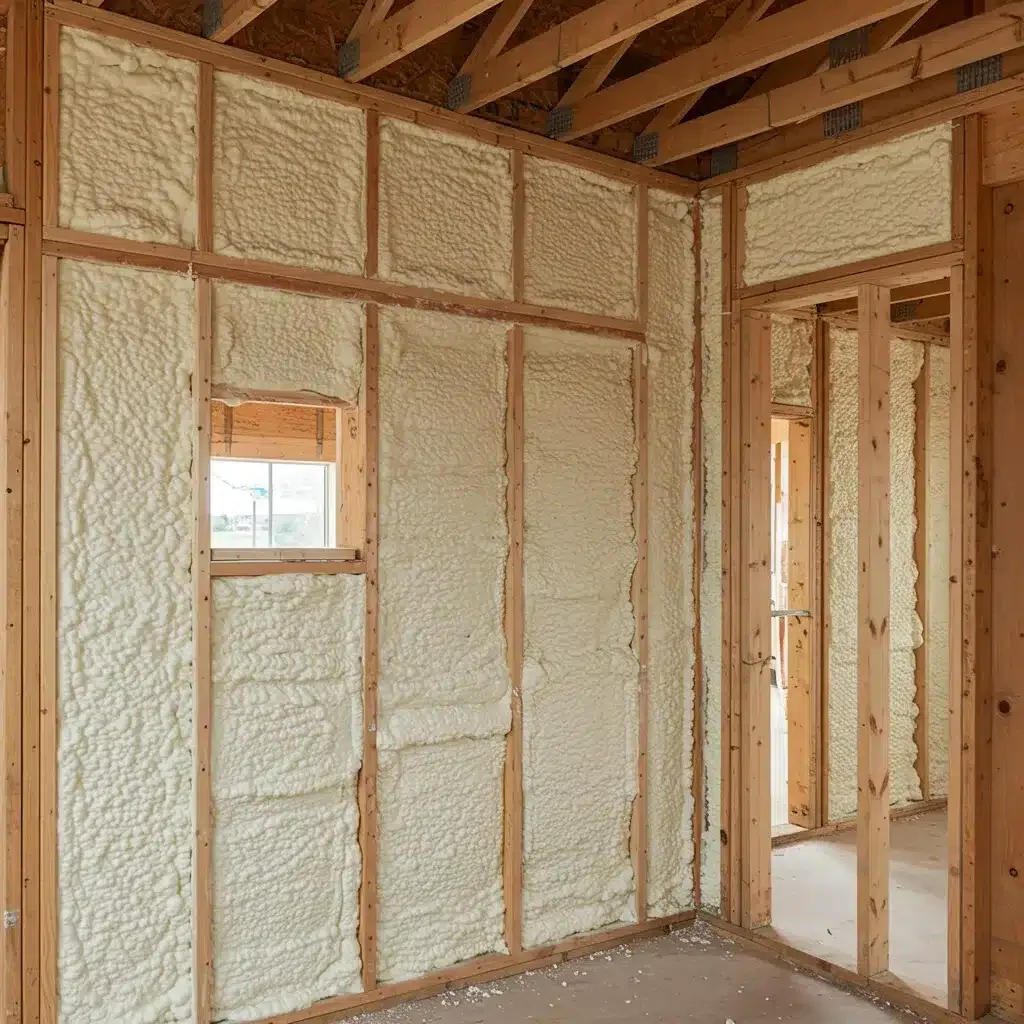
Closed cell spray foam does more than protect against moisture. Its rigidity adds structural support to wall and roof assemblies. When sprayed into stud cavities, rim joists, or crawlspace walls, the foam expands and adheres to wood framing, concrete, masonry, and metal. This bond helps resist racking and deflection in wall systems.
The material also eliminates thermal bridging, a problem described in building science literature as occurring when conductive materials like wood studs or metal fasteners create continuous paths across a temperature difference. Standard batt insulation leaves gaps around studs and at plate lines, but spray foam fills every void, creating a continuous layer of thermal resistance.
For homes in Libby where many were built decades ago with limited insulation and no vapor barriers in the original construction, retrofitting with closed cell spray foam addresses multiple deficiency issues at once. Our team commonly encounters homes with fiberglass batts that have settled, been compressed by storage, or been damaged by rodents and moisture. Replacing or supplementing with spray foam restores performance and adds protections the original construction never had.
Not every building area in Libby needs closed cell spray foam. The right approach depends on the specific moisture exposure, access constraints, and performance goals of each location.
| Building Area | Closed Cell Recommended? | Why |
|---|---|---|
| Crawlspace walls and ceilings | Yes | High moisture exposure, direct contact with damp soil, difficult to vent effectively |
| Rim joists and band joists | Yes | Major air leakage point, condensation risk from thermal bridging, thin cavities favor high R-value per inch |
| Basement walls (interior) | Yes | Ground moisture wicking, high water table in some Libby neighborhoods |
| Exterior walls | Conditional | Excellent performance but higher material cost per square foot; best ROI in new construction or full gut renovations |
| Attics (flat, vented) | Usually no | Ventilated attics may not need the vapor barrier properties; open cell or blown-in often sufficient |
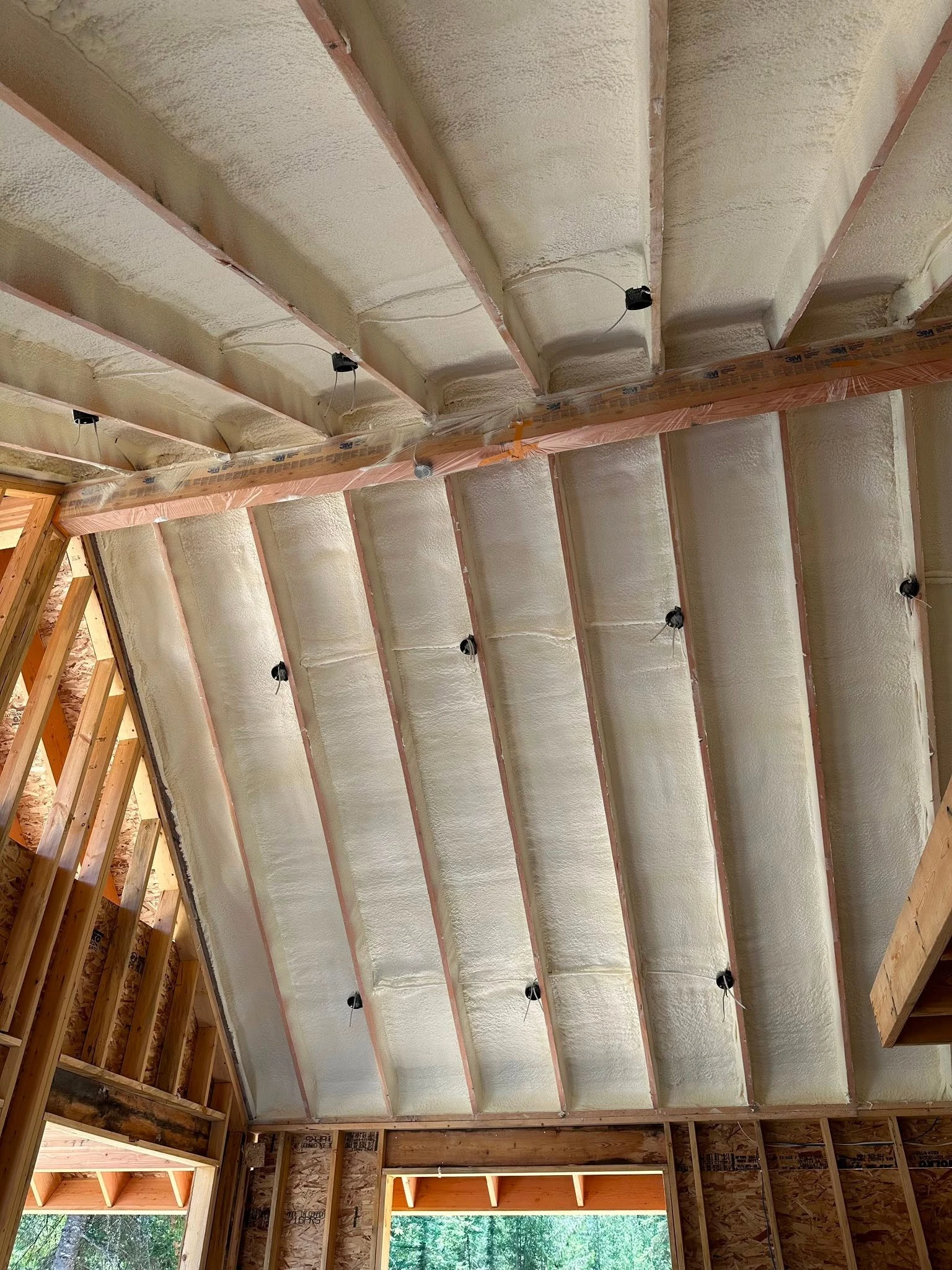
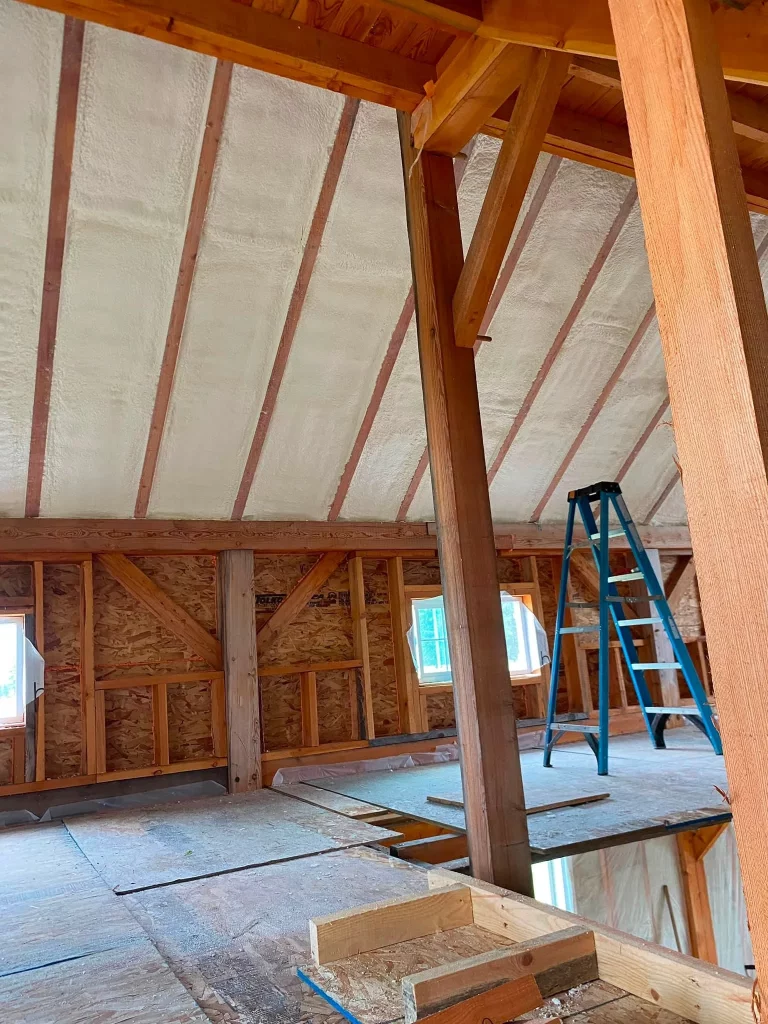
| Attics (cathedral or unvented) | Yes | Unvented assemblies require both insulation and air sealing; closed cell foam prevents condensation on roof sheathing |
Several variables influence the scope and approach of a closed cell spray foam installation. Understanding these upfront helps set expectations and avoid surprises during the project.
Access conditions. Tight crawlspace with limited clearance or areas obstructed by plumbing, ductwork, and electrical wiring require more labor per square foot. Our team evaluates access during the initial assessment and adjusts accordingly.
Existing moisture or mold. If a crawlspace or wall cavity already shows signs of mold, water damage, or pest infestation, those issues need to be resolved before insulation is applied. Spraying over active mold traps moisture and creates conditions that can accelerate fungal growth.
Crawlspace height and soil conditions. Low-clearance crawlspaces where technicians cannot stand increase installation time and cost. Damp or wet soil conditions in the crawlspace may also require a drainage solution or an encapsulation system in combination with the spray foam.
Travel distance. Jobs located farther from our base of operations may include additional logistics and transportation costs.
Choosing an insulation provider in the Libby area is not just about material cost per square foot. Look for these indicators:
Our approach at Selkirk Energy Solutions starts with an assessment of the existing conditions, a clear scope of work, and honest guidance on where closed cell spray foam delivers the most value and where a different approach might be more practical.
Selkirk Energy Solutions serves homeowners and builders throughout the Libby area with professional spray foam insulation services, including closed cell and open cell applications, air sealing, crawlspace encapsulation, and insulation removal and replacement. Our team evaluates each building on its own merits and recommends the right insulation strategy for the specific conditions, climate exposure, and budget.
Ready to find out what closed cell spray foam can do for your building? Contact us for a detailed quote or schedule an on-site moisture and insulation assessment.
Schedule a Moisture Assessment: Call (208) 295-9780 or email [email protected]
Open cell foam has interconnected pores that absorb sound well but allow moisture and air to pass through. Closed cell foam has sealed, gas-filled cells that block moisture, provide higher R-value per inch, and add structural rigidity.
In some cases, foam can be injected through small holes drilled into the wall cavity, but this depends on the wall framing type, cavity condition, and whether the cavity is already filled with insulation.
No. Closed cell spray foam is a Class I vapor retarder, so it serves as both insulation and vapor barrier in one step, eliminating the need for additional polyethylene sheeting or faced batts.
Closed cell spray foam is a thermosetting polymer that does not degrade, settle, or sag over time when properly installed. It maintains its R-value and moisture resistance for the life of the building.
Once cured, closed cell spray foam is inert and non-toxic. The curing process, which typically takes 24 to 72 hours, does produce temporary odors and off-gassing, so the space should be ventilated during and immediately after installation.