How Does Roof Design Influence Spray Foam Insulation Requirements in Dover, ID?
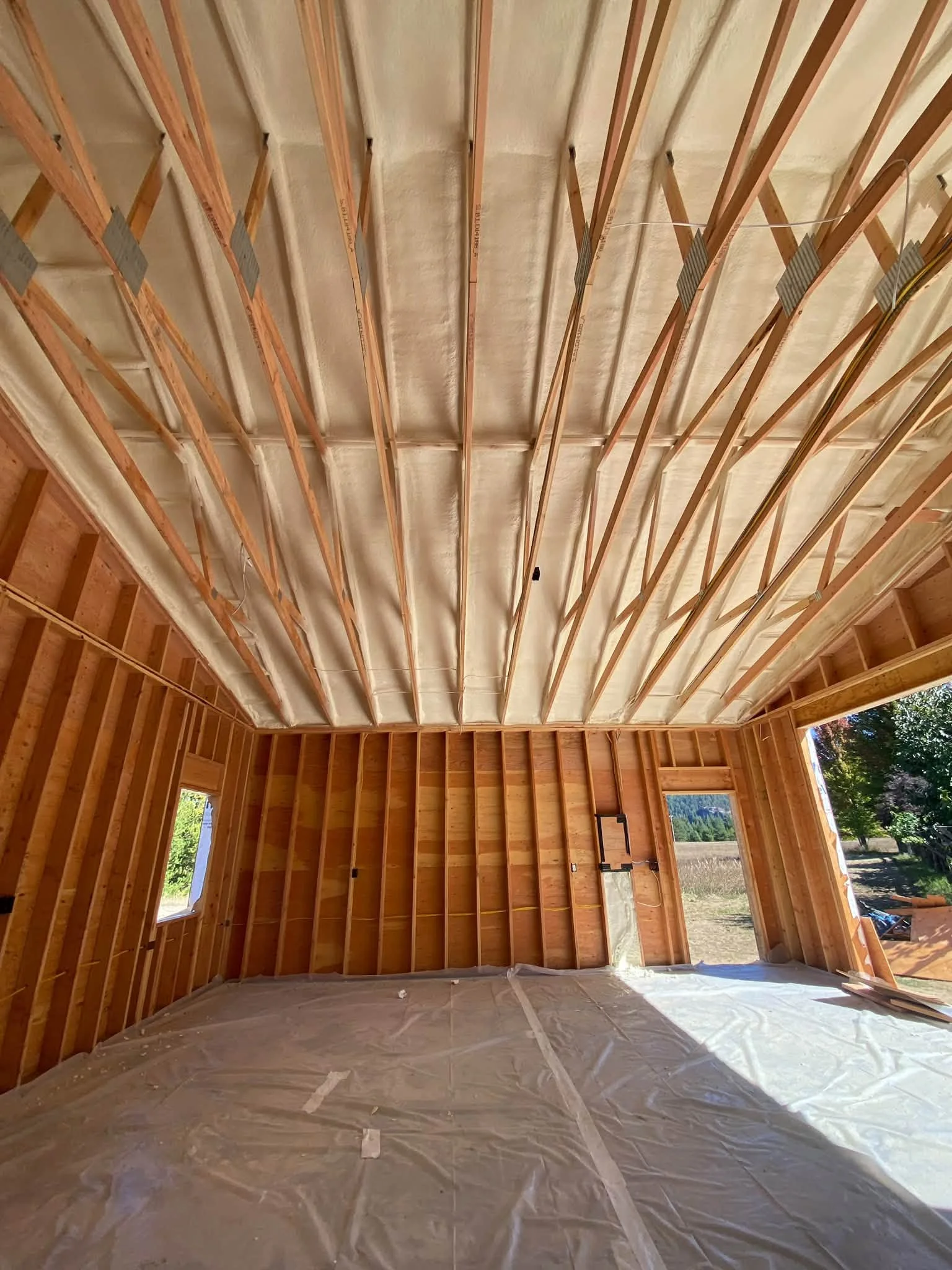
Your roof design is the primary factor that dictates how spray foam insulation should be installed. Because Dover, Idaho, experiences…


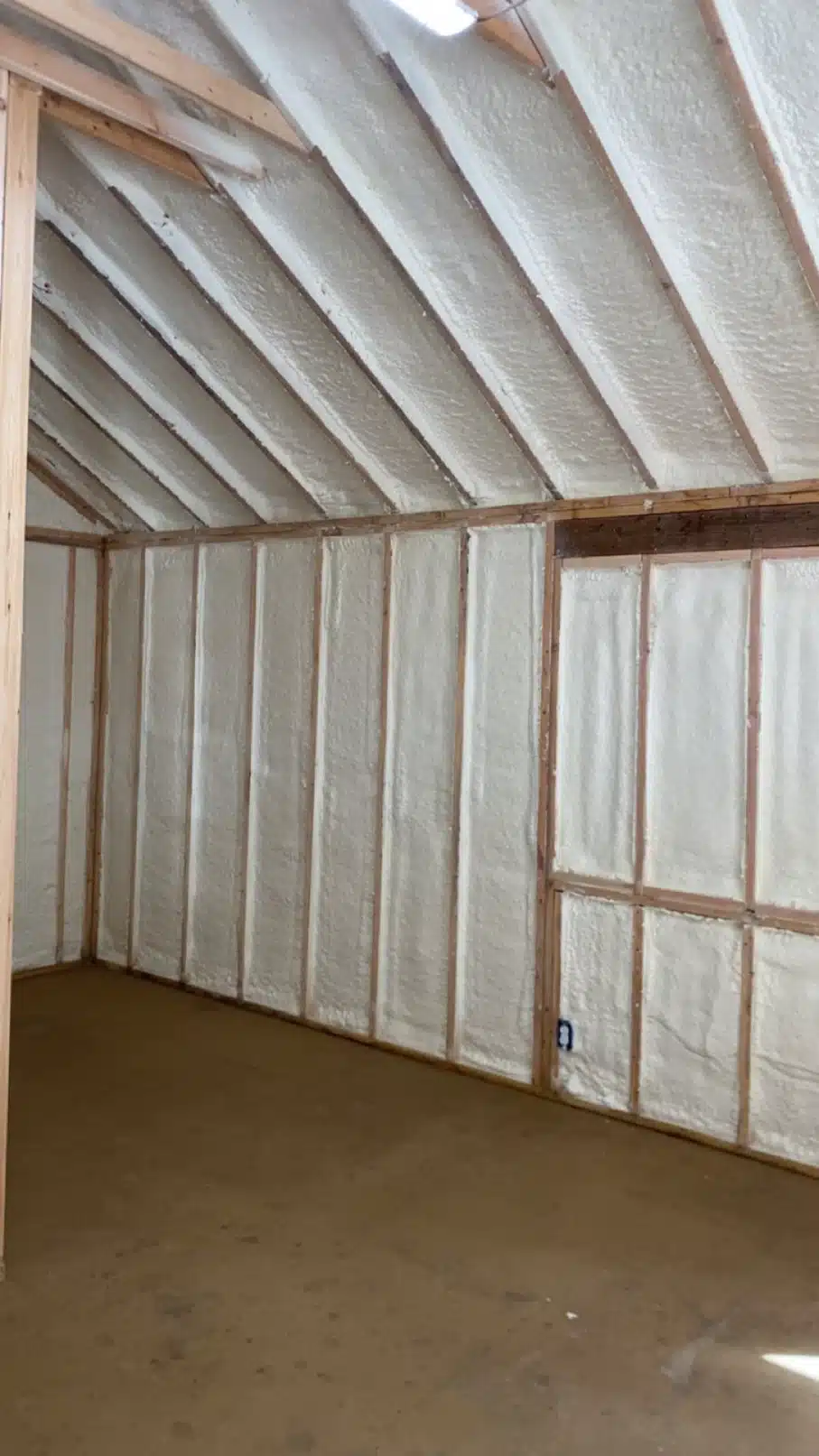
Closed-cell spray foam is highly water-resistant and functions as a Class II vapor retarder at typical installed thicknesses, but it is not completely waterproof under all conditions. Its closed-cell structure (over 90% closed cell content) makes it hydrophobic and moisture-impermeable in most building applications, meaning it repels liquid water and blocks water vapor transmission effectively. However, prolonged submersion in standing water or installation errors that leave gaps can compromise performance. The Complete Guide to Closed Cell Spray Foam explains why the distinction between “waterproof” and “water-resistant” matters when selecting insulation for crawlspaces, basements, below-grade walls, and flood-prone areas.
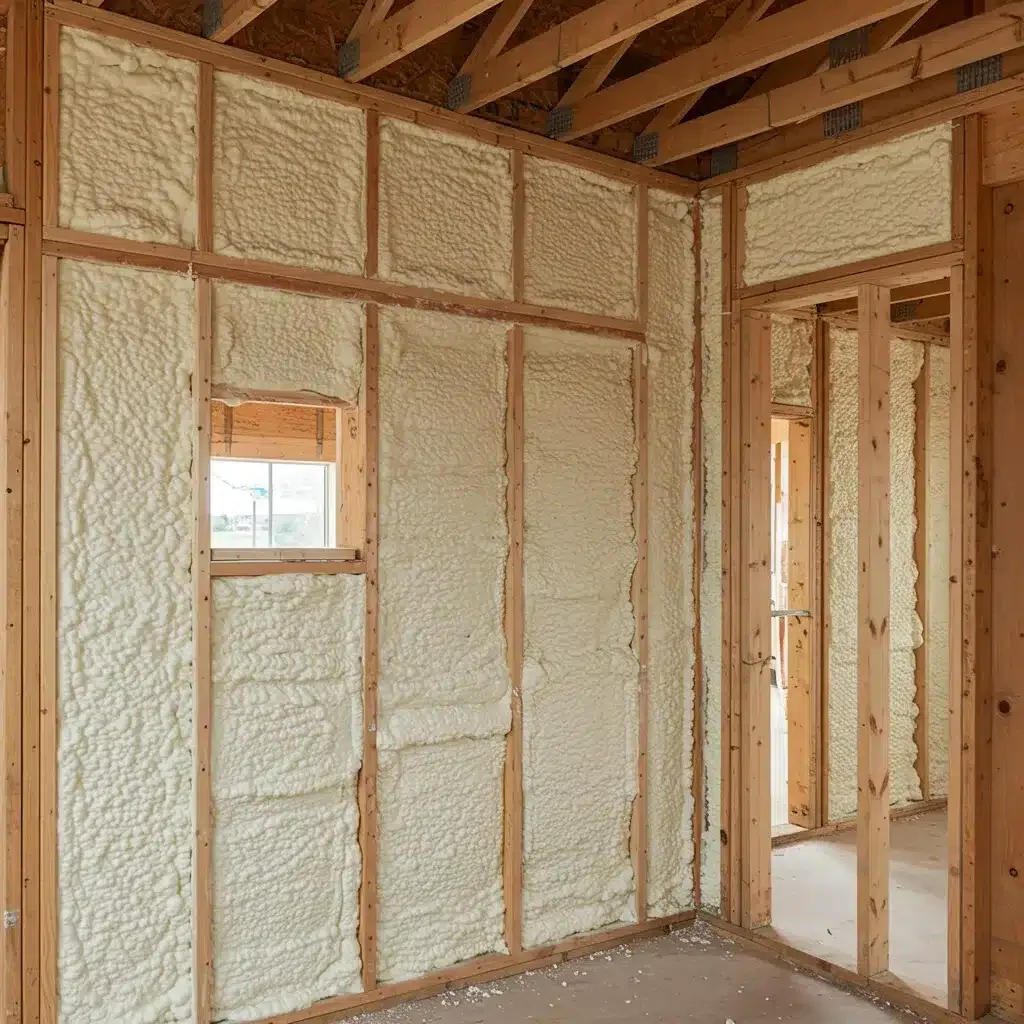
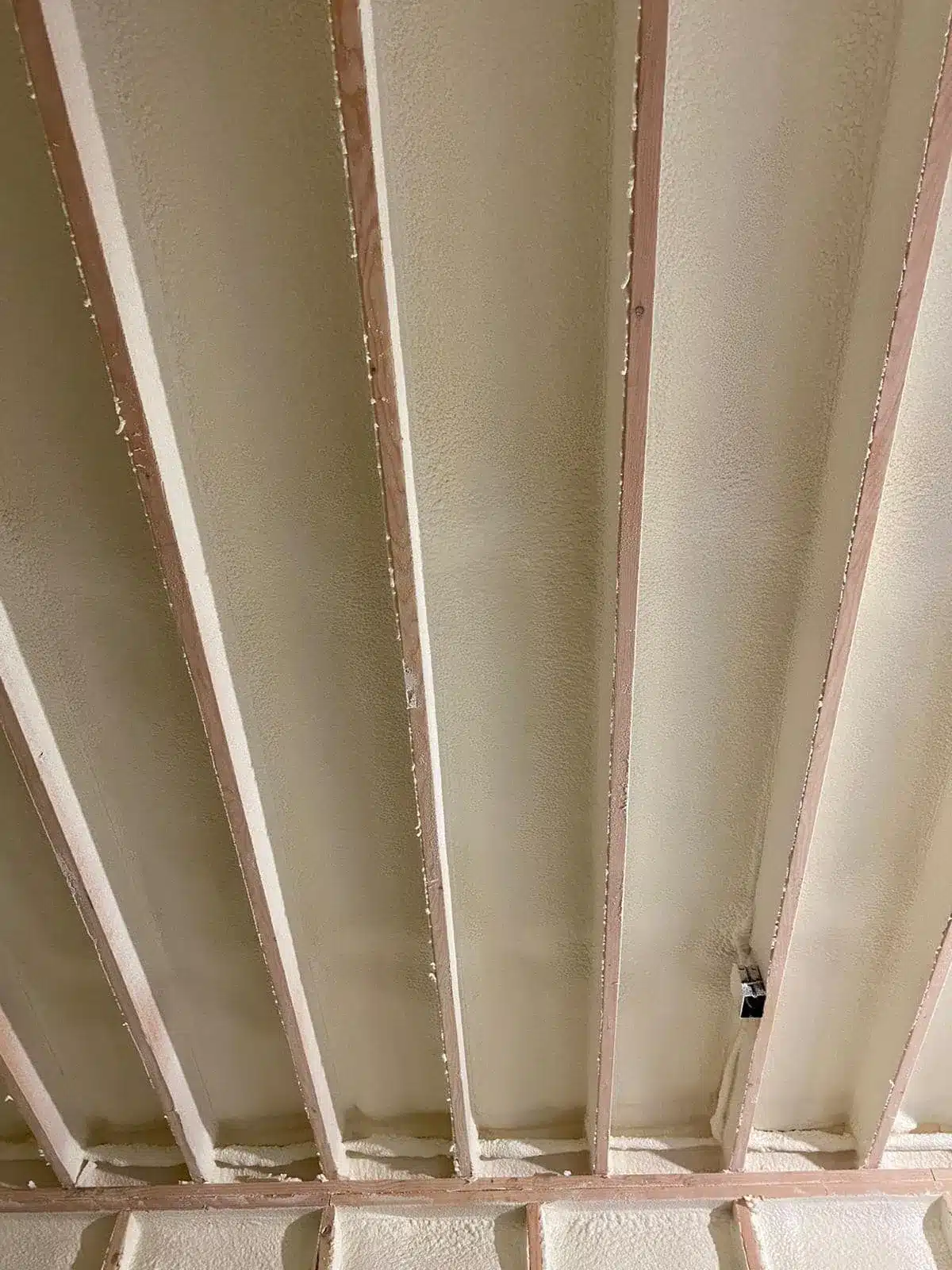
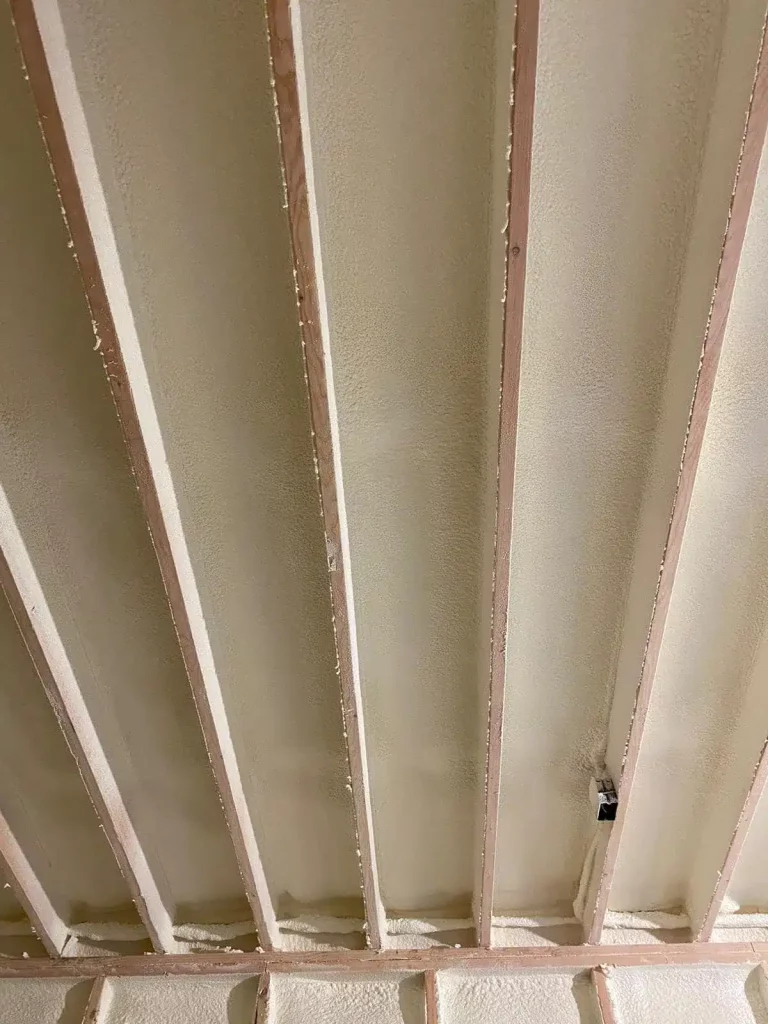
Closed-cell spray polyurethane foam (ccSPF) is a medium-density, thermoset cellular plastic with over 90% of its cells completely sealed. Each individual cell traps an insulating gas inside and prevents water or vapor from passing through to the next cell. The result is a rigid, continuous barrier that simultaneously controls water, air, vapor, and heat flow through the building envelope, making closed-cell spray foam prevent mold an effective approach that few other insulation materials can match.
The Building Science Corporation describes spray foam as “unique in that it has the ability to handle all four” control layers, water, air, vapor, and heat, noting that its continuity is what sets it apart from traditional insulation systems that rely on separate materials for each function.
Key physical properties that drive water resistance include:
The difference in water performance between the two foam types is significant and directly affects where each can be used. The U.S. Department of Energy Building America guide explicitly states that “closed-cell SPF is hydrophobic and will not absorb water” while “open-cell SPF will also absorb and hold liquid water… up to one-third by volume.”
| Property | Closed-Cell Spray Foam | Open-Cell Spray Foam |
|---|---|---|
| Density | ~2.0 lb/ft³ | ~0.5 lb/ft³ |
| Closed Cell Content | >90% | <10% |
| Water Absorption | <2% by volume (ASTM D2842) | Up to 33% by volume |
| Vapor Permeance | <1.0 perm at 2″ (Class II retarder) | 5-10 perms at 5″ |
| Liquid Water Behavior | Hydrophobic, repels water | Absorbs and retains water |
| Below-Grade Use | Acceptable (preferred) | Not acceptable |
| Flood Resistance | FEMA Class 4-5 | Not flood-rated |
| R-Value Per Inch | R-6.0 to R-6.7 | R-3.5 to R-3.8 |
| Air Barrier | Yes (all thicknesses) | Yes (at sufficient thickness) |
Open-cell foam can become saturated when exposed to bulk water from leaks, pressure-driven vapor diffusion, or moisture from air leakage. Once saturated, it can take extended periods to dry, creating conditions favorable for mold growth. The DOE guide rates open-cell foam as “not acceptable” for foundations and below-grade spaces specifically because of its moisture-permeable nature.
Building codes and standards organizations have specific requirements for closed-cell spray foam when it comes to moisture control. The International Code Council (ICC) evaluates spray-applied polyurethane foam through ICC Evaluation Service reports (ICC-ES) that test for physical properties including water absorption and vapor transmission.
The 2018 and 2021 International Residential Code (IRC) Section R702.7 addresses vapor retarders and includes specific provisions for spray foam:
The Air Barrier Association of America (ABAA) maintains a detailed standard (Section 5.6) for medium-density closed-cell spray polyurethane foam used in air barrier assemblies. This standard requires compliance with 13 specific tests, including ASTM D2842 for water absorption and ASTM E96/E96M for water vapor transmission rate. These tests verify that the foam can perform as a continuous moisture barrier when properly installed.
One of the most demanding tests of water resistance comes from flood zone requirements. FEMA Technical Bulletin 2 (TB-2) classifies building materials on a five-point scale for flood damage resistance. Only Classes 4 and 5 are acceptable for use below the Base Flood Elevation.
FEMA and the National Flood Insurance Program (NFIP) specifically list rigid and closed-cell foam insulation as examples of highly flood-resistant materials. These materials can withstand direct contact with floodwater for at least 72 hours without sustaining damage beyond cosmetic repair.
Permitted applications in moisture-critical areas include:
While the material properties of closed-cell foam are well documented, actual field performance depends on several variables that homeowners and builders should understand.
Foam density and formulation: Higher-density formulations have lower permeability rates and stronger structural integrity. Not all closed-cell foams perform identically. Manufacturers must provide ICC-ES evaluation reports with specific test data for their products.
Installed thickness: Vapor permeance decreases as foam thickness increases. A thin pass of closed-cell foam may not achieve the Class II vapor retarder rating needed for code compliance. The IRC specifies minimum thickness requirements by climate zone.
Installation continuity: Gaps, voids, or uneven application create pathways for moisture intrusion. The foam must form a continuous, unbroken layer across the entire surface being insulated. Poor installation quality is the most common cause of moisture-related failures.
Substrate condition: Applying closed-cell foam to wet surfaces, surfaces with active leaks, or surfaces with inadequate drainage can trap moisture behind the foam and lead to hidden damage.
Long-term exposure: While closed-cell foam resists water effectively, prolonged direct contact with standing water (as opposed to incidental wetting) may lead to minor absorption over extended periods. UV exposure and physical degradation can also reduce performance over time if the foam is left unprotected.
| Application | Recommended Foam Type | Minimum Thickness | Key Reason |
|---|---|---|---|
| Basement walls (Climate Zones 5-8) | Closed-cell only | 1.5″ – 2.0″ | Condensation control + Class II vapor retarder |
| Vented crawlspace framing | Closed-cell only | 1.5″ – 2.0″ | Must resist ground moisture and humidity |
| Unvented attic (Climate Zones 5+) | Closed-cell only | Per IRC Table R806.5 | Condensation control on roof deck |
| Unvented attic (warm climates) | Open or closed | Full cavity | Air sealing priority; less condensation risk |
| Frame walls (cold climates) | Closed-cell or hybrid | 1.5″ minimum for hybrid | Prevent interior moisture condensation |
| Frame walls (hot-humid climates) | Closed-cell preferred | 1.0″ minimum flash layer | Blocks exterior-driven moisture |
| Rim joists / band joists | Closed-cell | 1.5″ – 2.0″ | Critical air and moisture sealing location |
| Flood zone construction | Closed-cell only | Per FEMA guidelines | FEMA Class 4-5 flood-resistant rating |
Choosing the right insulation professional matters as much as choosing the right material. A poor installation can undo the water-resistant properties of even the best closed-cell foam.
Selkirk Energy Solutions delivers professional closed-cell and open-cell spray foam insulation for homes and commercial buildings throughout the 83864 area. Our team evaluates each project site for moisture conditions, climate zone requirements, and building assembly details to recommend the right foam type and thickness for lasting performance. Whether you need crawlspace encapsulation, basement insulation, attic spray foam, or moisture control in flood-prone areas, we handle it all.
Request a Quote | Schedule an Insulation Assessment
Reach us at [email protected] or call (208) 295-9780 to discuss your project. Our team is ready to help you choose the right insulation solution for your property and climate conditions.
No. Closed-cell spray foam is designed to resist moisture vapor and incidental wetting, not to stop active plumbing leaks or roof failures. The source of any bulk water intrusion must be repaired before insulation is installed.
For vented crawlspaces in all IECC Climate Zones, the Building Science Corporation recommends only high-density closed-cell spray foam on the floor framing. Open-cell foam can absorb ground moisture and hold it against wood framing, creating conditions for rot and mold.
FEMA Technical Bulletin 2 classifies closed-cell foam insulation as a Class 4 or 5 flood-damage-resistant material. It can withstand at least 72 hours of direct floodwater contact with only cosmetic damage, making it one of the few insulation types permitted below the Base Flood Elevation.
In most applications, no. At typical installed thicknesses of 1.5 inches or more, closed-cell spray foam functions as a Class II vapor retarder on its own. The IRC does not require an additional interior vapor retarder when closed-cell foam meets the thickness and permeance requirements in Table R702.7.1.
Closed-cell foam resists water penetration and will not absorb bulk water the way open-cell foam does. However, a roof leak can still damage surrounding building materials. The foam may mask the leak’s location, making detection and repair more difficult, so it is important to address roof issues promptly.